
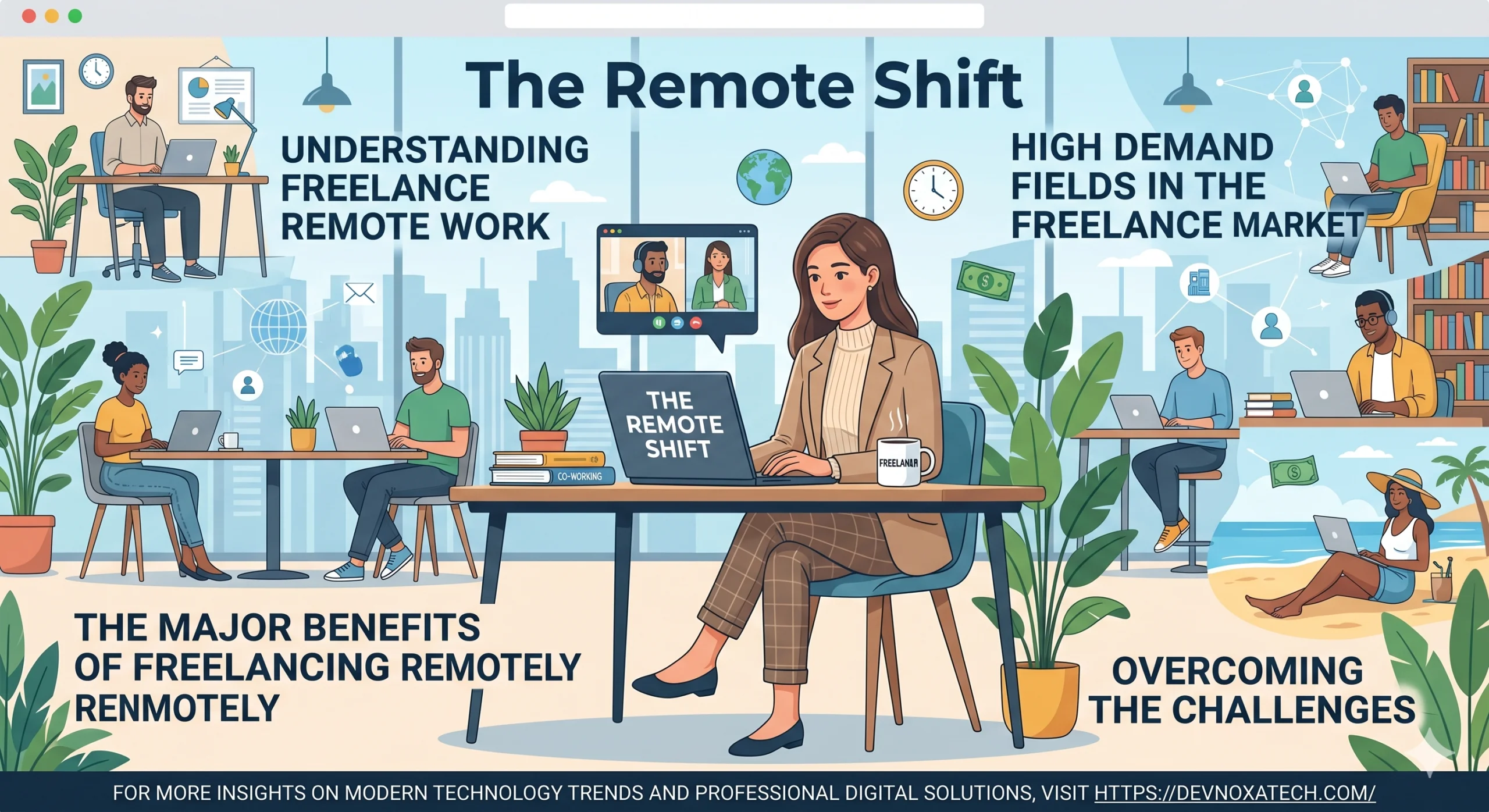

The global job market has experienced a massive transformation over the last few years. The traditional office routine, with its strict nine-to-five schedule and daily commute, is no longer the only way to build a successful career. Today, the rise of freelance remote jobs has opened up entirely new possibilities for professionals worldwide. This shift allows people to take full control of their professional lives, working from the comfort of their homes or anywhere with a stable internet connection.
Freelancing combined with remote work offers an unmatched level of flexibility. It allows individuals to choose their clients, define their working hours, and select projects that truly align with their skills and passions. For millions of people, this is not just a passing trend but a permanent lifestyle choice that offers a better balance between personal and professional responsibilities.
Understanding Freelance Remote Work
To successfully navigate this landscape, it is important to understand what freelance remote work actually entails. Freelancing means operating as an independent contractor rather than an official employee of a single company. Remote work means completing tasks from a location outside of a traditional corporate office. When you combine the two, you get a highly dynamic work model where you offer specialized services to multiple clients globally without being tied to a physical desk.
Unlike traditional employment, freelancing requires a proactive mindset. You are responsible for finding your own clients, managing your daily schedule, handling financial matters like invoicing, and continuously upgrading your skill set. While it demands discipline, the rewards of independence and uncapped earning potential make it an incredibly attractive option.
High Demand Fields in the Freelance Market
The remote freelance marketplace spans across numerous industries. Almost any service that can be delivered digitally has a place in this ecosystem. However, certain sectors experience consistently high demand and offer excellent compensation for skilled professionals.
Technology and software development remain at the very top of the list. Companies worldwide are constantly looking for talented web developers, mobile application engineers, and cybersecurity experts. Because software development is naturally outcome-based, it fits perfectly into the freelance structure.
Content creation and digital marketing form another massive sector. Businesses require a strong online presence to survive, creating a steady demand for skilled content writers, SEO specialists, social media managers, and graphic designers. If you can help a brand tell its story or improve its search engine ranking, you will find plenty of opportunities in the freelance market.
Additionally, data analysis, translation, administrative support, and online tutoring are rapidly growing fields. As businesses look to optimize their operations and cut down on overhead costs, they increasingly turn to remote freelancers to handle specialized tasks.
The Major Benefits of Freelancing Remotely
The most obvious advantage of pursuing remote freelance jobs is freedom. You have the ultimate authority to decide when you work, where you work, and how much workload you want to take on. This flexibility is incredibly valuable for parents, students, or anyone who values personal time over rigid corporate structures.
Another major benefit is the elimination of the daily commute. Shaving off hours spent in traffic every day saves a significant amount of energy, time, and money. This extra time can be reinvested into learning new skills, spending time with family, or simply enjoying a healthier lifestyle.
Furthermore, remote freelancing breaks down geographical barriers. A professional living in a developing country can easily collaborate with major corporations based in North America or Europe. This global reach levels the playing field and allows individuals to earn competitive international rates regardless of their local job market conditions.
Overcoming the Challenges
While the freelance lifestyle sounds ideal, it does come with its own unique set of challenges. The most prominent hurdle is the lack of income stability, especially when you are just starting out. Freelancing often follows a feast or famine cycle, where you might have an abundance of projects one month and very few the next. Managing your finances wisely and building a financial safety net is essential to handle these fluctuations.
Another common issue is isolation. Working alone at home for extended periods can sometimes feel lonely. To counter this, many freelancers choose to work from local cafes, libraries, or shared co-working spaces. Surrounding yourself with a community of like-minded individuals can greatly improve motivation and mental well-being.
Finally, self-discipline is a non-negotiable requirement. Without a manager looking over your shoulder, it can be easy to procrastinate or, conversely, to overwork yourself to the point of burnout. Establishing a dedicated workspace and setting clear boundaries between your working hours and personal time is vital for long-term success.
Essential Tools for Remote Success
To thrive as a remote freelancer, you need the right digital tools to streamline your daily workflow. Communication is the foundation of any remote relationship. Platforms like Slack, Zoom, and Microsoft Teams allow you to stay in constant touch with your clients and ensure that project expectations are perfectly aligned.
Project management tools are equally important to keep track of your deadlines and tasks. Applications like Trello, Asana, and Monday help you organize your workflow, break down large projects into manageable steps, and give your clients real-time updates on your progress.
For financial management, tools like PayPal, Payoneer, and various invoicing software simplify the process of billing international clients and receiving payments securely. Investing time in mastering these platforms will make your business operations run smoothly and professionally.
Building a Sustainable Freelance Career
Transitioning into a full-time freelance career requires a strategic approach. It is highly recommended to start by building a strong portfolio while you still have a steady source of income. Begin by showcasing your best work on platforms like Upwork, Fiverr, or LinkedIn.
Networking plays a massive role in finding high-quality clients. Participate in online communities, attend industry webinars, and connect with peers in your field. Often, the best and highest-paying freelance opportunities come through word-of-mouth recommendations and professional referrals.
Continuous learning is another key to longevity in this market. The digital landscape evolves rapidly, and technologies change overnight. By consistently upgrading your skills and staying updated on the latest industry trends, you ensure that your services remain highly valuable and relevant to global clients.
The Future of Work
The rise of freelance remote jobs is reshapeing the global economy. It empowers professionals to build customized careers based on independence, flexibility, and global collaboration. While it requires dedication, resilience, and strong self-management, the opportunity to work on your own terms makes it a deeply fulfilling path. By identifying your strengths, using the right tools, and maintaining a professional approach, you can successfully build a thriving career in the modern world of remote freelancing.
For more insights on modern technology trends and professional digital solutions, visit devnoxa tech