
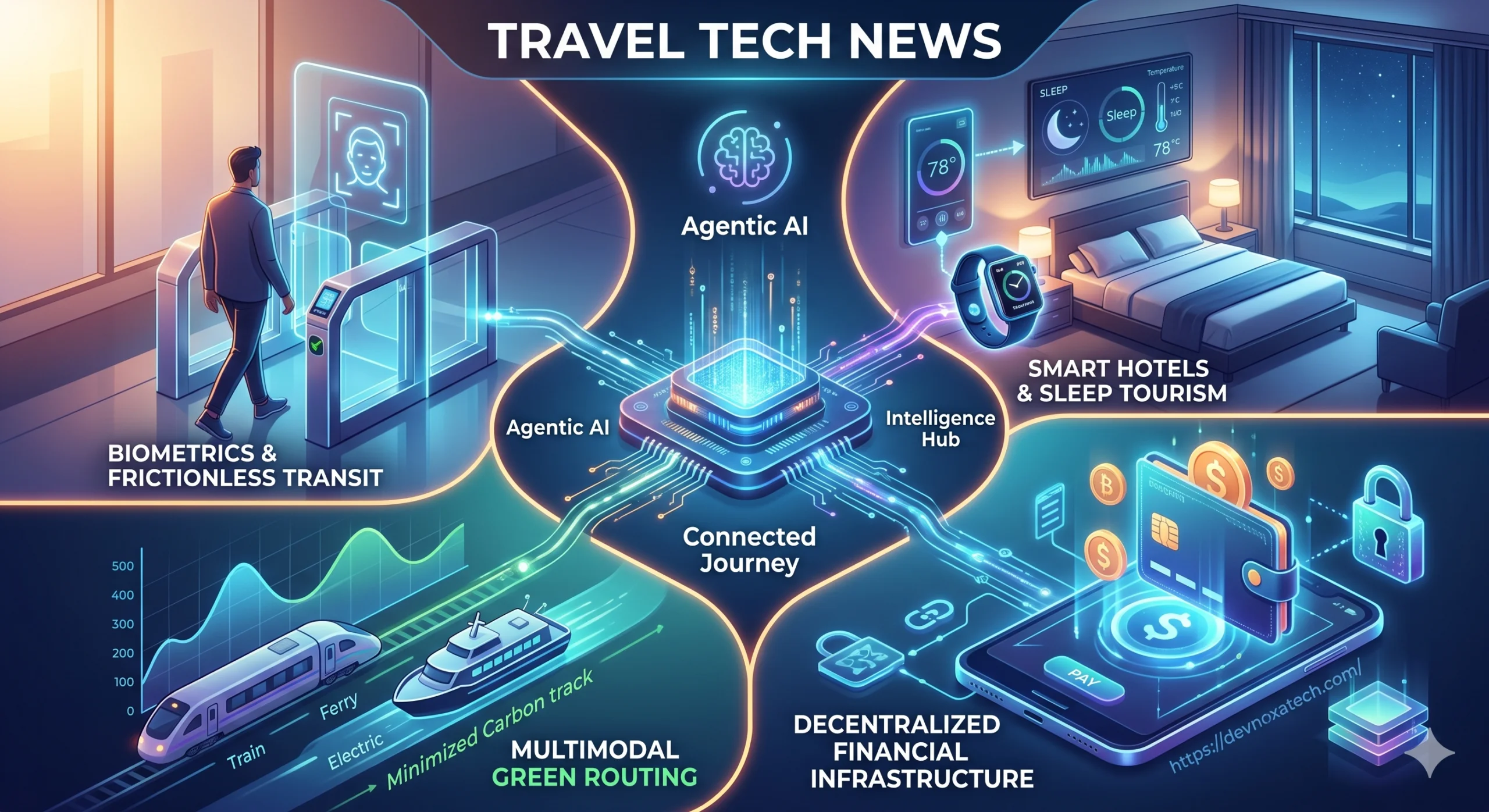

The global travel tech news landscape is undergoing a massive digital overhaul. While the past few years introduced consumers to basic artificial intelligence chatbots and digital boarding passes, the current wave of innovation is far more profound. Technology is no longer just a digital filing cabinet for booking confirmations. It has evolved into an active, invisible coordinator operating behind the scenes to eliminate traditional friction from transit. From autonomous software agents that can book entirely coordinated itineraries to biometric networks that turn your face into your passport, the travel ecosystem is becoming automated and identity-based. These advancements are rewriting the rules for airlines, hotels, and everyday global explorers.
The Rise of Agentic Artificial Intelligence
For a long time, using artificial intelligence in travel meant typing a prompt into a search box and receiving a generic list of top destinations or mid-range hotel recommendations. The traveler still had to open separate tabs, compare flight times, check baggage allowances, and manually enter credit card details across multiple platforms.
The industry is now transitioning toward agentic artificial intelligence. This represents a leap from software that simply answers questions to systems that take autonomous action. Tech giants and travel platforms are deploying tools powered by advanced models that read user schedules, anticipate preferences, and carry out complete bookings across entirely different service providers without human intervention. If a traveler requests a three-day weekend trip to an alpine destination with great hiking paths and a boutique hotel with wellness amenities, the autonomous agent coordinates the flight, handles the property booking, secures the transit vehicle, and places the final confirmation in the user’s digital wallet.
Frictionless Transit Through Biometrics
Airports and international border checkpoints have historically been the most tedious part of the journey. However, identity verification is experiencing a complete transformation through biometric sensor networks. Facial recognition systems are steadily rolling out across major global hubs, enabling passengers to move from the airport curb to the aircraft gate without repeatedly presenting physical documents.
These integrated systems monitor security queue lengths, optimize passenger flow, and verify identity at multiple touchpoints simultaneously. Biometric data securely links a traveler’s physical profile to their digital boarding pass and passport details. Beyond speeding up lines, this technology integrates into baggage tracking systems. Embedded sensors follow luggage from the initial check-in through the cargo belly of the aircraft, sending real-time push notifications to the passenger’s smartphone. If a connection is missed due to a delayed flight, automated backend infrastructure automatically reroutes the luggage and updates the passenger, mitigating the stress of lost property.
Multimodal Routing and Green Micro-steps
The conversation around sustainable travel has moved away from voluntary carbon offset checkboxes, which failed to gain widespread consumer traction. Instead, modern booking engines are utilizing big data and predictive analytics to build optimized multimodal routes.
Instead of presenting an individual with a simple choice between driving or flying, modern routing platforms analyze thousands of combinations involving trains, buses, local ferries, and regional flights for a single journey. The system automatically calculates where a traveler can substitute a high-emission flight for a high-speed rail segment without significantly impacting total travel time. To make this practical, modern booking systems offer unified payment integration and connection guarantees. If a train delay causes a passenger to miss a connecting regional flight, the underlying technology automatically rebooks the entire remaining portion of the trip without penalizing the traveler. This structural approach embeds sustainability directly into the logistics rather than relying on consumer guilt.
The Smart Hotel Experience and Sleep Tourism
The hospitality sector is using the internet of things to entirely re-engineer the guest experience, heavily aligning with the surging global trend of sleep tourism. Travelers are increasingly choosing accommodations specifically designed to counter professional burnout and optimize rest.
Smart hotel rooms now adjust dynamically to human biometrics and personal schedules. Upon checking in via a mobile application, a guest’s smartphone syncs with the room’s climate, lighting, and entertainment systems. Environmental sensors maintain indoor air quality, ambient sound barriers, and gradual morning lighting curves that mimic natural sunrise to minimize jet lag. Some luxury wellness resorts are taking this further by integrating sleep tracking technology, customizable mattress firmness controlled via software, and automated aromatherapy diffusers that activate based on the guest’s sleep cycles. On the operations side, predictive analytics allow property managers to monitor energy consumption and automate housekeeping workflows based on actual room usage rather than rigid daily schedules.
Decentralized Financial Infrastructure
Managing payments across international borders has always carried hidden costs, from foreign transaction fees to unfavorable currency conversion rates. The integration of blockchain technology and advanced decentralized digital wallets into the travel industry is addressing this issue directly.
Major fintech platforms are partnering with distribution systems to establish modern payment networks. By using digital wallets backed by secure decentralized ledgers, business and leisure travelers can bypass standard international banking channels. This drastically cuts transaction fees and provides immediate protection against booking fraud. Furthermore, decentralized identity systems are giving travelers greater control over their data. Instead of uploading highly sensitive personal records to dozens of different hotel chains and booking websites, travelers can use a single, tamper proof digital identity that verifies their age and payment capacity while protecting their underlying raw data.
Looking Ahead at the Connected Journey
The ultimate goal of modern travel technology is absolute continuity. The industry is rapidly moving away from fragmented apps and moving toward an invisible, unified layer of digital infrastructure that handles the complexities of global logistics. As automated decision-making and cross-platform systems become standard, the act of traveling will feel less like navigating an obstacle course of lines, confirmations, and sudden disruptions, and more like a fluid, personalized experience.
For businesses and consumers alike, keeping pace with these rapid tech developments is essential to maximizing efficiency and comfort on the road. To explore deeper insights into how modern enterprise workflows and digital solutions are transforming industries, visit devnoxa tech