
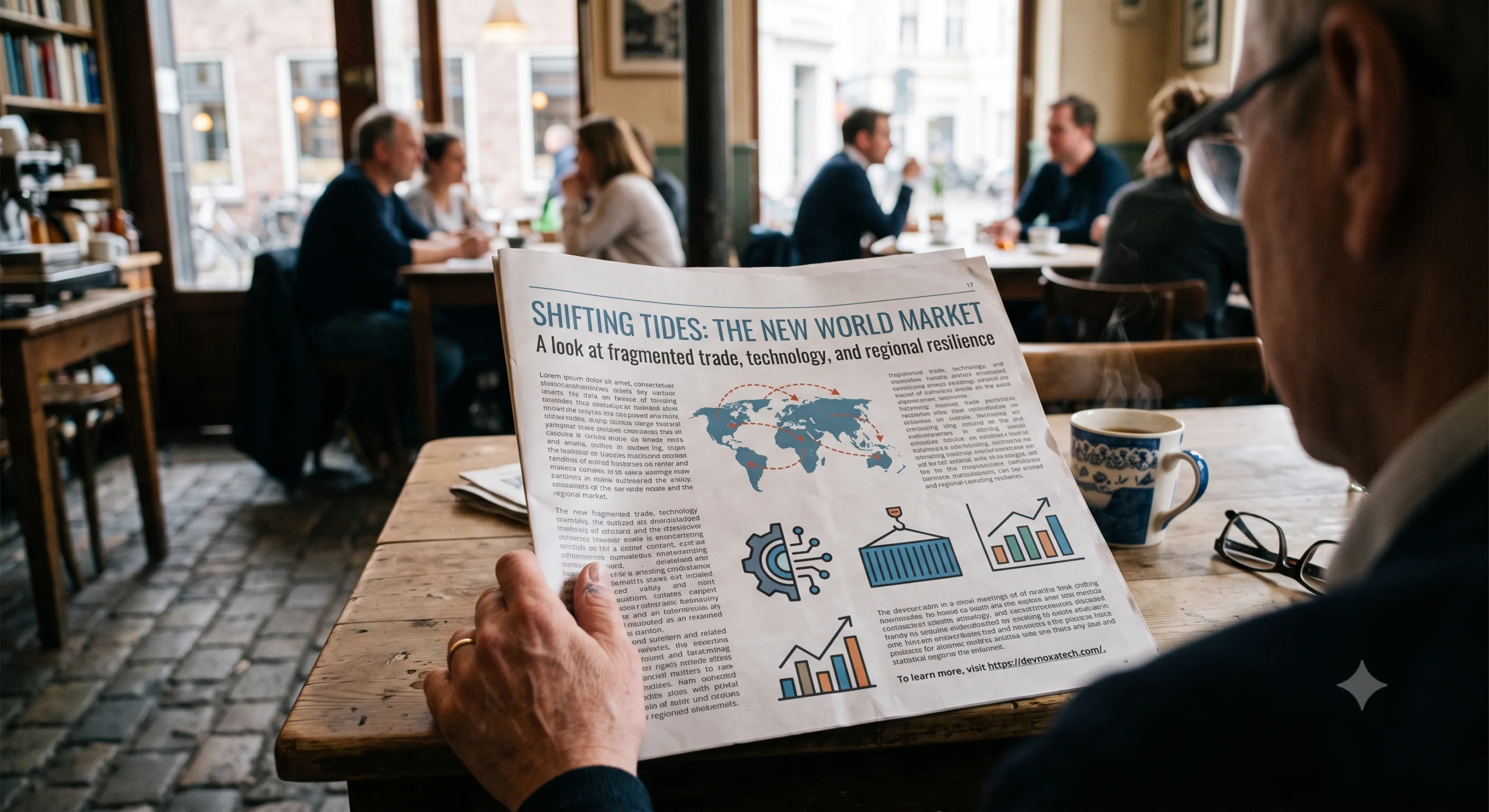

The global marketplace is undergoing a profound transformation. What once operated as a highly interconnected, frictionless machine is adjusting to a new era of regional focus and technological acceleration. Today, understanding the world market requires looking past traditional trade routes and examining the underlying forces of digital infrastructure, changing manufacturing hubs, and economic adaptability.
The New Reality of Fragmented Trade
For decades, globalization focused on finding the single cheapest location to produce any given item. Businesses happily ignored geographical distance in favor of lower labor costs. However, recent disruptions have exposed the fragility of this approach. Supply chain bottlenecks, shifting national trade policies, and geopolitical tensions have forced companies to rethink their setups.
Instead of relying on a single, distant factory, major enterprises are embracing diversification. Terms like nearshoring and friendshoring have evolved from corporate buzzwords into active survival strategies. Production is moving closer to consumer hubs, or at least to nations with stable, predictable political relationships. This shift has triggered a massive redistribution of manufacturing wealth, turning parts of Southeast Asia, Central America, and Eastern Europe into vibrant industrial hotspots.
The Rise of Secondary Manufacturing Hubs
As corporations move away from concentrated reliance on a single nation, several emerging economies are stepping into the spotlight. Countries like Vietnam, Indonesia, and Mexico are experiencing an influx of foreign direct investment. These regions are no longer just offering cheap assembly lines. Instead, they are rapidly upgrading their domestic infrastructure, training skilled workforces, and building comprehensive component ecosystems.
This movement is flattening the global industrial landscape. While it can introduce higher initial costs as new factories are built and logistics networks are established, it ultimately creates a more resilient system. If a localized crisis shuts down production in one part of the world, alternative hubs can quickly absorb the pressure, keeping retail shelves stocked and businesses operational.
Technology as the Great Equalizer
While physical trade faces new barriers and borders, the digital marketplace knows no boundaries. The explosion of cloud computing, decentralized remote work, and accessible digital platforms has democratized how international business happens. A small software agency or e-commerce brand can now reach a global audience from day one without needing massive capital or physical storefronts.
Technology acts as a powerful equalizer for developing nations. Many emerging economies are completely skipping the legacy phases of development, bypassing traditional banking networks or landline telecommunications to adopt advanced mobile finance and digital logistics directly. This rapid leapfrogging allows nimble businesses in emerging markets to compete on an equal footing with established corporate giants in older economies.
Consumer Behavior Goes Local
As the infrastructure of the world market changes, consumer habits are shifting alongside it. Modern buyers are increasingly conscious of where their products come from, how they are made, and the environmental footprint of their journeys. This awareness is driving a renewed appreciation for localized production and sustainable supply chains.
At the same time, the digital space has personalized expectations. Consumers around the world expect seamless, localized digital experiences, regardless of where a company is headquartered. To succeed globally, businesses must act locally, tailoring their payment methods, customer service channels, and marketing messages to the specific cultural nuances of each targeted territory.
Navigating Tomorrow
The future of the world market belongs to organizations that prioritize agility over absolute cost minimization. The old rulebook, which favored rigid predictability and highly concentrated supply chains, is being rewritten. Succeeding in this current landscape requires a deep appreciation for regional differences, a willingness to invest in robust digital tools, and the flexibility to adapt to unexpected shifts.
The global economy is not shrinking. Rather, it is reorganizing into a more mature, distributed, and tech-driven ecosystem. Businesses that embrace this decentralized reality will find countless fresh avenues for sustainable growth.
To learn more about navigating the evolving digital landscape and developing cutting-edge solutions for the modern market, visit devnoxa tech