
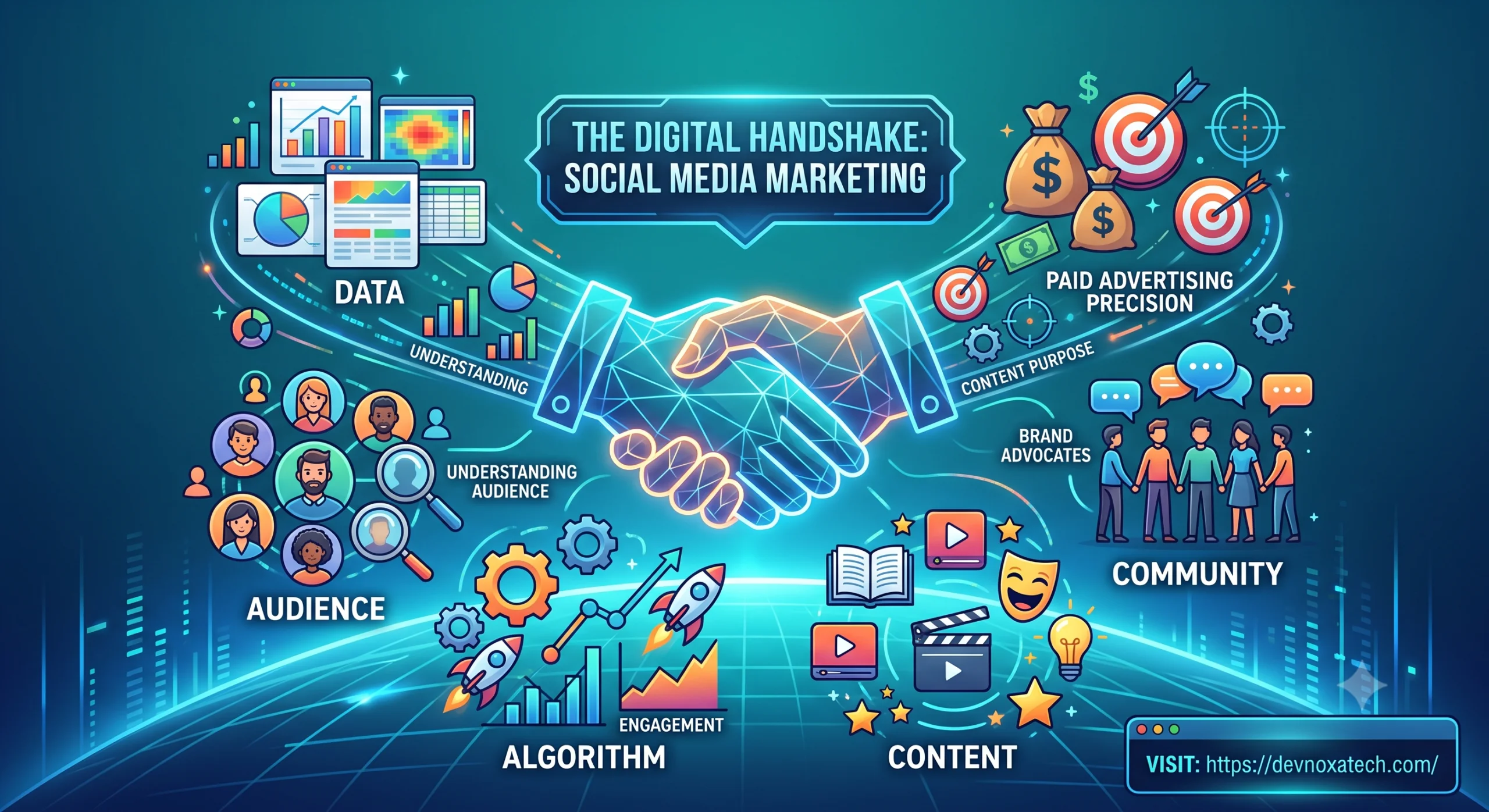

The way we connect, share, and buy things has fundamentally changed over the last decade. Traditional advertising used to be a one-way megaphone—a brand shouted its message through a billboard or a television commercial, and consumers simply listened. Today, the dynamic is entirely different. It is a two-way conversation, a digital handshake that happens millions of times a day across platforms like Instagram, TikTok, LinkedIn, and YouTube. This is the reality of social media marketing. It is no longer a luxury or an optional line item in a business budget. It is the very space where modern brand identities are built, nurtured, and converted into lasting relationships.
For any business looking to grow, understanding how to navigate this ecosystem is crucial. It is not just about posting pictures or jumping on the latest viral video trends. True social media marketing is a deliberate blend of psychology, data analysis, visual storytelling, and community management.
Understanding Your Digital Audience
Before typing a single caption or hitting upload, a marketer has to answer a vital question: who is on the other side of the screen? The classic mistake many businesses make is trying to speak to everyone. When you try to appeal to everyone, you end up resonating with no one.
Effective marketing begins with deep audience research. Brands must go beyond basic demographics like age and location. They need to understand psychographics—what keeps their audience up at night? What makes them laugh? Where do they hang out online?
The choice of platform depends entirely on these answers. A corporate software company will find its primary home on LinkedIn, where professionals talk shop and share industry insights. A boutique clothing brand, however, will thrive on the visual landscapes of Instagram and Pinterest, where aesthetics drive purchasing decisions. Knowing where your audience spends their digital time saves resources and ensures your message lands where it matters most.
Crafting Content with Purpose
Content is the currency of the internet, but not all currency holds the same value. To stand out in a crowded feed, businesses must create content that serves a distinct purpose. Generally, successful social media content falls into three main buckets: entertainment, education, and inspiration.
Educational content establishes authority. When a skincare brand explains the science behind a specific ingredient, or a financial consultant breaks down market trends in a simple video, they build trust. They prove they know what they are talking about. Entertainment, on the other hand, builds a human connection. Humor, behind-the-scenes glimpses of daily office life, and relatable industry memes show the human faces behind a corporate logo. Inspiration connects with the audience’s aspirations, showing them what is possible.
The golden rule of content creation is value first, sales second. If every single post on a business page is a direct sales pitch, followers will quickly tune out. By consistently delivering free, high-quality value, you earn the right to ask for the sale later on.
The Power of the Algorithm
Every social media platform is governed by a complex set of rules known as the algorithm. While these mathematical formulas change constantly, their core objective remains the same: keep users on the platform for as long as possible.
Algorithms favor engagement. When a post receives immediate likes, comments, shares, and saves, the platform interprets this as a sign of high-quality content and pushes it to a wider audience. Shares and saves are particularly valuable. A share means someone found the content interesting enough to show their personal network, while a save indicates they want to return to it later.
To work with the algorithm rather than against it, brands must encourage interaction. This can be as simple as asking a question at the end of a caption, running a poll in an Instagram Story, or creating a downloadable guide that people want to save for reference. Consistency also plays a massive role. Platforms reward creators and brands that show up regularly, as it ensures a steady stream of content for users to consume.
Community Over Follower Count
It is easy to get caught up in “vanity metrics”—the raw number of followers or likes on a page. However, a massive following means very little if those users are disengaged or indifferent. A smaller, fiercely loyal community of one thousand followers is infinitely more valuable to a business than one hundred thousand silent observers.
Building a community requires active participation. Social media is not a broadcast network; it is a community center. When users take the time to comment on a post or send a direct message, they expect a response. Brands that actively reply to comments, join in on conversations, and acknowledge their community build deep brand loyalty.
This interaction transforms casual buyers into brand advocates. Brand advocates are customers who love a product or service so much that they willingly promote it to their friends and family, providing the most powerful form of marketing available: organic word-of-mouth.
Paid Advertising and Targeting Precision
While organic reach is fantastic for community building, paid social media advertising is the engine that drives rapid, scalable growth. The beauty of paid social advertising lies in its unparalleled targeting capabilities.
Traditional media targets broad groups—anyone driving down a specific highway sees the same billboard. Social media advertising allows businesses to be incredibly precise. A local wedding photographer can target individuals who recently changed their relationship status to “engaged” within a thirty-mile radius. A pet supply company can target people who have shown a distinct interest in organic dog food and rescue organizations.
This level of precision ensures that marketing dollars are spent efficiently, showing ads only to the individuals most likely to convert into paying customers. Furthermore, robust tracking tools allow businesses to see exactly how much revenue a specific ad generated, making it easy to calculate the return on investment.
Analyzing Data for Smarter Choices
One of the greatest advantages of digital marketing over traditional methods is data. Every action taken on social media leaves a digital footprint, providing businesses with an absolute goldmine of analytics.
Marketers can see exactly when their audience is most active online, which types of media perform best, and where users drop off in the buying journey. Reviewing these metrics regularly prevents guesswork. If the data shows that short-form videos get three times more engagement than static images, the strategy can pivot accordingly. Social media marketing is not a static plan; it is a continuous process of testing, learning, and refining based on real-time feedback.
The Evolving Landscape
The digital landscape never stands still. New platforms emerge, user preferences shift, and technological advancements alter how we interact online. Success in social media marketing requires adaptability and a willingness to experiment. The core principles, however, remain unchanged. No matter how advanced the technology becomes, marketing will always be about understanding people, telling great stories, and building authentic connections.
To explore advanced digital strategies, tailored tech insights, and innovative solutions for your business growth, visit devnoxa tech