

The stock market futures landscape of technology is shifting at an unprecedented pace. For decades, software engineering relied primarily on human logic, manual coding, and iterative testing. Today, the industry stands at a fascinating crossroads where artificial intelligence intersects with traditional development. This evolution is not merely changing the tools that engineers use; it is fundamentally altering the role of the developer and reshaping how businesses approach digital problem-solving.
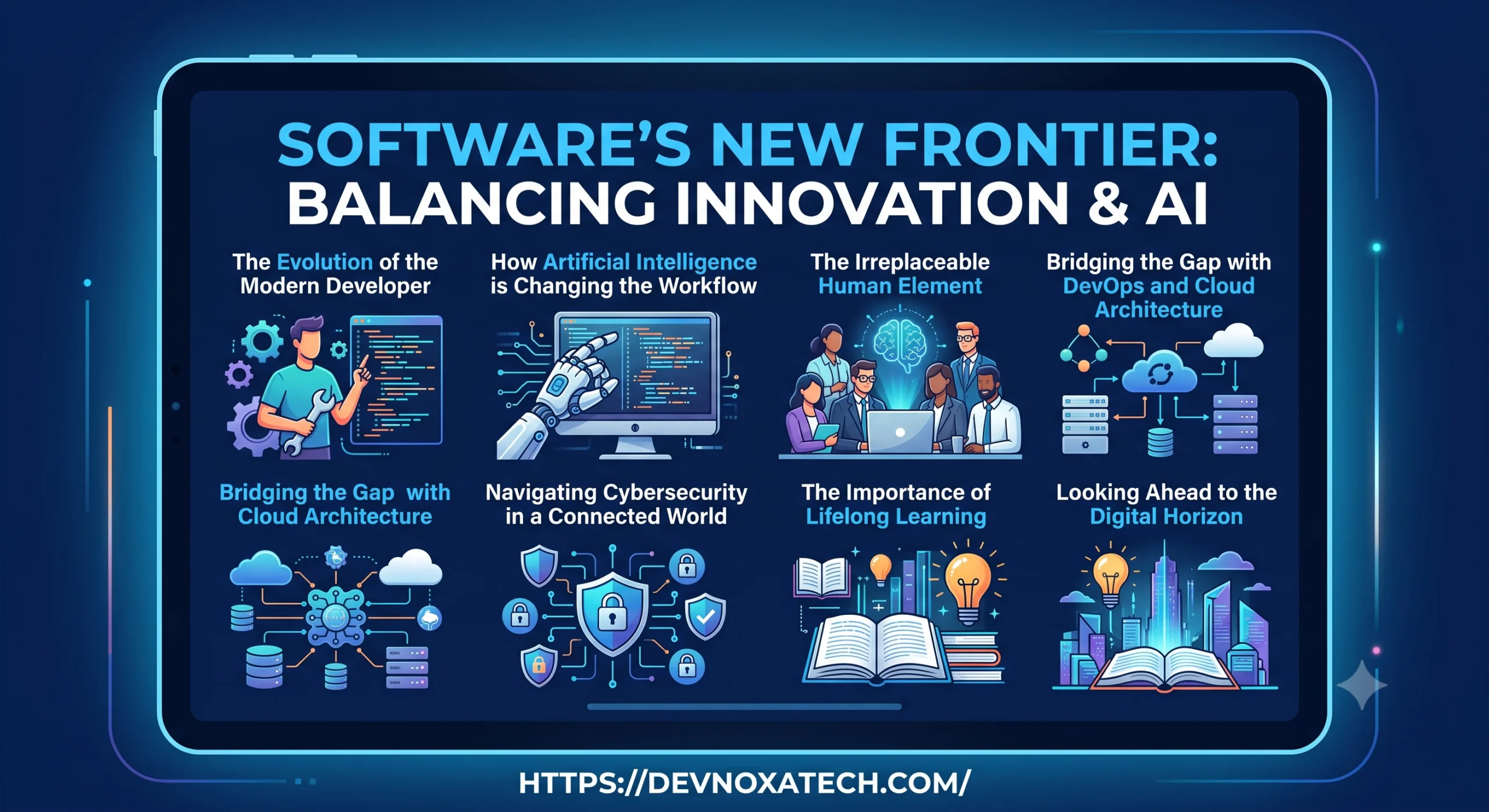
The Evolution of the Modern Developer
Historically, a software engineer’s primary value lay in their ability to write syntax. Mastery over language rules, memory management, and compiling processes dictated success. However, as high-level languages and frameworks emerged, the focus shifted from raw coding to system design and architecture.
In the current era, this shift has accelerated dramatically. With the rise of generative artificial intelligence and automated coding assistants, writing standard boilerplate code has become a matter of seconds. Today’s software engineers are transitioning from builders who manually lay every brick to architects who design the entire structure. The modern developer must possess a deep understanding of system integration, scalability, and security, ensuring that various automated components work harmoniously together.
How Artificial Intelligence is Changing the Workflow
Artificial intelligence is no longer a futuristic concept; it is a daily collaborator in modern development environments. Code generation tools can predict the next lines of code, suggest optimizations, and identify potential bugs before the software is ever compiled. This integration brings several profound changes to the traditional software development lifecycle.
First, speed to market has increased significantly. Routine tasks like writing unit tests, creating documentation, and setting up basic APIs can now be automated. This allows engineering teams to focus their creative energy on solving complex, proprietary problems that require genuine human ingenuity.
Second, debugging and code maintenance have become more proactive. AI systems can analyze vast codebases to find subtle vulnerabilities or inefficiencies that might take a human reviewer hours to spot. By catching these issues early, teams can reduce technical debt and build more resilient platforms.
The Irreplaceable Human Element
Despite the remarkable capabilities of automated tools, the human element remains the most crucial component of software engineering. AI is excellent at pattern recognition and synthesizing existing data, but it lacks the capacity for true innovation, empathy, and strategic thinking.
Understanding human needs is a uniquely human skill. Software is ultimately built for people. An AI cannot understand the emotional frustration of a user navigating a poorly designed interface, nor can it conduct nuanced client interviews to uncover the root cause of a business problem. Translating vague human desires into precise technical specifications requires empathy, active listening, and deep domain expertise.
Furthermore, ethical decision-making rests entirely on human shoulders. As software increasingly governs critical aspects of life, from healthcare to financial systems, engineers must make value judgments regarding data privacy, algorithmic bias, and accessibility. These are not mathematical problems with a single correct answer; they require moral reasoning and accountability.
Bridging the Gap with DevOps and Cloud Architecture
As software systems grow more complex, the methods used to deploy and maintain them must also evolve. The rise of DevOps and cloud-native architecture has transformed how organizations scale their digital infrastructure.
Continuous Integration and Continuous Deployment (CI/CD) pipelines ensure that software updates can be delivered to users seamlessly and frequently. This approach reduces the risks associated with large, infrequent software releases. By breaking updates down into smaller, manageable pieces, engineering teams can pivot quickly based on user feedback and changing market conditions.
At the same time, cloud computing has democratized access to powerful infrastructure. Startups can now leverage the same enterprise-grade computing power, storage, and machine learning capabilities as global corporations without investing in expensive physical hardware. Managing these virtual environments requires specialized knowledge in cloud architecture, cost optimization, and decentralized security models.
Navigating Cybersecurity in a Connected World
With greater connectivity and automation comes an increased risk of cyber threats. Security can no longer be an afterthought or a final checklist item before a product launches. Modern software engineering embraces the philosophy of security by design, integrating protective measures into every phase of the development lifecycle.
Developers must stay ahead of sophisticated attack vectors, including supply chain vulnerabilities, ransomware, and identity theft. Secure coding practices, continuous automated vulnerability scanning, and strict access controls are vital components of any robust development strategy. Protecting user data and maintaining digital trust is a continuous process that requires constant vigilance and adaptation.
The Importance of Lifelong Learning
The rapid pace of technological change means that knowledge has a shorter shelf life than ever before. A programming language or framework that is dominant today might become obsolete within a few years. Therefore, the most valuable trait a software engineer can possess is a commitment to continuous learning.
Successful developers are inherently curious individuals who enjoy dismantling systems to understand how they work. They embrace new paradigms, experiment with emerging tools, and are not afraid to unlearn old habits. Cultivating a growth mindset is essential for staying relevant in an industry that never stands still.
Looking Ahead to the Digital Horizon
The future of software engineering promises to be both challenging and exhilarating. We are moving toward a world where natural language processing will allow non-technical individuals to create basic applications, while professional engineers will manage highly sophisticated, interconnected ecosystems.
Emerging technologies like quantum computing, decentralized ledgers, and advanced spatial computing will open up entirely new frontiers for exploration. The developers who thrive in this environment will be those who combine technical adaptability with strong communication skills, strategic vision, and an unwavering focus on delivering value to human beings.
As organizations navigate this complex digital landscape, partnering with experienced technology experts can make all the difference in achieving sustainable growth and innovation.
To explore cutting-edge digital solutions and learn how expert development teams can transform your business vision into reality, visit devnoxa tech