
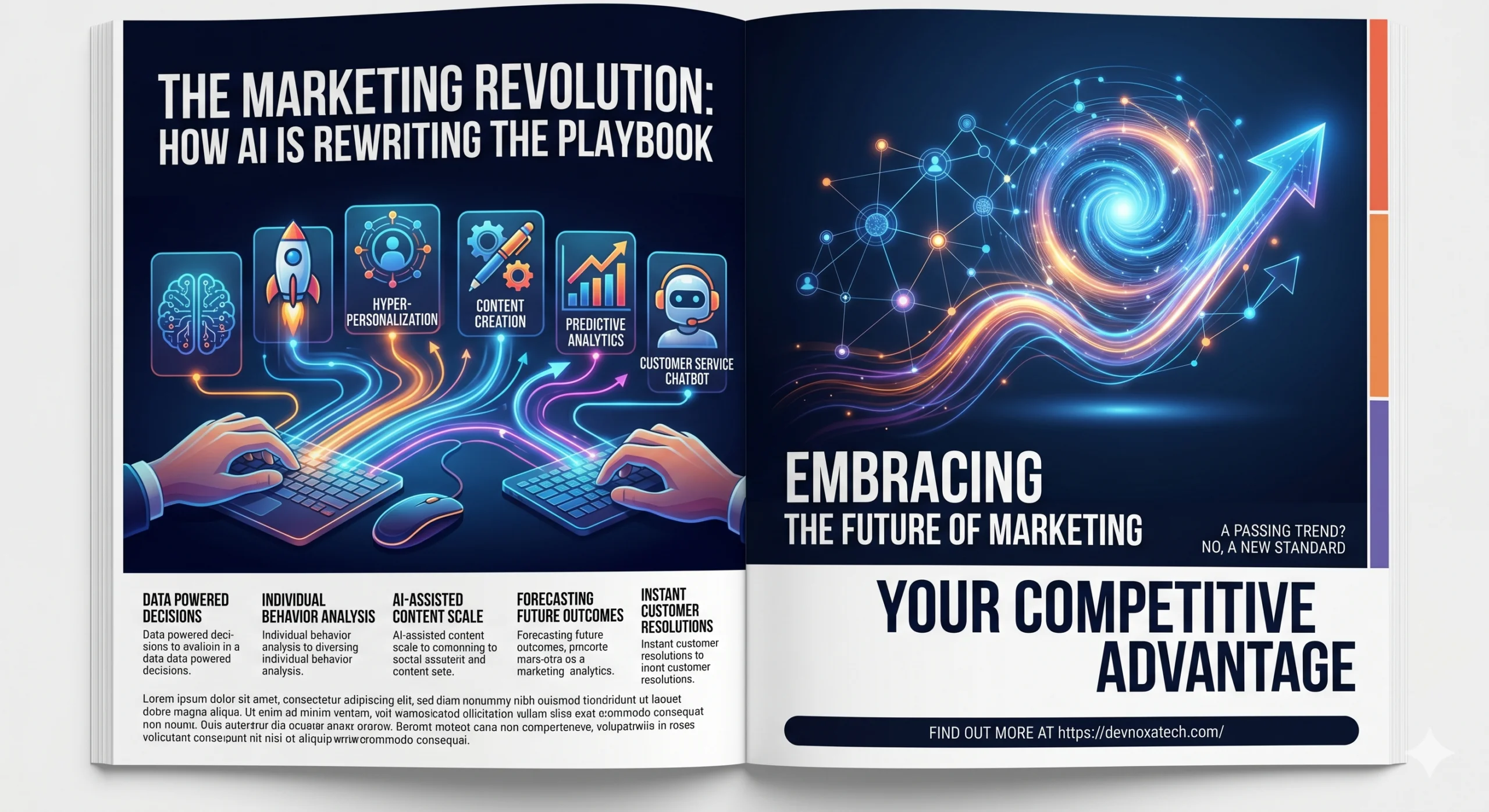

Not too long ago, ai for marketing was a game of educated guesses. Creative teams would huddle in boardrooms, pitch grand concepts based on demographic averages, launch massive campaigns, and pray the message hit the mark. It was expensive, slow, and often hit-or-miss.
Today, that old playbook is being completely rewritten. The driving force behind this shift is Artificial Intelligence (AI). Far from being a futuristic concept reserved for sci-fi movies, AI has quietly become the backbone of modern marketing strategies. It is transforming how brands understand their audiences, create content, and optimize their budgets.
For businesses looking to thrive in a crowded digital landscape, AI is no longer a luxury or a experimental tool. It is the ultimate competitive advantage.
Understanding the AI Shift in Marketing
To grasp why AI is causing such a massive stir, we have to look at the sheer volume of data consumers generate every single second. Every click, scroll, purchase, and skipped video tells a story. Human teams simply cannot parse through this mountain of information fast enough to make real-time decisions.
AI thrives exactly where humans hit a wall. By utilizing machine learning algorithms and natural language processing, AI tools can analyze millions of data points in the blink of an eye.
This does not mean robots are taking over the creative spirit of marketing. Instead, AI acts as a superpowered assistant. It handles the heavy lifting of data analysis, pattern recognition, and predictive forecasting, freeing up human marketers to focus on what they do best: strategy, storytelling, and building genuine human connections.
The Power of Hyper-Personalization
We have all experienced basic personalization, like receiving an email that starts with our first name. While that used to be impressive, today’s consumers expect much more. They want brands to understand their specific needs, preferences, and current context.
AI makes hyper-personalization possible on a massive scale. Instead of grouping customers into broad buckets like “millennials” or “suburban parents,” AI looks at individual behaviors.
For instance, streaming giants and e-commerce leaders use recommendation engines powered by AI to suggest products or content based on your exact viewing or shopping history. It predicts what you want before you even realize you want it. When a brand can deliver the exact right message, to the right person, at the perfect moment, engagement rates skyrocket and customer loyalty deepens.
Content Creation and the Generative AI Wave
The rise of generative AI has completely disrupted how content is produced. Writing blog posts, drafting social media captions, designing ad graphics, and brainstorming campaign ideas used to take days or weeks. Now, initial drafts can be generated in seconds.
Marketers are using AI to overcome the dreaded writer’s block and scale their content production efficiently. If a brand needs fifty variations of a digital ad headline to test across different audiences, AI can generate those options instantly.
However, the secret to success here is collaboration. The best marketing content is not purely AI-generated; it is AI-assisted. Human editors are essential to inject brand voice, check for factual accuracy, ensure emotional resonance, and maintain ethical standards. AI provides the clay, but humans do the sculpting.
Predictive Analytics and Smart Budgeting
Every marketer wants to know where to spend their next dollar to get the highest return on investment. Historically, this involved a lot of looking backward at past performance and trying to replicate it.
AI changes the game by introducing predictive analytics. By studying historical data alongside current market trends, AI can forecast future outcomes with remarkable accuracy. It can predict which leads are most likely to convert, which customers are at risk of churning, and which products will see a surge in demand.
Furthermore, AI-driven ad platforms automatically optimize ad spend in real time. If an algorithm notices that a specific ad creative is performing exceptionally well on one platform but failing on another, it will automatically shift the budget to maximize results. This eliminates wasted ad spend and ensures that marketing budgets are used as efficiently as possible.
Elevating Customer Service via Chatbots
Customer service and marketing are deeply intertwined. A poor post-purchase experience can completely ruin a brilliant marketing campaign. This is where AI-powered chatbots and virtual assistants step in to bridge the gap.
The chatbots of old were frustrating, relying on rigid, pre-written scripts that rarely answered specific questions. Modern AI chatbots utilize advanced conversational processing to understand context, tone, and intent.
They can handle routine inquiries, process returns, track orders, and even recommend complementary products twenty-four hours a day, seven days a week. By resolving customer issues instantly and seamlessly, these tools keep customers happy and keep the brand top-of-mind.
Embracing the Future of Marketing
The integration of AI into marketing is not a passing trend. As technology continues to evolve, the line between traditional software and AI will disappear entirely. We will see even deeper integrations, from voice search optimization to predictive product creation.
The businesses that succeed in this new era will be those that view AI not as a threat, but as an indispensable partner. By adopting these smart technologies, brands can move away from generic, intrusive advertising and move toward meaningful, data-driven experiences that truly resonate with their audience.
The future of marketing is intelligent, automated, and deeply personal.
To explore how advanced digital solutions can transform your business strategy, visit devnoxa tech