

The ai tools marketing world used to move fast, but today it moves at the speed of algorithms. Artificial intelligence is no longer a futuristic luxury or a simple tool for spinning out quick text drafts. It is the core engine driving modern business growth. From automating repetitive workflows to predicting exact consumer behaviors, smart software has turned data into a strategic superpower.
For businesses aiming to scale, understanding this landscape is essential. Navigating the sheer volume of available technology can feel overwhelming. By breaking down how these systems function across different areas, teams can build a leaner, smarter, and far more effective operation.
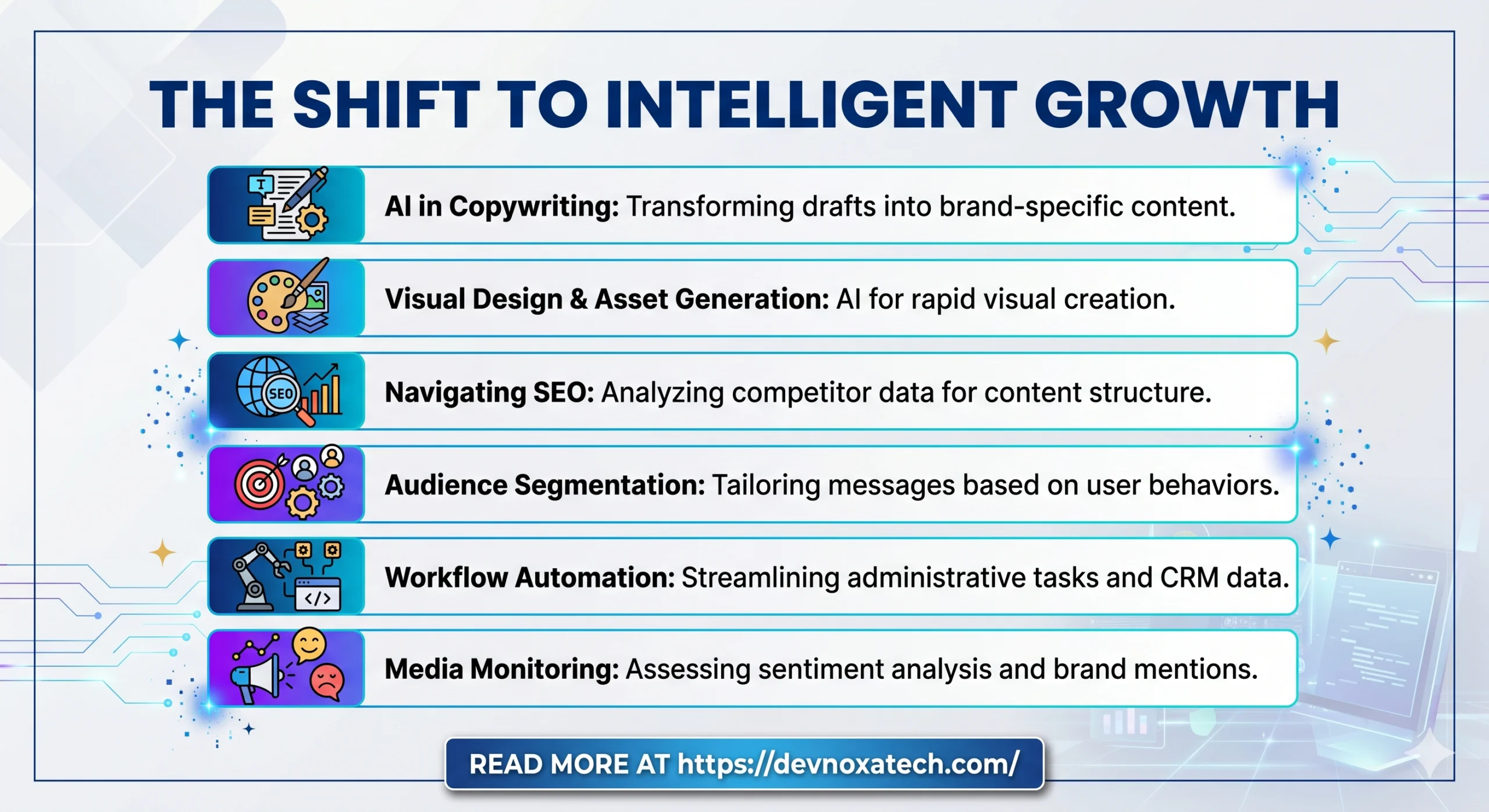
Copywriting and Content Creation
Content remains the bridge between a brand and its audience, but the process of building that bridge has completely changed. Specialized writing platforms have evolved far beyond basic grammar checkers. Systems like Jasper and Copy AI allow teams to train software on their specific brand voice, ensuring that every piece of text sounds authentic and consistent.
These platforms do not replace human creativity. Instead, they act as high speed drafting assistants. A marketer can enter a brief, and within seconds, the software generates variations for email campaigns, landing pages, and social media captions. This eliminates the friction of the blank page, allowing creators to focus their energy on refining ideas, checking facts, and injecting deep human emotion into the final edit.
Visual Design and Asset Generation
Engaging an audience requires striking visuals, but traditional design pipelines often create bottlenecks. Enter generative visual suites like Midjourney and Canva Magic Studio. Instead of spending days waiting for custom photography or scrolling endlessly through generic stock photo libraries, marketers can now describe exactly what they need in plain language.
Modern design software can generate photorealistic product environments, modify image backgrounds instantly, and format a single creative asset for dozens of different social media platforms at once. For video marketing, platforms like Pictory and Kling allow teams to convert text scripts into short promotional videos or social media reels. This democratization of design means small agile teams can produce high quality multimedia campaigns that match the output of massive agencies.
Search Engine Optimization and Visibility
The way people find information online is undergoing a massive transformation. Traditional keyword stuffing is dead. As conversational search engines and AI answer engines change user habits, search engine optimization must adapt. Tools like Semrush AI, Surfer SEO, and Adobe Brand Visibility help companies navigate this new era.
Rather than guessing what terms might rank, these systems analyze millions of search queries in real time. They evaluate competitor content, suggest ideal article structures, and flag specific topics that lack comprehensive coverage online. More importantly, they help brands optimize their visibility so that when a user asks a digital assistant for a product recommendation, that brand is the one the assistant surfaces.
Hyper Personalization and Audience Segmentation
Broad targeting is an expensive relic of the past. Today, successful marketing relies on showing the right message to the exact right person at the ideal moment. Managing this level of precision manually is impossible, which is where advanced automation systems excel.
Customer relationship management platforms like HubSpot utilize machine learning to automatically track user behaviors, from website clicks to past purchasing patterns. The software then groups individuals into highly specific segments based on their likelihood to convert. Instead of sending a generic blast email to a whole subscriber list, a company can deliver dynamically tailored messages that shift based on a user’s recent interactions, ensuring maximum relevance and dramatically higher conversion rates.
Workflow Automation and Integration
A collection of brilliant tools is useless if they operate in isolated silos. The true magic happens when a marketing stack functions as a unified ecosystem. Integration engines like Zapier and Gumloop serve as the connective tissue between disparate applications.
These platforms allow marketers to build custom automated workflows without writing a single line of code. For example, when a prospective client fills out a form on a website, the automation tool can instantly log their details in a database, alert the sales team via chat, draft a personalized welcome email, and add the lead to a specific tracking dashboard. By offloading these repetitive administrative tasks to software, human teams reclaim hours of their day to focus on high level strategy and relationship building.
Media Monitoring and Reputation Management
In a hyper connected digital landscape, brand reputation can shift in minutes. Keeping track of what people say across forums, blogs, news sites, and social networks requires constant vigilance. Reputation management tools like Brand24 solve this by listening to the internet around the clock.
These platforms do more than just flag mentions of a company name. They use sentiment analysis to evaluate the emotional tone behind the words, categorizing comments as positive, neutral, or negative. This real time feedback loop gives businesses the power to step in and resolve customer service issues before they escalate, while also identifying happy brand advocates who can be amplified.
The Strategy for Modern Teams
Adopting artificial intelligence is not about replacing the human element of marketing. It is about amplifying it. Software handles the heavy lifting, the data crunching, the pattern recognition, and the rapid prototyping. This leaves humans free to do what they do best: build relationships, tell compelling stories, and establish genuine emotional connections with their audience.
The future belongs to organizations that know how to combine human intuition with algorithmic speed. Building this type of intelligent infrastructure requires the right partners and a forward thinking approach to digital development. To learn how to integrate advanced digital systems into your business strategy, visit devnoxa tech