
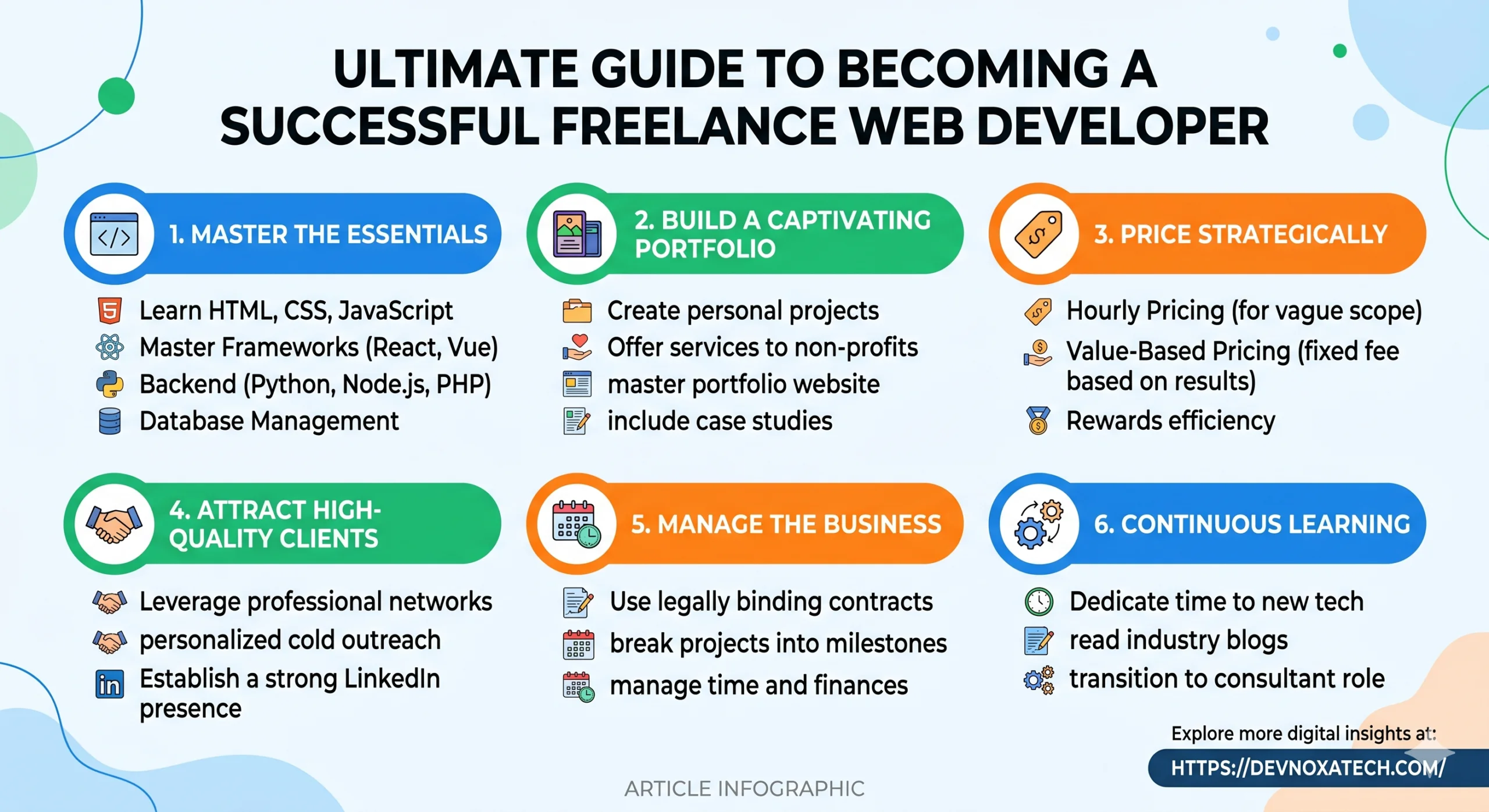

The freelance web developer digital landscape is expanding at an unprecedented rate. Every business, from the local corner bookstore to massive global conglomerates, needs a strong online presence to survive and thrive. This soaring demand has created a golden era for independent tech professionals. Choosing to build a career as a self-employed programmer offers an unmatched level of personal and professional freedom. You get to be your own boss, choose your own hours, and work from anywhere in the world.
However, transitioning into this field or scaling an existing independent operation involves much more than just writing clean code. It requires a unique blend of technical expertise, business acumen, marketing skill, and mental resilience. This comprehensive guide breaks down the essential steps to building a thriving, sustainable career in independent web production.
Mastering the Essential Technical Foundations
Before you can confidently market your services to clients, you must possess a solid, reliable technical foundation. The web development universe is vast, so it helps to categorize your learning path into clear specialties. You can focus on front-end creation, back-end engineering, or become a full-stack generalist.
Front-end production deals with everything the user sees and interacts with directly. To excel here, you must completely master HTML5, CSS3, and JavaScript. Beyond these core languages, modern client projects frequently demand familiarity with powerful frameworks and libraries like React, Vue.js, or Angular. Additionally, understanding responsive design principles is entirely non-negotiable. Your creations must look flawless and function seamlessly on smartphones, tablets, laptops, and massive desktop monitors alike.
Back-end engineering focuses on the server-side logic, databases, and application programming interfaces that power modern websites from behind the scenes. Key languages to learn include Python, Node.js, PHP, and Ruby. You will also need to understand how to manage database management systems like MySQL, PostgreSQL, or MongoDB.
If you prefer a comprehensive approach, specializing in Content Management Systems like WordPress, Shopify, or Webflow is highly lucrative. A massive percentage of small to medium businesses prefer these platforms because they allow for easier content updates later on.
Building a Captivating Portfolio
Your portfolio is your single most important marketing asset. Clients rarely care about impressive certificates or formal degrees. They care about what you can actually build. When you are just starting out and lack official client reviews, you must create your own opportunities to show off your skills.
Begin by building high-quality personal projects. Develop an intricate e-commerce mockup, a functional weather application, or a custom content management system. You can also offer your services to local non-profit organizations or friends who need a digital upgrade. This allows you to gain real-world experience while gathering valuable testimonials.
Your portfolio website itself must be a masterpiece. It should load incredibly fast, feature an intuitive user interface, and clearly explain how your skills solve specific business problems. Make sure to include detailed case studies for each project. Explain the initial challenge the client faced, the technical solution you engineered, and the measurable results achieved.
Pricing Your Services Strategically
Determining how much to charge is one of the most daunting challenges for independent developers. Undercharging leads to burnout and financial stress, while overcharging can scare away great opportunities when you lack experience. There are two primary pricing models to consider.
Hourly pricing is straightforward and excellent for projects where the final scope is vague or constantly shifting. You track the exact hours worked and bill the client accordingly. The downside is that as you become faster and more efficient, you technically make less money for the same project unless you constantly raise your hourly rate.
Value-based or fixed-project pricing is often much more lucrative. Instead of billing for time, you charge a flat fee based on the total value and complexity of the final deliverable. For example, if a custom web application will help a business generate tens of thousands of dollars in new revenue, charging a premium flat fee is completely justified. This model rewards your efficiency and expertise rather than the number of hours you sit at your desk.
Finding and Attracting High-Quality Clients
Once your portfolio is ready and your pricing is set, you need to find people willing to pay for your expertise. Relying solely on popular freelance bidding platforms can quickly turn into a race to the bottom, where developers compete by offering the lowest possible price. To build a sustainable business, you must diversify your client acquisition strategies.
Start by leveraging your existing personal and professional network. Inform former colleagues, friends, and family members that you are accepting new web development projects. You would be amazed by how many high-paying contracts originate from a simple casual referral.
Cold outreach is another highly effective tactic when executed professionally. Instead of sending generic, spammy messages to hundreds of businesses, carefully select a handful of companies with outdated websites. Send them a polite, highly personalized message pointing out specific performance flaws on their current site and explain exactly how a redesign will boost their user engagement and sales.
Finally, establish a strong presence on professional social networks like LinkedIn. Share valuable content, discuss recent web development trends, and showcase your ongoing projects. By consistently demonstrating your expertise publicly, clients will naturally begin reaching out to you.
Managing the Business Side Efficiently
Being a successful independent developer means you are a business owner. This requires handling administrative tasks that have nothing to do with writing code. You must learn to manage your time, finances, and client communications with extreme discipline.
Always use clear, legally binding contracts for every single project. A robust contract protects both you and the client by clearly outlining the project scope, payment schedules, deadlines, and intellectual property rights. Never begin typing a single line of code until a contract is signed and an initial deposit is securely in your bank account.
Project management tools like Trello, Asana, or Notion are fantastic for keeping your daily tasks organized. Break large, overwhelming development projects down into smaller, manageable milestones. This keeps you on track and allows you to provide clear, transparent progress updates to your clients, which builds immense trust.
Continuous Learning and Future Growth
The tech world evolves at a breathtaking pace. Tools, frameworks, and programming practices that are dominant today might become completely obsolete in a few short years. To maintain a competitive edge and keep your rates high, you must commit to lifelong learning.
Dedicate a small portion of your week to exploring emerging technologies, reading industry blogs, and experimenting with new coding techniques. As you gain more experience, look for opportunities to transition from a general developer into a specialized technical consultant. Businesses are always willing to pay a massive premium for specialists who deeply understand their specific industry niche.
Building a vibrant, independent web development career takes time, dedication, and patience. By consistently polishing your technical craft, marketing your services intelligently, and treating your clients with absolute professionalism, you can easily build a highly profitable and deeply fulfilling career.
To explore more insights into cutting edge digital solutions, web design, and tech innovations, visit devnoxa tech