
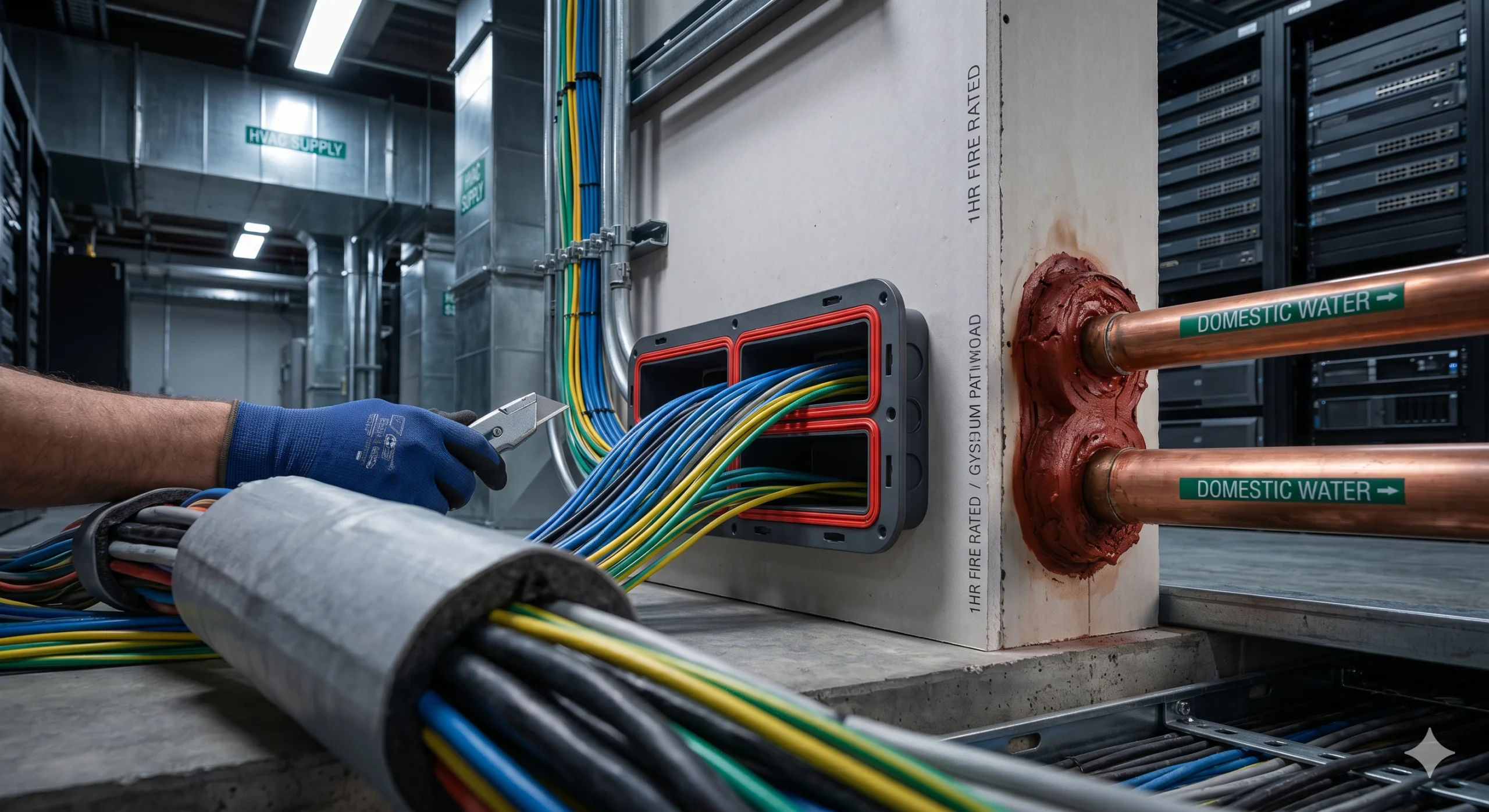

When we walk into a modern skyscraper, a state of the art hospital, or a sprawling data center, we rarely think about what is happening inside the walls. We see polished floors, clean design, and seamless technology. Yet, hidden from view is a complex network of cables, pipes, and ducts that keep the building alive. These utilities must pass through concrete floors and drywall partitions, creating thousands of openings. In a fire, these holes act like chimneys, allowing toxic smoke and flames to spread rapidly.
This is where passive fire protection becomes critical. Rather than fighting a fire after it starts, passive systems contain it within a specific zone. Specified Technologies Inc, widely known as STI Firestop, has spent over three decades mastering this exact science. By focusing entirely on firestopping, the company has transformed how buildings are designed and protected, turning vulnerable utility penetrations into robust barriers against disaster.
Anatomy of Firestopping
To understand the impact of Specified Technologies Inc, it helps to understand what happens when a fire breaks out. Active fire protection like sprinklers and alarms are designed to extinguish flames or alert occupants. Passive fire protection, however, is structural. It divides a building into manageable compartments to give people time to escape and to allow firefighters to do their work safely.
Every time a contractor runs an electrical conduit, a plumbing pipe, or a data cable through a fire rated wall, they compromise that barrier. If a fire starts in one room, it will naturally seek out these breaches. Firestopping is the process of sealing these openings with specialized materials that can withstand intense heat for hours.
The chemistry behind these materials is fascinating. Many of Specified Technologies Inc products rely on intumescent technology. When subjected to temperatures exceeding 300 degrees Fahrenheit, these materials undergo a chemical reaction that causes them to expand significantly, sometimes up to 25 times their original volume. This expansion forms a dense, insulating char layer that plugs any gaps left behind as plastic pipes melt away or cables burn.
Rethinking Cable Management
One of the biggest historic headaches in building maintenance has been data and communication cabling. In environments like hospitals and data centers, tech needs change constantly. Technicians are regularly pulling out old wires and feeding through new ones.
Traditionally, these cable sleeves were packed with firestop putty or caulking. Every time a change was made, a technician had to dig out the old putty, run the new wire, and carefully pack the sealant back in. It was a tedious process, and human error was incredibly common. If a technician forgot to replace the putty, the fire barrier was left completely useless.
Specified Technologies Inc solved this chronic industry issue by inventing the EZ Path Fire Rated Pathway. This device is a mechanical sleeve that features a built in, self sealing firestop system. Inside the sleek metal pathway are intumescent foam pads that expand rapidly in a fire. During daily operations, the pads remain split, allowing technicians to pull cables through easily without needing to touch, remove, or replace any firestop material. It completely removes human error from the equation, ensuring that the wall remains fully compliant and fire rated 100 percent of the time, whether it holds one cable or is filled to capacity.
High Risk Environments
Different buildings present wildly different safety challenges. In healthcare facilities, the stakes are exceptionally high. Hospitals house patients who are bedridden, sedated, or hooked up to life support systems. Total evacuation during an emergency is incredibly difficult and dangerous. Healthcare architecture relies on a defend in place strategy, meaning patients are protected right where they are while the fire is contained.
Specified Technologies Inc has tailored an entire suite of solutions for the healthcare sector. Beyond stopping fire, these systems must prevent the migration of toxic smoke and gases, which cause the vast majority of fire related casualties. Products like their SpecSeal sealants and smoke acoustical pathways are designed to maintain airtight seals around high density cable bundles, keeping corridors clear of dangerous fumes.
Data centers present a completely different hurdle. These facilities run on immense amounts of electrical power and produce substantial heat, relying on sophisticated cooling systems. Airflow management is vital to keep servers running efficiently. In these zones, firestop devices must prevent air leakage during normal operations to maintain cooling efficiency, while remaining ready to seal off entirely if an automated gas suppression system fails or a fire takes hold.
Engineering Behind the Standards
A firestop product is only as good as the system it is tested in. You cannot simply slap fire resistant caulk onto a pipe and assume it will work. The performance depends heavily on the wall construction, the pipe material, the size of the hole, and the orientation of the penetration.
This is why Specified Technologies Inc focuses heavily on rigorous testing and digital engineering tools. The company holds more than 1300 UL Certified systems. This means their products have been tested under real world conditions at Underwriters Laboratories, subjected to intense furnace temperatures that mimic an advancing structural fire, followed by high pressure water streams from fire hoses to test structural integrity.
To help architects and engineers navigate this mountain of technical data, the company developed digital solutions like the Submittal Builder and System Search tools. Instead of guessing which sealant works for a specific three inch copper pipe passing through an eight inch concrete floor, designers can plug in their exact parameters to instantly find a fully certified, code compliant blueprint. This digital infrastructure takes the guesswork out of life safety compliance during the early design phases of construction.
Future of Building Safety
As architecture evolves, fire protection must evolve alongside it. Modern construction is moving toward sustainable, modular, and prefabricated methods. Buildings are being put together faster, using innovative materials like mass timber and complex curtain wall facades.
Curtain walls, which are non structural exterior glass coverings common on modern skyscrapers, create a unique perimeter void between the edge of the floor slab and the outside wall. If left unsealed, this gap creates a vertical highway for fire to leap from floor to floor up the outside of a building. Specified Technologies Inc has pioneered advanced perimeter fire barrier systems specifically designed to handle the dynamic shifting, wind loads, and thermal movement of these modern glass towers while maintaining a flawless fire barrier.
At its core, the work done by Specified Technologies Inc reminds us that safety is a quiet, continuous effort. True innovation in this space is not about being flashy; it is about creating dependable, user friendly systems that work perfectly when everything else goes wrong. By blending material science with practical engineering, they ensure that our modern, interconnected world remains safe from the inside out.
For businesses looking to integrate advanced tech infrastructure and modern operational tools into their own workflows, expert development partners can make all the difference in bridging the gap between hardware and software. Learn more about custom technology implementations at devnoxa tech