
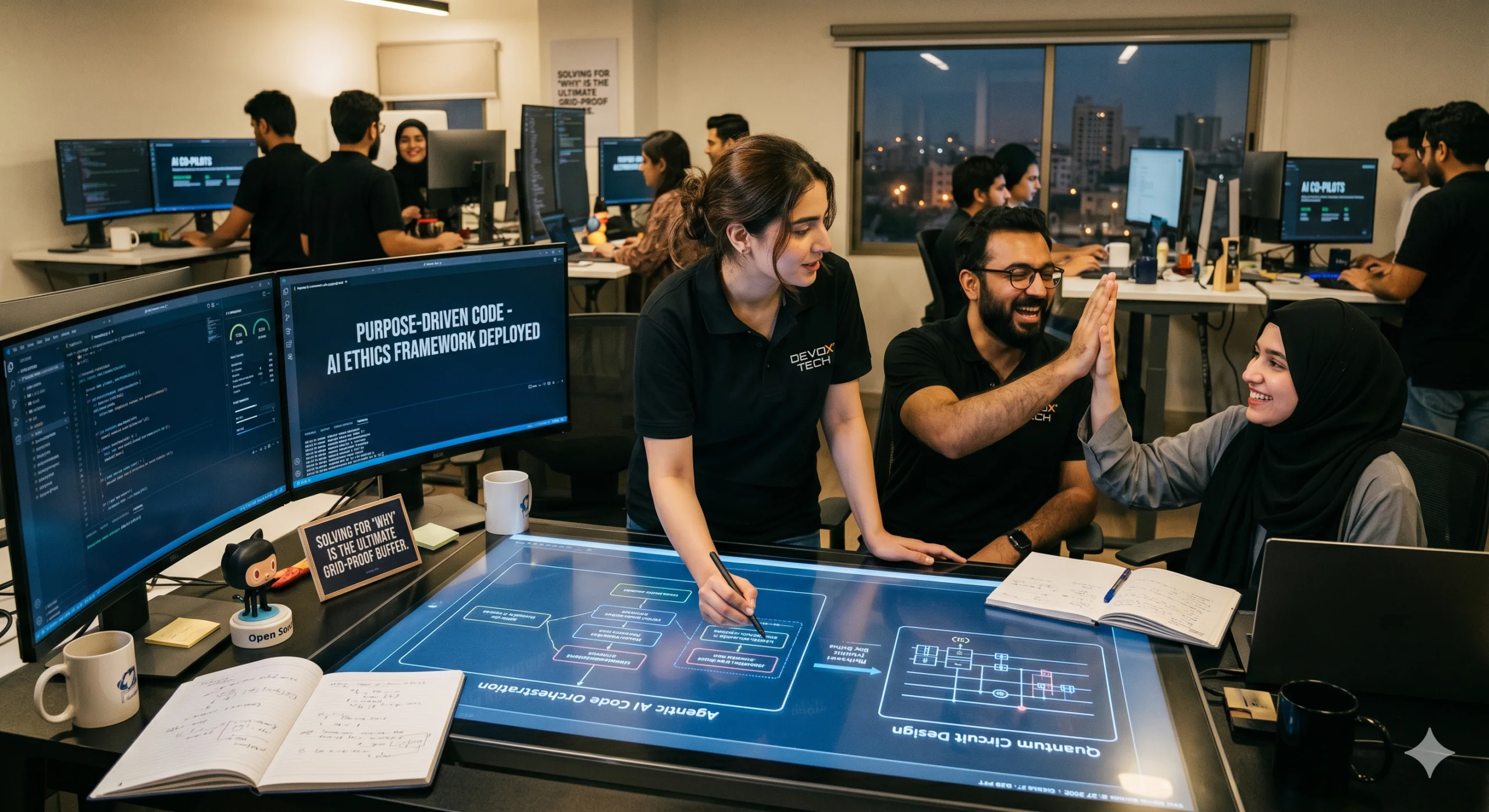

In the high velocity world of 2026, it is easy to look at the landscape of technology intech motivation and see only the machines. We see the sleek glass of the latest smartphone, the hum of massive data centers, and the seemingly magical capabilities of artificial intelligence. However, if you peel back the layers of any great digital achievement, you will not find a silicon heart. You will find a human one. Behind every revolutionary line of code and every groundbreaking hardware design is a person or a team driven by an intense sense of purpose. This is the essence of tech motivation. It is the invisible force that transforms a difficult problem into a world changing solution.
The Myth of the Solitary Genius
For a long time the popular image of tech motivation was the solitary genius working in a dark garage fueled by caffeine and an obsessive need to build something new. While the history of technology certainly has its share of lone wolves the reality of the modern era is much more collaborative. In today’s complex environment motivation is rarely about individual glory. Instead it is about the collective drive to solve puzzles that are far too large for any one person to tackle alone.
When engineers and designers show up to work in 2026 they are often motivated by the chance to contribute to something bigger than themselves. This might be a global cybersecurity initiative an effort to optimize renewable energy grids or the development of medical technologies that save lives. The knowledge that your specific contribution is a vital piece of a much larger puzzle provides a level of professional fulfillment that a high salary alone simply cannot match.
Solving for Why The Power of Purpose
The most resilient form of motivation in the tech sector is rooted in purpose. In the early days of the digital revolution much of the excitement was driven by the sheer novelty of what was possible. We built things because we could. Today as technology has matured the “why” has become much more important than the “how.”
The most motivated professionals in the industry are those who have a direct line of sight to the positive impact of their work. A developer working on an educational app for remote villages is motivated by the prospect of global literacy. A data scientist analyzing climate patterns is motivated by the survival of the planet. When the work feels meaningful the inevitable technical hurdles and long nights become manageable. Purpose acts as a psychological buffer against burnout. It provides the grit necessary to push through the “trough of disillusionment” that almost every complex project eventually encounters.
The Joy of the Problem Solving Flow
Beyond the grand sense of purpose there is a much more immediate and tactile form of motivation: the pure love of the craft. There is a specific mental state known as “flow” where a person becomes so deeply immersed in a task that time seems to disappear. For a programmer this often happens when they are deep in the logic of a complex algorithm. For a hardware engineer it might happen during the meticulous process of circuit design.
This intrinsic motivation is driven by the challenge itself. Technology is one of the few fields where the rules of the game are constantly changing. Just as you master one language or framework three new ones appear on the horizon. For the right kind of mind this is not exhausting; it is exhilarating. The constant need to learn and adapt provides a never ending stream of fresh mental puzzles. The satisfaction of finally finding the elegant solution to a “bug” that has been haunting a system for weeks is a high that few other professions can offer.
Autonomy and the Freedom to Create
High performers in the tech world are notoriously protective of their autonomy. One of the greatest motivators for a technical mind is the freedom to choose how a problem is solved. When organizations move away from rigid top down management and toward a culture of trust motivation levels skyrocket.
In 2026 the best tech companies are those that provide their teams with clear objectives but stay out of the details of execution. This autonomy allows for experimentation and failure. In a creative field like technology failure is not a setback; it is an essential part of the learning process. When a team feels they have the “psychological safety” to try a radical new approach without fear of punishment they are far more likely to innovate. The ownership that comes with autonomy is a massive driver of pride and dedication.
The New Frontier AI as a Motivational Partner
As we navigate the mid 2020s a new factor has entered the motivational landscape: artificial intelligence. There was an initial fear that AI would replace the human spark making technical roles feel redundant. However the opposite has proven to be true. AI is acting as a massive force multiplier for human motivation.
By taking over the “toil” the repetitive and mind numbing parts of coding and data management AI is freeing up human minds to focus on high level strategy and creative architecture. A developer in 2026 is no longer just a “writer of code.” They are an orchestrator of intelligent systems. This elevation of the role has brought a new wave of excitement to the industry. The ability to build massive complex systems in a fraction of the time it used to take is an incredible motivator. It allows for a faster “feedback loop” where an idea can go from a whiteboard to a functional prototype in a matter of days.
Community and the Open Source Spirit
You cannot discuss tech motivation without mentioning the incredible power of community. The open source movement is perhaps the greatest example of human motivation in history. Thousands of developers around the world donate their time and expertise to build tools that are free for everyone to use.
Why do they do it? They do it for the peer recognition for the chance to learn from the best in the business and for the sheer pride of contributing to the “digital commons.” This sense of belonging to a global tribe of builders is a profound motivator. It reminds every individual that they are not alone in their struggles. Whether it is through a GitHub repository a specialized Discord server or a local meetup the tech community provides the social support and inspiration needed to keep going when things get tough.
Conclusion The Human Element in a Digital Age
As technology continues to advance at an exponential rate the human element will only become more critical. We can build faster chips and more powerful models but we cannot build the desire to innovate. That must come from within.
Tech motivation is a delicate balance of purpose craft autonomy and community. It is the spark that turns a cold computer terminal into a canvas for creation. In 2026 as we stand on the brink of new frontiers in quantum computing biotechnology and space exploration that human fire is more important than ever. It is the ultimate engine of progress and it is what will define the world we build for the generations to come.devnoxa tech