
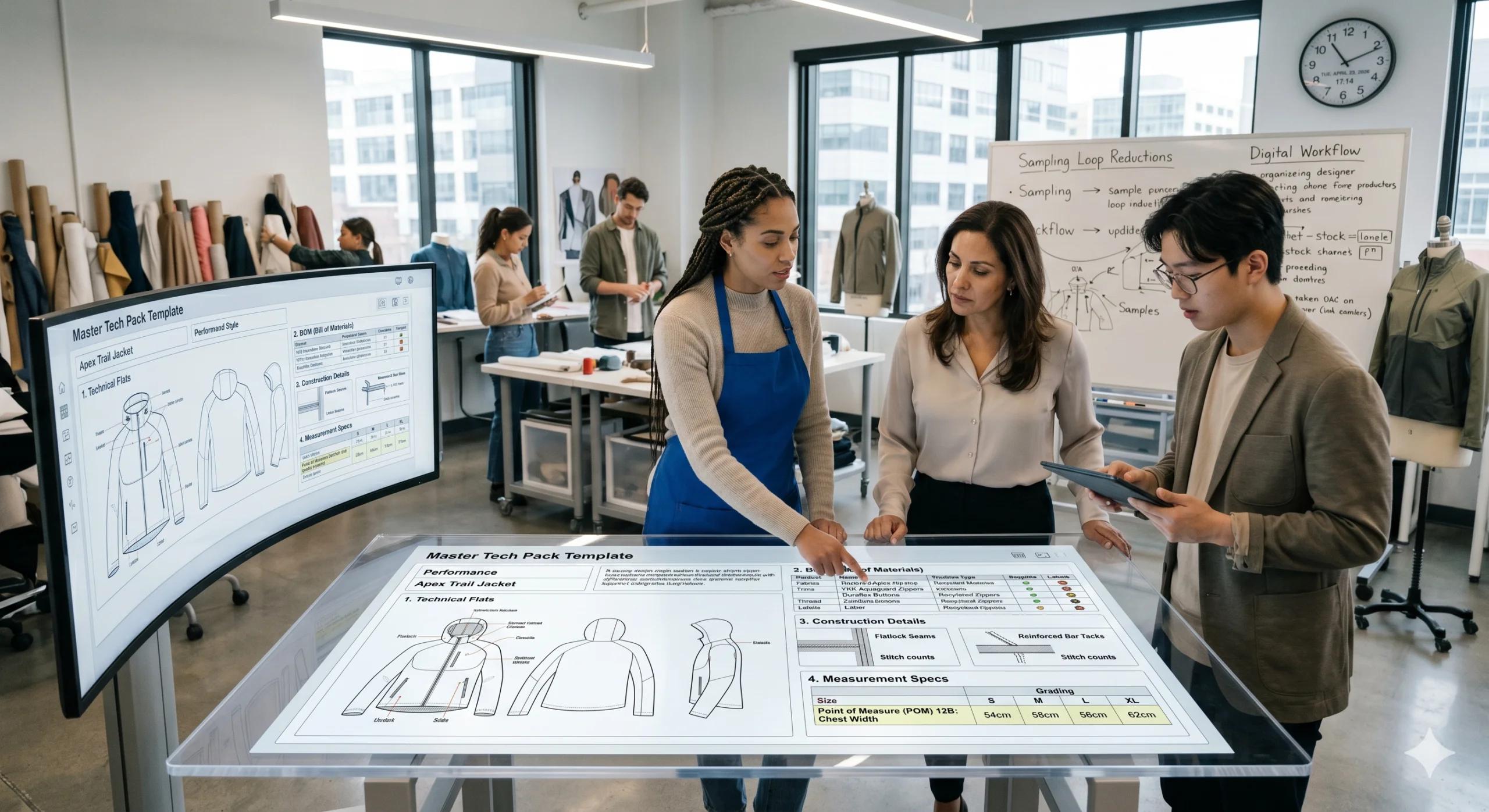

In the fast paced world of fashion and apparel manufacturing, an idea is only as good as its execution. You might have a vision for a groundbreaking garment a jacket with the perfect drape or a pair of performance leggings that move like a second skin but translating that creative spark into a physical product requires more than just a sketch. It requires a master document known as a tech pack. For designers and brands operating in 2026, a tech pack template is not just a helpful tool; it is the essential blueprint that bridges the gap between a conceptual dream and a factory ready reality.
What Exactly is a Tech Pack Template?v
At its simplest, a tech pack (short for technical package) is a comprehensive instruction manual for your garment. If you think of a fashion designer as an architect, the tech pack is the set of detailed blueprints used by the construction crew. It contains every bit of technical information a manufacturer needs to produce the item exactly as intended.
A tech pack template is the standardized framework used to build this document. Instead of starting from scratch for every new design, a template ensures that no critical detail is forgotten. It organizes complex data from stitch types to button diameters into a clear, professional format that factories across the globe can understand, regardless of language barriers.
The Anatomy of a Professional Tech Pack
To understand why a template is so vital, one must look at the sheer volume of information a professional tech pack holds. A high quality template typically includes several key sections:
- Technical Flat Sketches: Unlike artistic illustrations, these are precise, two dimensional line drawings. They show the garment from the front, back, and sides, highlighting structural elements like seams, pockets, and closures without the distraction of a “fashion pose.”
- Bill of Materials (BOM): This is the ultimate shopping list. It identifies every single physical component required, including the primary fabric, linings, zippers, buttons, labels, and even the specific type of thread.
- Measurement Specifications and Sizing: This section defines the “fit.” It lists exact measurements for every part of the garment (Points of Measure) and includes a grading scale to show how those measurements change across different sizes.
- Construction Details: This is where the “how to” lives. It specifies the types of seams to be used, the number of stitches per inch, and any specialized reinforcement techniques.
- Labeling and Packaging: A product isn’t finished until it’s ready for the shelf. This section dictates where the care labels go, how the hang tags are attached, and even how the garment should be folded and bagged for shipping.
Why a Standardized Template is a Game Changer
The primary reason designers use a tech pack template is clarity. In manufacturing, ambiguity is the enemy of profit. If a factory has to guess where a pocket should be placed or what shade of navy blue you want, they will likely guess wrong. This leads to costly samples, wasted fabric, and months of delays.
By using a structured template, you create a “single source of truth.” When the factory has a question, they don’t have to scroll through dozens of fragmented emails; they simply check the tech pack. This leads to fewer “bad” samples and a much faster path to the final production run. In 2026, where consumer trends move at lightning speed, the ability to get a product to market even two weeks faster can be the difference between a bestseller and a clearance rack item.
The Shift Toward Digital and Collaborative Templates
While tech packs were traditionally managed in static spreadsheets like Excel or Illustrator files, the industry has shifted toward cloud based, interactive templates. Modern platforms allow designers and manufacturers to collaborate on the same document in real time.
If a designer realizes a certain zipper is out of stock, they can update the Bill of Materials in the digital template, and the factory sees that change instantly. This eliminates the “version control” nightmare where a factory inadvertently produces a thousand garments based on an outdated PDF. These digital templates often integrate with 3D design software, allowing manufacturers to see a virtual simulation of the garment before a single piece of fabric is cut.
Accuracy as an Investment
Some new designers are tempted to skip the tech pack stage or send a “light” version to save time. This is almost always a mistake. An incomplete tech pack is an invitation for errors. If you don’t specify the “tolerance” (how much a measurement can vary), you might receive a shipment where half the shirts are an inch too short.
Investing time in a detailed tech pack template is essentially buying insurance for your production. It provides a legal and professional standard. If the finished goods don’t match the specifications laid out in the tech pack, you have the documentation needed to hold the manufacturer accountable. It transforms the relationship from a series of hopeful requests into a professional contract based on data.
Sustainability Through Precision
An overlooked benefit of the tech pack template is its contribution to sustainability. One of the biggest sources of waste in the fashion industry is the “sampling loop” the process of making and shipping multiple prototypes back and forth across the ocean until the fit is right.
A precise tech pack significantly reduces the number of samples needed. When the instructions are clear from day one, the “first fit” sample is much more likely to be accurate. This saves enormous amounts of fabric, energy, and transportation fuel. In an era where consumers are demanding more ethical and eco friendly practices, being “right the first time” is a powerful sustainability story.
Final Thoughts: Empowering the Creator
Ultimately, a tech pack template is an empowering tool. It takes the “magic” out of manufacturing and replaces it with engineering. It allows a solo designer in a home studio to speak the same language as a massive factory in Vietnam or Portugal.
By mastering the art of the tech pack, you move from being a dreamer to being a producer. You ensure that your brand stands for quality, consistency, and professionalism. Whether you are building a small boutique collection or a global empire, your tech pack is the foundation upon which your success is built. devnoxa tech