
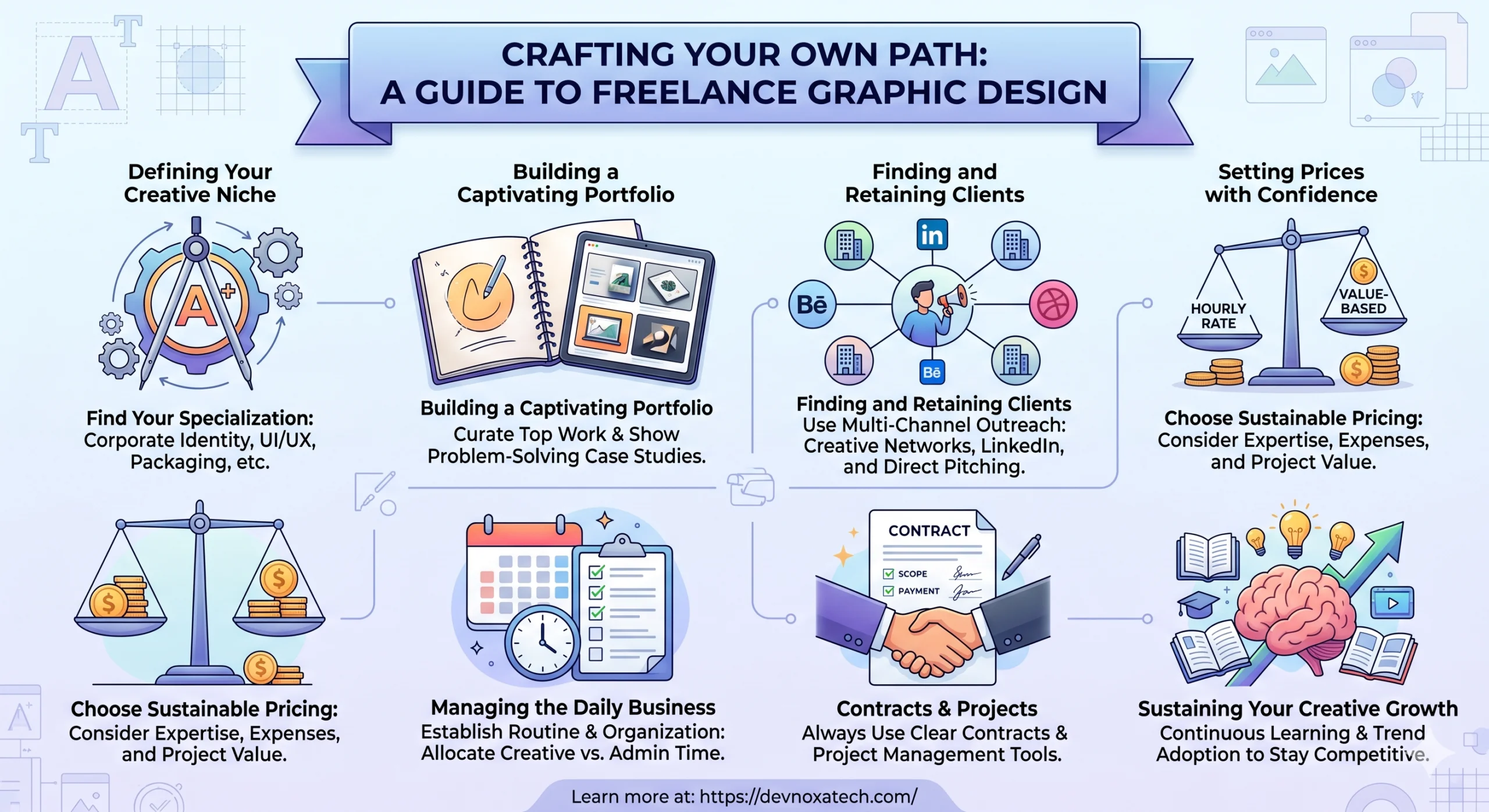

The creative landscape has experienced a massive shift over the last decade. Traditional nine-to-five office jobs are no longer the sole blueprint for a successful career. Today, visual artists are stepping away from corporate cubicles and embracing the freedom of independent work. Choosing this path means transforming your creative skills into a self-sustaining business. It offers unparalleled flexibility, allowing individuals to select their own clients, set their own hours, and work from literally anywhere in the world. However, stepping into this independent arena requires much more than just a sharp eye for aesthetics and a mastery of design software. It demands entrepreneurial discipline, resilience, and a strategic approach to building a personal brand.
Navigating this industry successfully means balancing two distinct roles. On one hand, you are the artist responsible for producing high-quality visuals that tell a compelling story. On the other hand, you are a business owner managing marketing, client relations, invoicing, and project timelines. The transition from enthusiast to professional freelance graphic design can feel overwhelming at first, but breaking the journey down into manageable pillars makes sustainable growth entirely possible.
Defining Your Creative Niche
Many beginners make the mistake of trying to offer every service under the sun to everyone. While being a generalist might bring in a few random gigs early on, specialization is the true key to long-term profitability. When you focus on a specific niche, you position yourself as an expert rather than a general helper. This specialization allows you to command higher rates because clients are willing to pay a premium for targeted expertise.
Finding your niche involves evaluating your specific strengths and identifying where they intersect with market demand. You might choose to specialize in corporate brand identity, where you build comprehensive visual systems, logos, and style guides for businesses. Alternatively, you could focus on UI/UX design, creating seamless and intuitive digital interfaces for websites and mobile applications. Other lucrative avenues include packaging design for consumer goods, editorial layouts for digital publishers, or custom illustrations for apparel brands. By narrowing your focus, your marketing efforts become much more precise, and attracting the right audience becomes significantly easier.
Building a Captivating Portfolio
Your portfolio is the single most important tool in your professional arsenal. It serves as your visual handshake and provides concrete proof of your capabilities. Potential clients rarely care about an impressive resume or a formal degree; they want to see what you can actually create. Therefore, curation is essential. It is always better to showcase five outstanding, comprehensive projects than twenty mediocre, disjointed pieces.
When putting your portfolio together, aim to display not just the final product, but also your problem-solving process. Include brief case studies that explain the initial client challenge, your strategic thinking, and how your final design resolved the issue. This approach demonstrates to prospects that you do not just make things look pretty, but that you understand how design drives business results. If you are just starting out and lack commercial experience, do not let that hold you back. Create self-initiated projects, redesign existing brand concepts, or volunteer your skills for local non-profit organizations to build up a robust body of work.
Finding and Retaining Clients
Securing a steady stream of projects is often the biggest hurdle for independent creatives. To build a reliable pipeline, you need to implement a multi-channeled outreach strategy. Online freelance platforms can serve as a decent starting point to gain experience and understand client communication, but relying on them indefinitely can lead to a race to the bottom on pricing.
To scale your business, you must look beyond these platforms. Actively showcase your work on creative networks like Behance and Dribbble, and maintain a professional presence on LinkedIn. Direct outreach is another highly effective tactic. Identify businesses that align with your niche, analyze their current visual presence, and send them a polite, personalized pitch explaining how your services can elevate their brand. Once you land a client, prioritize exceptional communication and reliability. Delivering great work on time builds deep trust, turning one-time projects into recurring retainers and valuable word-of-mouth referrals.
Setting Prices with Confidence
Determining how much to charge for your creative labor is a frequent source of anxiety. Many independent designers undercharge out of fear of losing prospects, which quickly leads to burnout. Broadly speaking, there are two primary pricing models to consider: hourly rates and value-based project pricing.
An hourly rate is straightforward and ideal for projects with unpredictable or shifting scopes. However, it inherently penalizes you as you become faster and more efficient at your craft. Project-based or value-based pricing is generally more sustainable for experienced professionals. With this model, you estimate the total value the project brings to the client’s business and quote a flat fee. For instance, a logo for a local coffee shop involves a different level of commercial impact and scale than a complete visual rebranding for a regional tech company, even if the execution time is similar. Whichever model you choose, ensure your rates comfortably cover your living expenses, business overhead, software subscriptions, and taxes.
Managing the Daily Business
The true test of a successful independent creative career lies in managing the operational side of things. Without a boss managing your schedule, self-discipline becomes your lifeline. Establishing a structured daily routine helps maintain a healthy boundary between your professional tasks and personal life. Dedicate specific blocks of time solely to focused creative work, and set aside separate hours for administrative tasks like responding to emails, sending proposals, and tracking expenses.
Contracts are an absolute necessity for every single project, regardless of how small the job or how friendly the client seems. A clear, written agreement outlines the exact scope of work, the number of revisions included, payment milestones, and deadline expectations. Utilizing project management and invoicing tools keeps your business organized and ensures you project an image of absolute professionalism at every step.
Sustaining Your Creative Growth
The design world is in a constant state of evolution, driven by emerging technologies, shifting consumer behaviors, and cultural trends. Staying relevant requires a commitment to continuous learning. Make it a habit to regularly explore new software features, experiment with different visual styles, and study design history to keep your perspectives fresh.
Ultimately, thriving as an independent designer is about building a sustainable lifestyle around your passion. By combining sharp technical skills with strong business acumen, clear communication, and consistent organization, you can transition from a casual creator to a high-earning independent professional. The freedom to steer your own career path is incredibly rewarding, making the entrepreneurial effort entirely worthwhile. devnoxa tech