
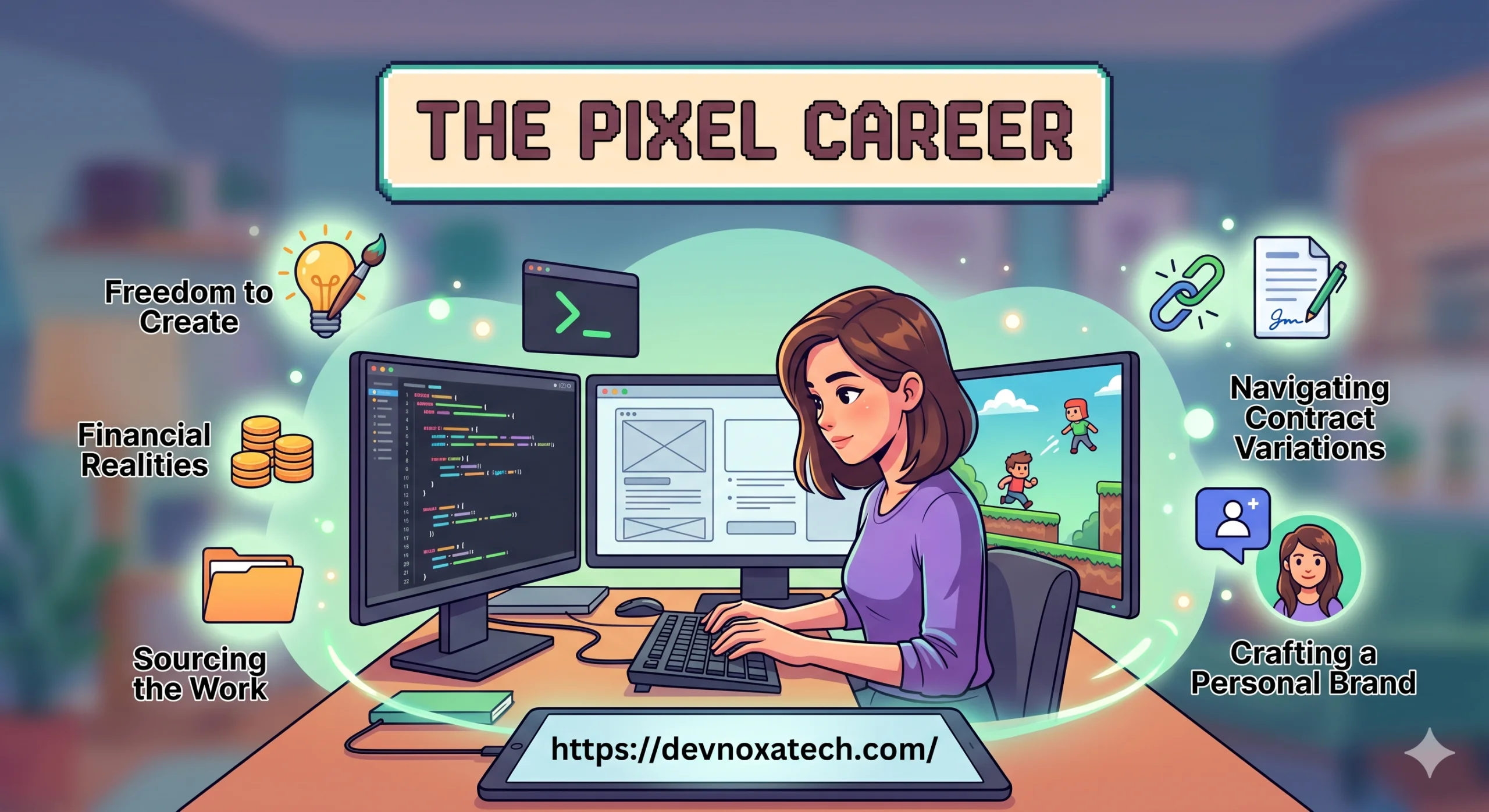

The gaming industry is no longer just a playground for enthusiasts; it has evolved into a massive global economy. Within this ecosystem, a new breed of professional has emerged: the freelance game developer. Moving away from the traditional, rigid structure of major gaming studios, these independent creators are carving out their own paths. Choosing a freelance video game development offers an exciting mix of creative freedom and unique operational challenges.
The Freedom to Create
The most compelling draw of freelancing in the gaming sector is autonomy. In a traditional studio setting, a developer might spend months, or even years, working on a single aspect of a massive project, such as perfecting the texture of brick walls or coding the collision mechanics of vehicles. While vital, this hyper-specialization can sometimes stifle broader creativity.
Freelancers, by contrast, often wear multiple hats. On any given day, an independent developer might transition from writing core gameplay loops to designing user interfaces, or from composing background scores to marketing a finished product. This variety keeps the creative spark alive and allows individuals to develop a diverse, holistic skill set that is highly valued in the modern tech landscape.
Sourcing the Work
Transitioning to independent contract work requires a strategic approach to finding clients. Unlike traditional employment, where tasks are assigned, a freelancer must actively hunt for opportunities. The digital landscape offers several avenues for this.
General freelancing platforms provide a starting point, but specialized gaming forums, community groups, and developer networks often yield higher-quality leads. Building a robust online presence is essential. A portfolio showcasing functional prototypes, clean code repositories, and visual assets acts as a digital resume, proving capability to potential clients far better than a standard cover letter ever could.
Navigating Contract Variations
The scope of freelance work in video games is incredibly broad, varying significantly from project to project. Some contracts involve joining an established indie team for a few weeks to help optimize performance before a major launch. Other gigs might require building a small-scale mobile game or educational application completely from scratch for a corporate client.
This structural variation requires high adaptability. A successful freelancer must quickly adapt to different coding standards, communication pipelines, and project management styles. Understanding contract terms, setting clear milestones, and establishing realistic deadlines are crucial skills to prevent scope creep—the gradual, uncompensated expansion of a project’s requirements.
Financial Realities and Rhythms
While the concept of being your own boss is highly appealing, the financial reality of freelancing involves managing an unpredictable income stream. The industry often operates on a feast-or-famine cycle. A developer might secure a lucrative contract that funds several months of comfortable work, followed by a dry spell where no new projects materialize.
Managing this instability requires disciplined financial planning. Freelancers must budget not just for their current expenses, but also build a financial buffer to sustain them during slow periods. Additionally, independent operators are responsible for their own healthcare, equipment upgrades, software licenses, and taxes, all of which must be factored into their hourly or project-based rates.
Balancing Independence and Isolation
The remote nature of freelance work offers unmatched geographical flexibility, allowing developers to work from home, a local cafe, or a co-working space. However, this independence can sometimes lead to professional isolation. Traditional studios offer built-in communities of peers with whom to collaborate, brainstorm, and socialize.
To combat isolation, successful freelance game developers actively seek out communities. Participating in game jams—short events where creators build games from scratch over a weekend—attending local industry meetups, and engaging in online developer circles are vital strategies. These spaces provide not only social interaction but also opportunities for peer review, mentorship, and unexpected project collaborations.
Crafting a Personal Brand
In a competitive global marketplace, technical skill alone is rarely enough to guarantee long-term freelance success. A developer must also become a marketer, establishing a distinct personal brand that sets them apart from the competition.
This branding involves defining a niche. A freelancer might position themselves as an expert in mobile optimization, a master of procedural generation, or a go-to specialist for retro pixel art styling. By focusing on a specific area of expertise, developers can target their marketing efforts more effectively and command higher rates for their specialized knowledge.
The Long Road Ahead
The trajectory of a freelance game development career is rarely a straight line. It is a path defined by continuous learning, adaptation, and resilience. As technology evolves, with new game engines, platforms, and programming methodologies emerging regularly, the independent developer must commit to ongoing self-education to remain relevant.
For those who possess the right blend of technical capability, self-discipline, and entrepreneurial drive, the rewards are substantial. Freelancing offers a level of professional agency that traditional roles can rarely match, turning the act of making video games into a deeply personal, customized career journey.
To explore more insights into technology trends, software development, and modern digital career paths, discover the resources available at devnoxa tech