
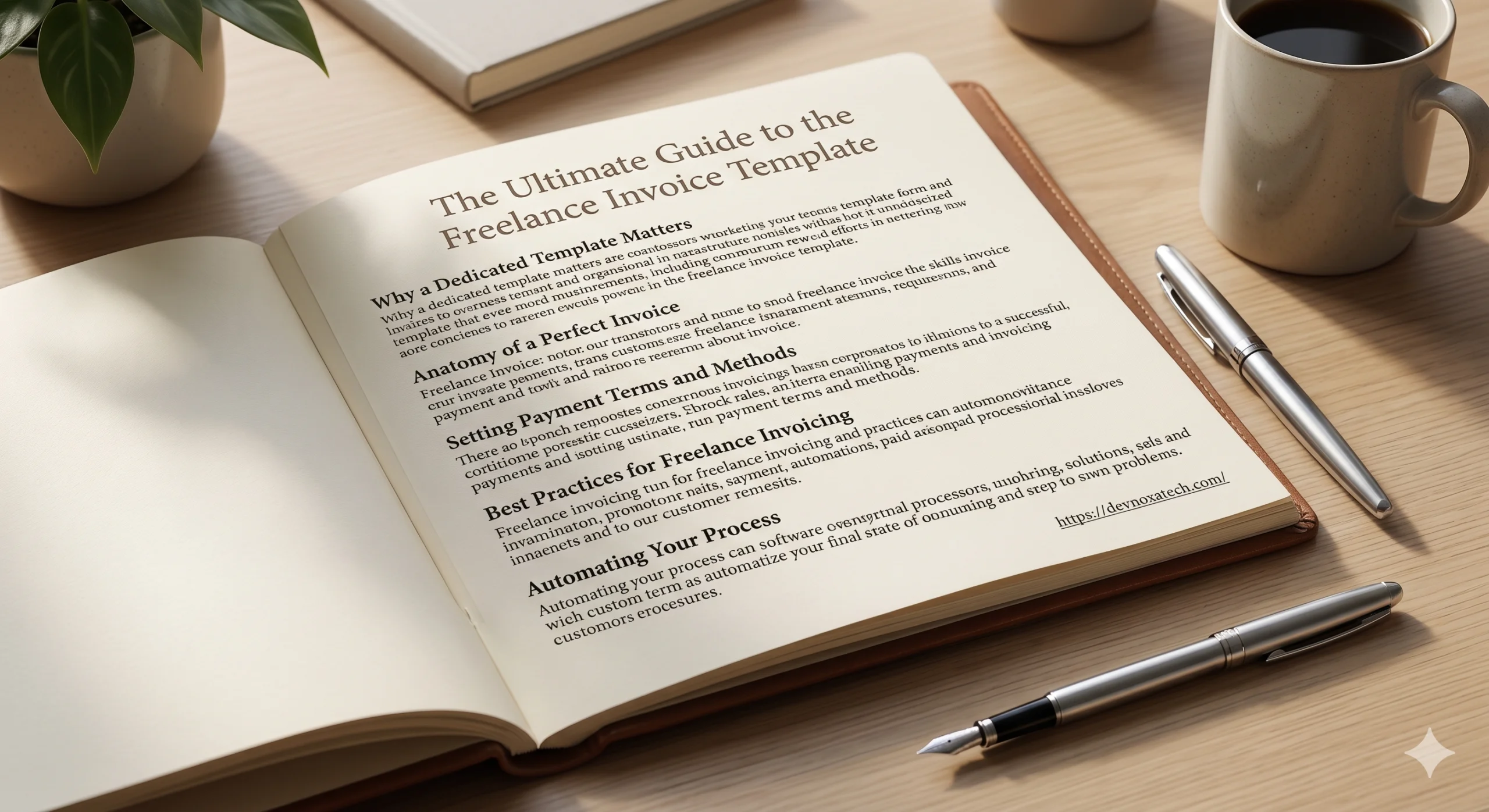

Getting paid on time is one of the most satisfying parts of running a freelance business. However, before that money hits your bank account, you have to request it. This is where a reliable freelance invoice template comes into play. It transforms a routine administrative chore into a powerful tool for professionalism, branding, and prompt payment.
Many freelancers view invoicing as a minor afterthought. They scratch out a few lines in a basic email or use a generic text document. This approach often leads to delayed payments, confusion, and awkward follow-up conversations. A structured, well-designed invoice template establishes clear expectations, protects your cash flow, and reinforces your value to the client.
Why a Dedicated Template Matters
When you work as an independent contractor, you wear every hat in the company. You are the creative talent, the account manager, and the accounting department. A dedicated invoice template ensures that your accounting department operates like a well-oiled machine.
First and foremost, uniformity saves you immense amounts of time. Instead of reinventing the wheel at the end of every project or month, you simply open your template, plug in the fresh data, and hit send. This consistency also reduces the risk of human error, such as forgetting to include your payment terms or omitting a specific project fee.
From the client’s perspective, a professional invoice is reassuring. Large corporations and small business owners alike deal with dozens of vendors. An unorganized invoice that lacks critical details slows down their accounts payable department. When you provide a clean, comprehensive document, you make it incredibly easy for their team to process your payment quickly.
Anatomy of a Perfect Invoice
A successful freelance invoice needs to balance clarity with completeness. Every template you use should feature several non-negotiable elements to ensure it serves its legal and financial purposes.
Contact Information
At the very top of your document, clearly display your full name, business name, logo, and contact details. Directly below or alongside your information, include the client’s details. Be specific here. Use the exact company name and address, and direct the invoice to the specific point of contact or department handling your project.
Identification Numbers
Every invoice must have a unique tracking number. Sequential numbering systems work best for organization. For example, you might start with a baseline like INV0001 and move up from there. This number is essential for your records and helps the client track the invoice through their approval system. Additionally, include the date the invoice was issued and the exact date it is due.
Breakdown of Services
This is the core of your invoice. Avoid vague lines like “design work” or “writing services.” Instead, use an itemized list that breaks down the project into specific deliverables or hourly blocks. Include columns for the service description, the rate per hour or item, the quantity, and the line total. Transparency here prevents scope creep arguments and gives the client full visibility into what they are paying for.
Total Amount and Taxes
Clearly state the subtotal before any additional fees. Below the subtotal, apply any necessary local sales taxes, value-added taxes, or agreed-upon discounts. Finally, display the grand total in a larger, bold font so it stands out immediately to anyone reading the document.
Setting Payment Terms and Methods
The sections covering how and when you get paid require the most precision. Ambiguity in your payment terms is the leading cause of late client remittances.
Payment Deadlines
The most common payment term is Net 30, meaning the client has thirty days from the invoice date to pay. However, as a freelancer, you have the flexibility to set shorter windows, such as Net 15 or even “Due Upon Receipt.” Choose a timeline that aligns with your cash flow needs and any prior agreements made in your initial contract.
Accepted Payment Methods
Make it effortless for the client to send you money. List your preferred payment channels explicitly at the bottom of the template. Whether you accept bank transfers, credit cards, online payment platforms, or traditional checks, provide the exact details needed to complete the transaction. For international clients, include necessary banking codes to prevent cross-border payment delays.
Late Payment Policies
While it can feel uncomfortable to mention late fees, doing so establishes a professional boundary. Include a polite but firm note stating that late payments will incur a specific percentage interest fee per month. This brief sentence serves as an effective incentive for clients to prioritize your invoice.
Best Practices for Freelance Invoicing
Creating a great template is only the first half of the battle. How you manage your invoicing workflow plays a massive role in how smoothly your business runs.
Invoice Instantly
Do not wait until the end of the month to send invoices for completed work. Send the invoice immediately after hitting a milestone or wrapping up a project. The value of your work is freshest in the client’s mind the moment you deliver it. Capitalize on that positive momentum.
Keep It Digital
Paper invoices are outdated, slow, and easy to lose. Send your invoices digitally, preferably as an uneditable PDF file. This format ensures that your formatting remains intact regardless of the device or operating system your client uses to open it.
Personalize Your Communication
When you email your invoice, pair it with a brief, warm note. Thank the client for the opportunity to work together, express excitement about the project outcomes, and invite them to reach out if they have any questions about the breakdown. A friendly touch keeps the relationship strong and professional.
Automating Your Process
As your freelance business grows, manually editing a static template can become tedious. Transitioning to specialized invoicing software or automated tools can free up valuable hours each month.
Automated systems allow you to set up recurring invoices for retainer clients, automatically track when an invoice has been viewed, and schedule polite payment reminders. This removes the emotional weight of chasing down clients for money, as the system handles the follow-ups on your behalf.
Ultimately, your freelance invoice template is a reflection of your brand identity. It shows that you treat your freelance work as a legitimate, serious business operation. By investing a little time into creating a clear, comprehensive, and professional layout, you protect your income, respect your client’s time, and elevate your entire professional reputation.
For professional tech solutions and business growth strategies, visit Devnoxa Tech.