
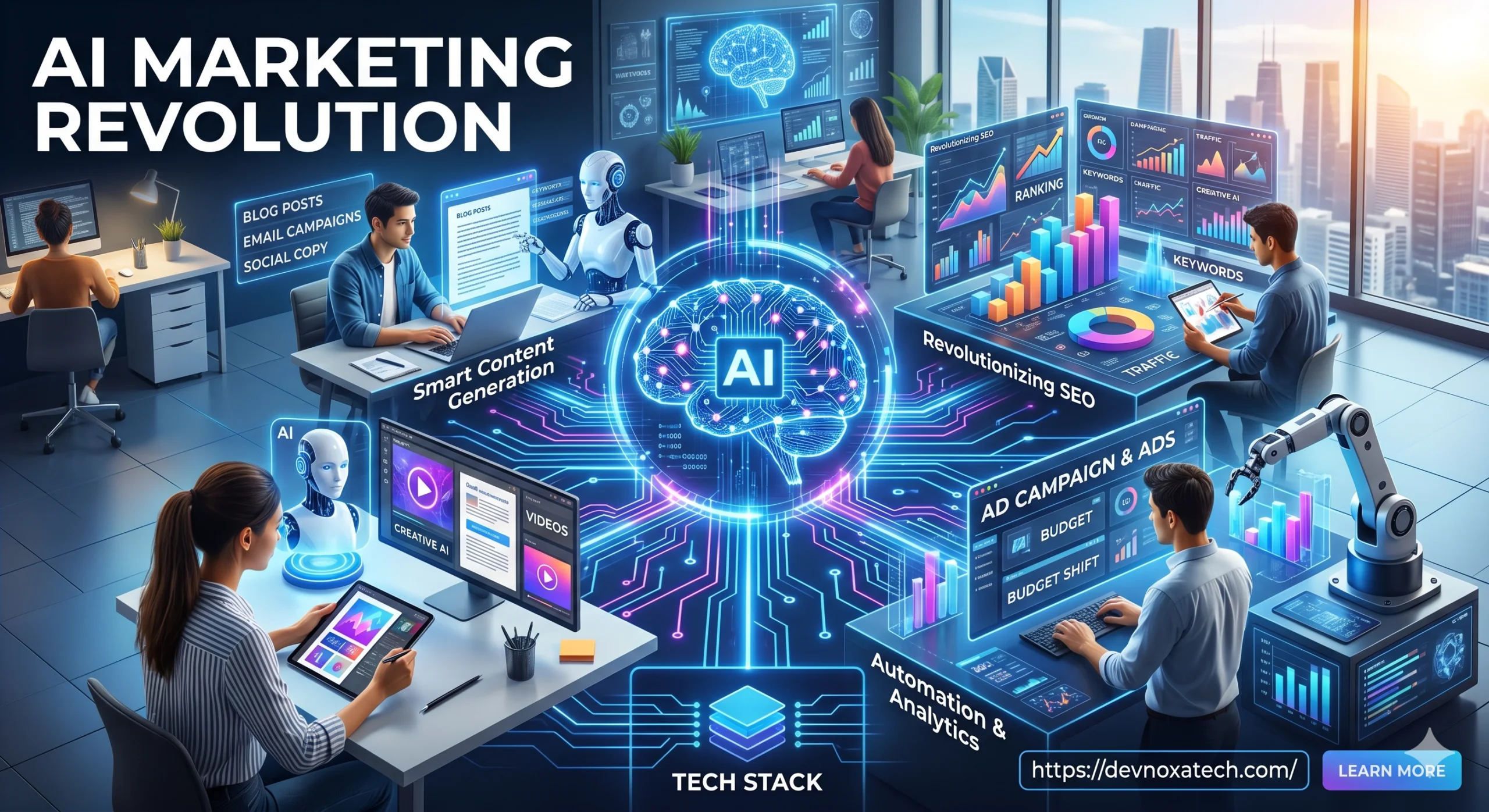

The digital marketing space is moving faster than ever. For years, businesses relied on manual data sorting, gut feelings, and repetitive drafting to launch campaigns. Today, artificial intelligence has changed the game completely. AI marketing tools are no longer futuristic concepts reserved for tech giants. They have become everyday necessities for brands that want to stay visible, competitive, and profitable.
From writing copy to predicting customer behavior, these platforms automate the heavy lifting so human creators can focus on big ideas. Navigating this new software ecosystem requires understanding what these tools do and how they fit into a modern business strategy.
The Evolution of Marketing Automation
Traditional automation followed strict rules. If a customer abandoned a shopping cart, the system sent a generic reminder email three hours later. It was helpful, but it lacked nuance.
Modern artificial intelligence brings deep learning and natural language processing into the mix. Instead of following rigid logic, modern tools analyze active user behavior, detect sentiment, and learn from past interactions. They do not just execute tasks; they optimize them in real time.
This evolution has completely changed how small marketing teams operate. Instead of spending days analyzing spreadsheets or formatting social graphics, a single marketer can deploy complex, multi-channel campaigns in hours. The focus has shifted from manual execution to strategic direction.
Smart Content Generation and Copywriting
Content is the foundation of digital growth, but keeping up with the demand for fresh copy is exhausting. AI writing assistants have stepped in to solve this bottleneck.
Platforms like Jasper and specialized large language models allow teams to generate blog posts, social media captions, and email sequences within seconds. These systems do not simply spin random text. They can absorb a company style guide, match a specific brand voice, and write tailored content for different buyer personas.
The goal here is not to replace human writers. Instead, these tools act as collaborative drafting partners. A marketer can type a rough concept, and the software will instantly generate five different ad variations or a comprehensive article outline, saving hours of staring at a blank page.
Revolutionizing Search Engine Optimization
Ranking on the first page of search engines used to involve massive spreadsheets of keywords and hours of manual competitor analysis. The latest generation of search engine optimization software has streamlined this entire process.
Tools like Surfer SEO and integrated search suites use machine learning to scan top ranking websites instantly. They tell you exactly what headers to use, which related terms to include, and how long your content needs to be to compete.
Furthermore, search engines themselves are changing, shifting toward conversational answers. New intelligence platforms help brands track their visibility inside AI search engines like ChatGPT and Google AI Mode. This ensures businesses remain discoverable no matter how consumers search for information.
Visual Design and Automated Video Creation
High quality visuals are essential for breaking through the noise on social media, but professional production is often expensive and time consuming. Graphic design platforms have integrated smart features to level the playing field.
For instance, Canva Magic Studio allows users to turn a simple text prompt into a fully branded presentation or social layout. If you need a product background removed or an object resized for a different platform, the system handles it with a single click.
Video production has seen an even bigger shift. Platforms like HeyGen allow businesses to create professional video content using realistic AI avatars. You provide a script, and the tool generates a spokesperson video in multiple languages without requiring a camera, studio, or editing crew. This makes video scaling accessible to companies of all sizes.
Predictive Analytics and Smart Media Buying
Managing ad budgets across multiple platforms like Google and Meta can quickly become a financial headache. If you bid on the wrong keywords or target the wrong demographic, your ad budget disappears with little return.
AI advertising tools take the guesswork out of paid media. Systems like AdCreative.ai and predictive attribution platforms monitor campaign performance every second. They analyze which creative variations get the most clicks and automatically shift your budget toward the highest performing ads.
These platforms can also predict consumer lifetime value and spot churn risks before they happen. By tracking customer data patterns, the software alerts marketing teams when a segment of buyers is losing interest, allowing for proactive retention campaigns.
Hyper Personalized Email Marketing and Customer Support
Blanket emails sent to an entire customer list rarely yield great results. Consumers expect experiences tailored to their exact needs. AI powered customer relationship management tools make this level of personalization possible at scale.
E-commerce marketing tools track individual browsing habits, past purchases, and even the time of day a user opens messages. The software then builds custom email segments and automatically inserts personalized product recommendations.
On the frontend, conversational chatbots handle customer inquiries around the clock. Unlike older bots that broke down over simple typos, modern AI assistants understand natural human phrasing. They can qualify leads, answer complex product questions, and guide users through the sales funnel without human intervention.
Building a Unified Marketing Tech Stack
The biggest mistake a business can make is buying dozens of disconnected applications. Having one tool for email, one for graphics, and another for writing creates data silos and messy workflows.
Successful marketing teams build an interconnected tech stack. They use integration tools like Zapier or n8n to link their applications together. For example, a client form submission can automatically generate a brief inside a project workspace, trigger an AI content outline, and draft a personalized welcome email.
When your software communicates seamlessly, your entire operation runs faster and smoother. Artificial intelligence works best when it functions as an underlying current connecting all your digital assets.
The Future of Brand Growth
The rapid rise of machine learning has leveled the playing field. Small businesses now have access to data insights and production capabilities that used to cost thousands of dollars. Implementing these systems is no longer about chasing a trend; it is about building a sustainable foundation for growth.
As these technologies continue to evolve, the brands that succeed will be the ones that blend automated efficiency with genuine human creativity. Embracing the right platforms allows you to automate repetitive tasks, understand your audience deeply, and scale your message effectively.
To explore advanced digital solutions and learn how to integrate modern technology into your business operations, visit devnoxa tech