
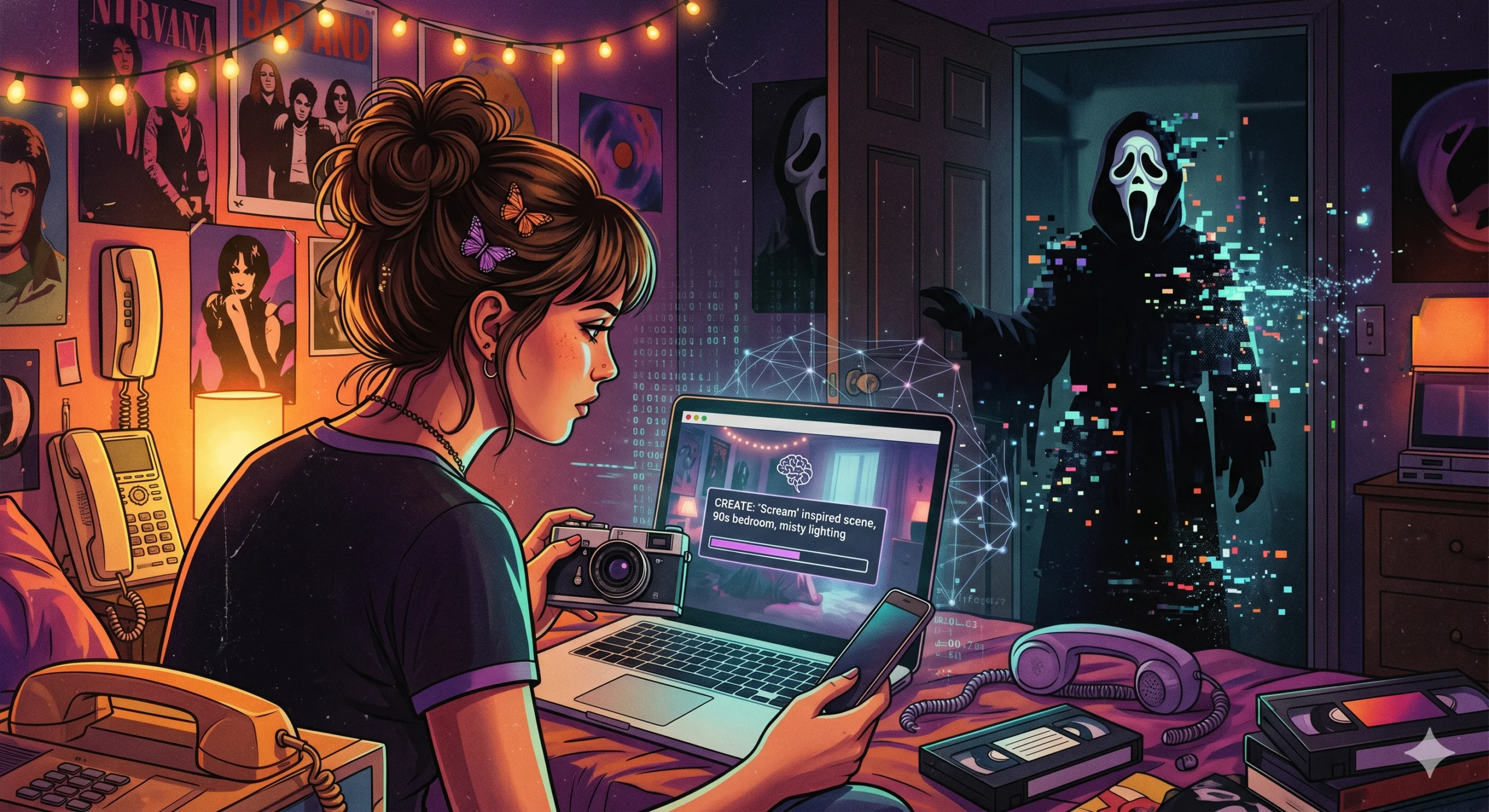

Social media feeds have taken a decidedly dark, cinematic turn. If you have spent any time scrolling through TikTok or Instagram Reels recently, you have likely encountered a specific type of eerie, atmospheric imagery. A creator poses in a hyper stylized, late nineties bedroom or school hallway, seemingly lost in a daydream. The lighting is soft, the colors are heavily saturated, and a grainy vintage film grain covers the scene. But just behind them, lurking in the shadows of a dim doorway, stands the iconic slasher villain: Ghostface.
This is the Ghostface AI trend, a viral phenomenon that is dominating digital culture. Driven by advanced generative software and fueled by a massive wave of pop culture nostalgia, this trend has evolved into a masterclass on how modern creators use technology to build immersive narrative content. It is no longer just about snapping a simple selfie; it is about staging a mini thriller frozen in time.
The Recipe for Digital Suspense
The explosion of this viral phenomenon relies heavily on specific text to image prompts that creators share across internet forums. Unlike previous filter trends that simply slapped a digital mask over a user’s face, this movement requires building an entire aesthetic environment from scratch.
The visual architecture of these creations relies on a heavy dose of Y2K nostalgia. A typical prompt instructs the artificial intelligence to build a scene featuring a subject in a room decorated with vintage posters, holding a classic corded telephone, or wearing butterfly clips and chunky rings. The true magic happens when the software is told to introduce the antagonist. The prompt specifically instructs the system to place the masked killer subtly in the background, making sure his form is dimly lit and partially obscured by shadows.
By using advanced image generators and face swapping tools, users can seamlessly place themselves into these high resolution, movie poster quality scenes. The result is a striking contrast between a cozy, comforting aesthetic and a jarring element of psychological horror.
The Evolution from Image to Movie
What began as a trend centered purely on static images has rapidly expanded into the realm of short form video. Creators are no longer satisfied with a single spooky photo; they are utilizing image to video generators to bring their slasher concepts to life.
By injecting movement prompts into their workflow, users can animate these frozen scenes. A static image of a girl daydreaming on her bed suddenly becomes a terrifying five second movie trailer where the lights flicker, fog swirls across the floor, and the masked figure takes a slow step forward out of the hallway.
The integration of realistic text to speech voice generators has elevated this content even further. Creators can now type custom scripts and have them spoken in the exact, chilling baritone of the original movie villain. These audio tools capture the calm, calculated tone that made the character a horror legend, allowing creators to produce custom voiceovers, fake phone call pranks, and suspenseful narrations that keep viewers hooked from the very first frame.
Nostalgia and Digital Anxiety
Every major viral movement speaks to a deeper cultural mood, and this particular trend is no exception. At its core, the phenomenon thrives on a collective obsession with the late 1990s and early 2000s. For younger generations, this era represents a romanticized, analog world that feels drastically different from our hyper connected reality. The inclusion of physical objects like chunky VHS tapes, disposable cameras, and corded phones acts as visual comfort food.
However, layering a classic horror villain over this nostalgia introduces a fascinating psychological element. There is an underlying digital anxiety built into how we interact with technology today. As generative algorithms become highly sophisticated, the line between what is authentic and what is fabricated continues to blur.
By deliberately placing a symbol of danger into a highly comforting, retro setting, creators are subverting the innocence of the past. It serves as an artistic metaphor for our modern relationship with the internet: a beautiful, highly stylized space where hidden dangers or systemic anxieties always seem to be lurking just out of sight.
Creativity Without Technical Barriers
Perhaps the most significant reason for the widespread success of this phenomenon is its absolute accessibility. Historically, creating a high quality film poster or a cinematic video sequence required expensive editing software, professional lighting setups, elaborate costumes, and years of technical training.
Today, generative technology acts as an equalizer for independent content creators. Anyone with a smartphone and an internet connection can access advanced image platforms to render complex cinematic lighting, realistic rain reflections, and complex atmospheric fog in a matter of seconds.
The community aspect of social media has amplified this ease of access. Creators are not gatekeeping their methods; instead, they actively share their successful text prompts, step by step tutorials, and favorite editing platforms. This collaborative ecosystem allows a casual user to transform a standard morning selfie into an elite piece of fan art with minimal friction, keeping the trend fresh, rapidly evolving, and highly engaging.
The Future of Social Storytelling
The massive traction behind this movement hints at where social media content is headed. We are rapidly moving away from simple, unedited snapshots of daily life and moving toward highly produced, narrative driven media. Audiences are hungry for mood, atmosphere, and storytelling, even within the constraints of a short video or a single image swipe.
As digital tools become more intuitive and powerful, the boundaries of personal expression will continue to expand. The success of this cinematic movement proves that audiences love to be part of the stories they consume. By stepping directly into the frame of their favorite cinematic universes, everyday creators are redefining what it means to make viral entertainment.
To discover more about how cutting edge technology, digital creation, and modern software solutions are shaping our online experiences, explore the resources available at devnoxa tech