
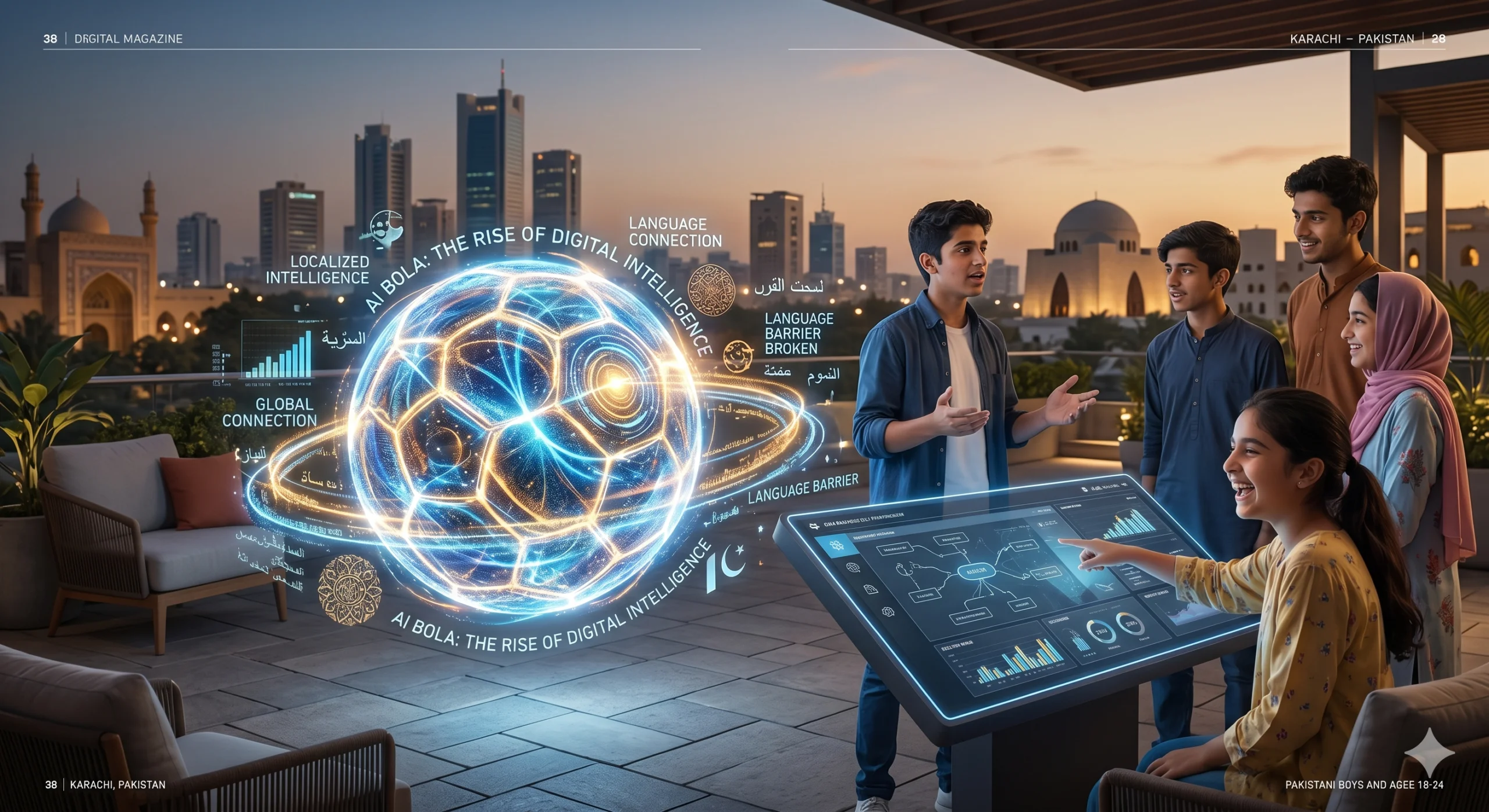

Technology has a funny way of sneaking into our lives. One day we are marveling at the ability to send a text message across the ocean, and the next, we are having deep, philosophical conversations with programs that live in our pockets. Among the many innovations shaping our modern world, the concept of AI Bola has emerged as a fascinating intersection of culture, language, and high-tech evolution. It represents more than just a piece of software; it is a symbol of how artificial intelligence is becoming more localized, more conversational, and ultimately, more human.
Understanding the Shift
For a long time, artificial intelligence felt like something reserved for scientists in white lab coats or silicon valley engineers. It was cold, calculated, and often felt disconnected from the average person’s daily reality. However, as the digital landscape expanded, the need for AI that speaks the language of the people became apparent. This is where the idea of AI Bola takes center stage.
In many contexts, “Bola” carries connotations of speech, interaction, or even a sense of playfulness and movement. When we combine this with AI, we get a vision of technology that isn’t just sitting there processing numbers, but is actively engaging with us. It suggests an intelligence that can “kick around” ideas, pivot during a conversation, and adapt to the nuances of human expression.
Breaking the Language Barrier
One of the biggest hurdles for global technology has always been the language gap. Most early AI models were trained primarily on English datasets, which left a massive portion of the world feeling like they were talking to a stranger who didn’t quite understand their culture. The movement toward specialized AI like AI Bola highlights a shift toward inclusivity.
When technology can speak in the local vernacular, understand regional slang, and respect cultural etiquette, it ceases to be a tool and starts to become a companion. This is crucial for education, business, and social connectivity. Imagine a student in a remote village being able to ask a complex scientific question and receiving an answer that uses metaphors they actually understand. That is the true power of localized digital intelligence.
The Human Element in a Digital World
A common fear people have about AI is that it will make our world feel robotic and soulless. We worry about losing the “human touch.” But interestingly, the development of AI Bola shows that we are actually using technology to enhance human connection rather than replace it.
By automating mundane tasks and providing instant access to information, AI frees up our mental bandwidth. It allows us to focus on creativity, empathy, and strategy. When an AI can handle the “bola” or the back-and-forth of basic information gathering, humans are left to do what they do best: innovate and relate to one another. The goal isn’t to create a machine that thinks exactly like a human, but to create a machine that understands humans well enough to be truly helpful.
Impact on Business and Innovation
From a commercial perspective, the integration of conversational AI is a game changer. Businesses are no longer limited by the hours their staff can work or the number of languages their customer service team can speak. An AI-driven interface can handle thousands of inquiries simultaneously, providing consistent and accurate information 24/7.
But it goes deeper than just customer service. AI Bola concepts are being used in data analysis to “talk” to data. Instead of staring at a spreadsheet with ten thousand rows, a business owner can simply ask, “Where did we lose money last month?” and the AI can explain the trends in plain language. This democratization of data means that you don’t need a PhD in statistics to run a smart, data-driven business. It levels the playing field for entrepreneurs everywhere.
Ethical Considerations and the Road Ahead
As we dive deeper into this era of conversational intelligence, we have to talk about responsibility. If an AI is “talking” to us, who is responsible for what it says? The developers behind these systems have a massive responsibility to ensure that the information provided is accurate and unbiased.
There is also the question of privacy. For an AI to be truly helpful, it often needs to know something about us. Finding the balance between personalized assistance and data security is the great challenge of our decade. We want our technology to be smart, but we also want our private lives to stay private.
Furthermore, as AI becomes more convincing in its speech, we must maintain a level of digital literacy. Understanding the difference between a human’s lived experience and an AI’s generated response is vital. We should celebrate the capabilities of AI Bola while remembering that the heart of communication is still a human-to-human endeavor.
Education and the Next Generation
Perhaps the most exciting application of this technology is in the classroom. Education has traditionally been a “one size fits all” model. A teacher stands at the front of the room and delivers a lecture, and thirty students are expected to absorb it at the same pace.
With conversational AI, we move toward a model of personalized tutoring. A student who is struggling with algebra can have a dedicated AI tutor that explains the concept in five different ways until it clicks. This AI doesn’t get frustrated, it doesn’t judge, and it is available at three in the morning if that’s when the student feels most inspired. This has the potential to close the achievement gap and provide high-quality learning resources to anyone with an internet connection.
The Cultural Resonance
The term AI Bola also reminds us that technology is a global story. It isn’t just happening in one part of the world. From the bustling streets of Karachi to the tech hubs of London, people are finding ways to make AI their own. They are naming it, shaping it, and giving it a voice that reflects their own identity. This cultural ownership is what will ultimately decide which technologies stick around and which ones fade away.
When we look back at this era, we won’t just remember the chips and the code. We will remember the moment when the machines finally started to understand us. We will remember when the “bola” started, and the conversation between humanity and its creations became a two-way street.
Final Thoughts
The journey of AI is far from over. In fact, we are likely still in the “dial-up” phase of what artificial intelligence will eventually become. As models become more sophisticated, the interactions will become even more seamless. We will move past simple text boxes and into environments where AI is integrated into our physical spaces, our vehicles, and our workplaces.
AI Bola represents the friendly face of this transition. It suggests a future where technology is accessible, conversational, and deeply integrated into the fabric of our lives. It’s about making the complex simple and the distant feel close. As we continue to innovate, let’s keep the focus on people. After all, the best technology isn’t the one that has the most features, but the one that makes our lives better, our work easier, and our connections stronger.
The future is talking. It’s time we joined the conversation.
For more insights into how technology is changing the world, visit: devnoxa tech