

The digital landscape is moving at a breakneck pace. For anyone running a website, capturing and keeping an audience is becoming tougher by the day. Organic reach on social media feels more unpredictable than ever, search engine updates are shifting how traffic flows, and the cost of acquiring a single new customer keeps climbing. In this environment, your direct line to your audience is your most valuable asset. That is why ai email marketing remains the backbone of digital growth.
However, the days of blasting the exact same newsletter to your entire list are officially over. Modern inboxes are smart. Providers like Gmail utilize advanced filtering to prioritize messages that offer genuine value, while quietly pushing unengaging content into the promotions or spam folders. To stand out, you need to deliver relevance every single time you hit send. This is where artificial intelligence steps in, transforming email from a generic broadcast channel into a highly personalized, efficient, and data-driven powerhouse.
Turning Raw Data into Smart Segments
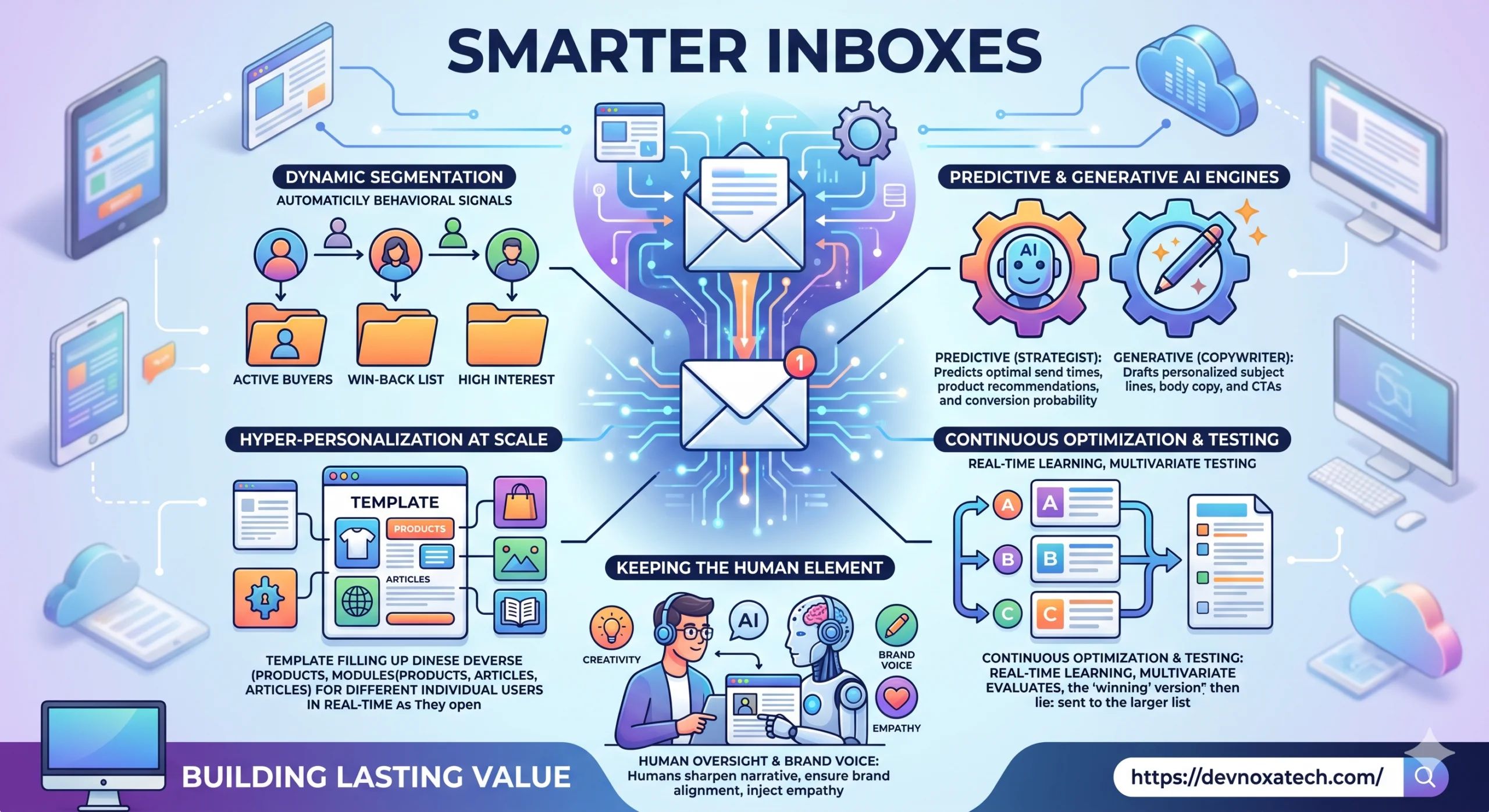
Traditional audience segmentation used to mean manually grouping subscribers by basic filters, such as their geographic location or their age group. While that was a good start, it barely scratched the surface of how people actually interact with a brand. AI changes the game by handling dynamic segmentation in real time.
Instead of waiting for a human marketer to download a spreadsheet and sort the data, machine learning algorithms continuously monitor a variety of behavioral signals. The system tracks when a subscriber browses a specific category on your website, how long they spend reading a particular article, or when their purchase patterns begin to slow down. By instantly processing these massive, unstructured datasets, the technology automatically updates your audience lists.
This means a contact who has not opened an email in a month is automatically moved into a win back sequence, while a highly engaged customer who keeps viewing a specific product is placed into a high intent segment. The result is a highly accurate targeting system that adapts as fast as your customers do.
The Power of Two AI Engines
To truly maximize your returns, a modern strategy relies on two distinct types of artificial intelligence working together: predictive AI and generative AI. Think of them as the strategist and the copywriter of your campaign.
Predictive tools answer the operational questions. They analyze historical patterns to determine exactly who should receive an email, what product recommendations they are most likely to buy, and precisely when the message should land in their inbox. Rather than sending a massive batch of emails at 9:00 AM across the board, predictive optimization schedules the delivery for each individual subscriber based on when they historically check their inbox. This single shift consistently drives major improvements in open rates.
Generative tools, on the other hand, handle the creative workload. They can instantly produce dozens of unique subject line variations, optimize preview text so it builds curiosity, and draft the initial versions of your body copy. When you combine these two engines, the results multiply. The predictive engine ensures your message arrives at the perfect moment, while the generative engine ensures the words on the screen immediately grab attention.
Scaling Individual Personalization
True personalization goes far beyond dropping a subscriber name into the subject line. Today, users expect content that reflects their specific journey. AI makes hyper personalization possible at a scale that would be completely impossible to manage manually.
Imagine an e commerce platform or a content site with tens of thousands of subscribers. With dynamic content generation, you do not need to build fifty different versions of a newsletter. Instead, you create a single modular template. At the exact millisecond a subscriber opens the email, the system populates the layout with tailored recommendations. One user might see an update on an item they left in their shopping cart, along with an article matching their recent reading history. Another user opening the exact same email will see entirely different products based on their own unique preferences.
This level of relevance builds deep trust. When subscribers realize that every message you send is highly tailored to their needs, they are far more likely to remain active, open your future sends, and actively engage with your call to action.
Simplifying Continuous Testing
A successful campaign requires constant optimization, but traditional A/B testing can be incredibly slow. Historically, you had to split a small portion of your list, send two different versions, wait a couple of days for enough data to accumulate, manually pick a winner, and then send the best version to the rest of your audience.
AI completely streamlines this optimization loop. Machine learning platforms can test multiple variants simultaneously, analyzing engagement metrics within minutes of the initial send. The system recognizes which headline or layout is performing best in real time, automatically shifts the delivery strategy, and ensures the vast majority of your list receives the highest converting version. This removes the guesswork and ensures you are always optimizing for real business outcomes, not just surface level metrics.
Keeping the Human Element in the Loop
With all the incredible capabilities that automation brings to the table, it is easy to fall into the trap of letting the machines run everything on autopilot. This is a massive mistake. Brands that completely automate their communication without any oversight end up sending cold, robotic, and generic messages that quickly alienate readers.
The technology is an incredible tool for data heavy tasks, generation, and timing, but it completely lacks human empathy, nuance, and true brand voice. Language models can occasionally generate copy that feels slightly off key or misinterprets a subtle emotional tone.
Therefore, keeping a human editor in the loop is absolutely non negotiable. Your team should always act as the ultimate quality gate. Use automation to handle the drafting, the multivariate testing, and the scheduling, but rely on human creativity to sharpen the narrative, inject humor, and ensure the content perfectly aligns with your brand values.
Building Lasting Value
Ultimately, the goal of integrating smart technology into your workflow is to build stronger, deeper relationships with your audience. By taking the administrative burden off your team, you free up valuable time to focus on high level strategy, creative storytelling, and big picture growth.
When you leverage these tools responsibly, you stop guessing what your audience wants and start delivering exactly what they need, right when they need it. It turns your email channel into a predictable, highly efficient engine for long term revenue and customer loyalty.
To find more insights on optimizing your digital presence, maximizing your content strategy, and exploring modern growth solutions, visit the link below. devnoxa tech