
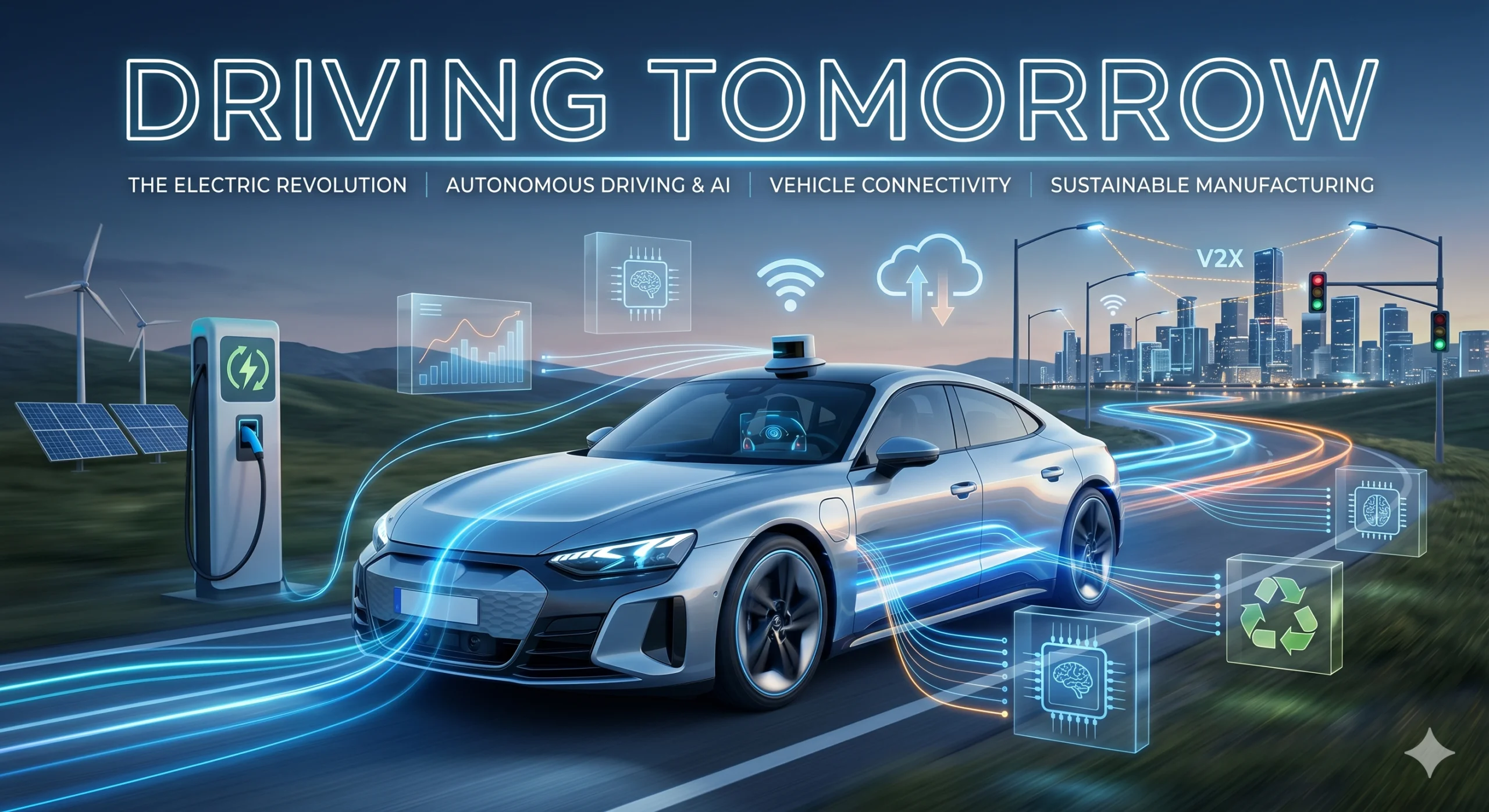

The automotive technology industry is undergoing its most radical transformation since Henry Ford introduced the assembly line. For over a century, cars were defined by internal combustion engines, gears, and mechanical linkages. Today, vehicles are increasingly defined by software, microchips, and clean energy. The modern automobile is morphing from a mechanical machine into a highly sophisticated, connected computer on wheels. This shift is not just changing how we get from point A to point B; it is redefining urban infrastructure, global economics, and our relationship with technology.
The Electric Revolution
The most visible shift in automotive technology is the rapid transition toward electrification. For decades, electric vehicles (EVs) were relegated to niche markets and experimental prototypes. Today, they represent the future of mainstream transportation. This shift is driven by a combination of tightening environmental regulations, shifting consumer preferences, and massive technological breakthroughs in energy storage.
At the heart of the electric revolution is battery technology. Early modern EVs suffered from limited range and prolonged charging times. However, the development of high-density lithium-ion batteries has dramatically extended how far a vehicle can travel on a single charge. Engineers are now on the cusp of commercializing solid-state batteries. This next-generation technology replaces the liquid electrolyte inside standard batteries with a solid material, promising faster charging times, greater energy density, and enhanced safety. As production scales up, the cost of manufacturing EVs continues to drop, bringing them to price parity with traditional gasoline vehicles.
Autonomous Driving and Artificial Intelligence
While electric powertrains change how vehicles are fueled, autonomous driving technology is changing who—or what—is in control. The pursuit of self-driving vehicles has turned automakers into software companies. This technology relies on a complex ecosystem of sensors, including cameras, radar, and LiDAR (Light Detection and Ranging). These sensors act as the vehicle’s eyes, constantly scanning the environment to create a real-time, three-dimensional map of the surroundings.
Processing this massive influx of data requires advanced artificial intelligence and machine learning algorithms. The vehicle’s onboard computer must instantly identify pedestrians, cyclists, debris, and traffic signals, while predicting the behavior of other drivers. Autonomous driving is categorized into six levels, ranging from Level 0 (fully manual) to Level 5 (fully autonomous). Currently, many consumer vehicles feature Level 2 or Level 3 autonomy, offering advanced driver-assistance systems (ADAS) like lane-keeping assist, adaptive cruise control, and automated parking. As AI models become more sophisticated, the industry creeps closer to a future where human error, the leading cause of traffic accidents, is largely eliminated from the equation.
The Power of Vehicle Connectivity
Modern vehicles are no longer isolated islands. Through the power of cellular networks, cloud computing, and Internet of Things (IoT) architecture, cars are now fully integrated into the digital world. This concept, often referred to as V2X (Vehicle-to-Everything) communication, allows automobiles to share data seamlessly with their environment.
V2X encompasses several critical communication pathways:
- Vehicle-to-Vehicle (V2V): Cars broadcast their speed, position, and braking status to surrounding vehicles, allowing them to anticipate hazards before they are visible to the human eye.
- Vehicle-to-Infrastructure (V2I): Cars interact with smart traffic lights, toll booths, and road signs to optimize traffic flow and reduce idling times.
- Vehicle-to-Network (V2N): Cars connect to cloud servers for real-time navigation updates, weather alerts, and entertainment streaming.
Furthermore, connectivity enables Over-the-Air (OTA) software updates. Just like a smartphone, a modern connected vehicle can receive performance enhancements, bug fixes, and entirely new features while parked in a owner’s driveway overnight. This capability extends the lifecycle of the vehicle and allows manufacturers to improve safety features long after the car has left the dealership lot.
Smart Cabins and the User Experience
As the act of driving becomes increasingly automated, the interior of the vehicle is being reimagined as a mobile living space or a rolling office. The focus of automotive design is shifting heavily toward the user experience (UX) inside the cabin. Traditional analog dashboards have been replaced by sweeping digital displays, augmented reality head-up displays (HUDs), and intuitive voice-activated assistants.
Artificial intelligence inside the cabin monitors driver alertness and health. Biometric sensors can detect signs of fatigue or sudden medical emergencies, automatically pulling the vehicle safely to the side of the road if the driver becomes unresponsive. Meanwhile, personalized infotainment systems utilize machine learning to understand passenger preferences, automatically adjusting seating positions, climate control, and media playlists. The car is transforming from a mere tool for transport into an intuitive, responsive companion.
Sustainable Manufacturing and Material Science
The push for sustainability in automotive technology goes far beyond tailpipe emissions. Automakers are looking holistically at the entire lifecycle of the vehicle, from raw material extraction to recycling. This has sparked a revolution in material science, with a heavy emphasis on reducing vehicle weight to improve efficiency.
Advanced high-strength steels, aluminum alloys, and carbon fiber composites are being utilized to build lighter, safer vehicle frames. Concurrently, the interior of the car is going green. Luxury brands are increasingly replacing traditional leather with vegan alternatives derived from mushrooms, pineapples, or recycled plastics fished from the ocean. Furthermore, significant research is being poured into the circular economy, creating standardized methods to recycle EV batteries and recover valuable rare-earth metals like cobalt, nickel, and lithium.
The Road Ahead
The automotive landscape is evolving at a breathtaking pace. The convergence of electrification, artificial intelligence, hyper-connectivity, and sustainable manufacturing is creating a safer, cleaner, and more efficient transport ecosystem. While challenges remain—such as updating global electrical grids to handle EV charging, establishing clear legal frameworks for autonomous liability, and fortifying vehicles against cybersecurity threats—the momentum behind these innovations is unstoppable. We are witnessing the dawn of a new era in mobility, where the journey matters just as much as the destination.
To explore more about how digital transformation is shaping various industries, visit devnoxa tech