
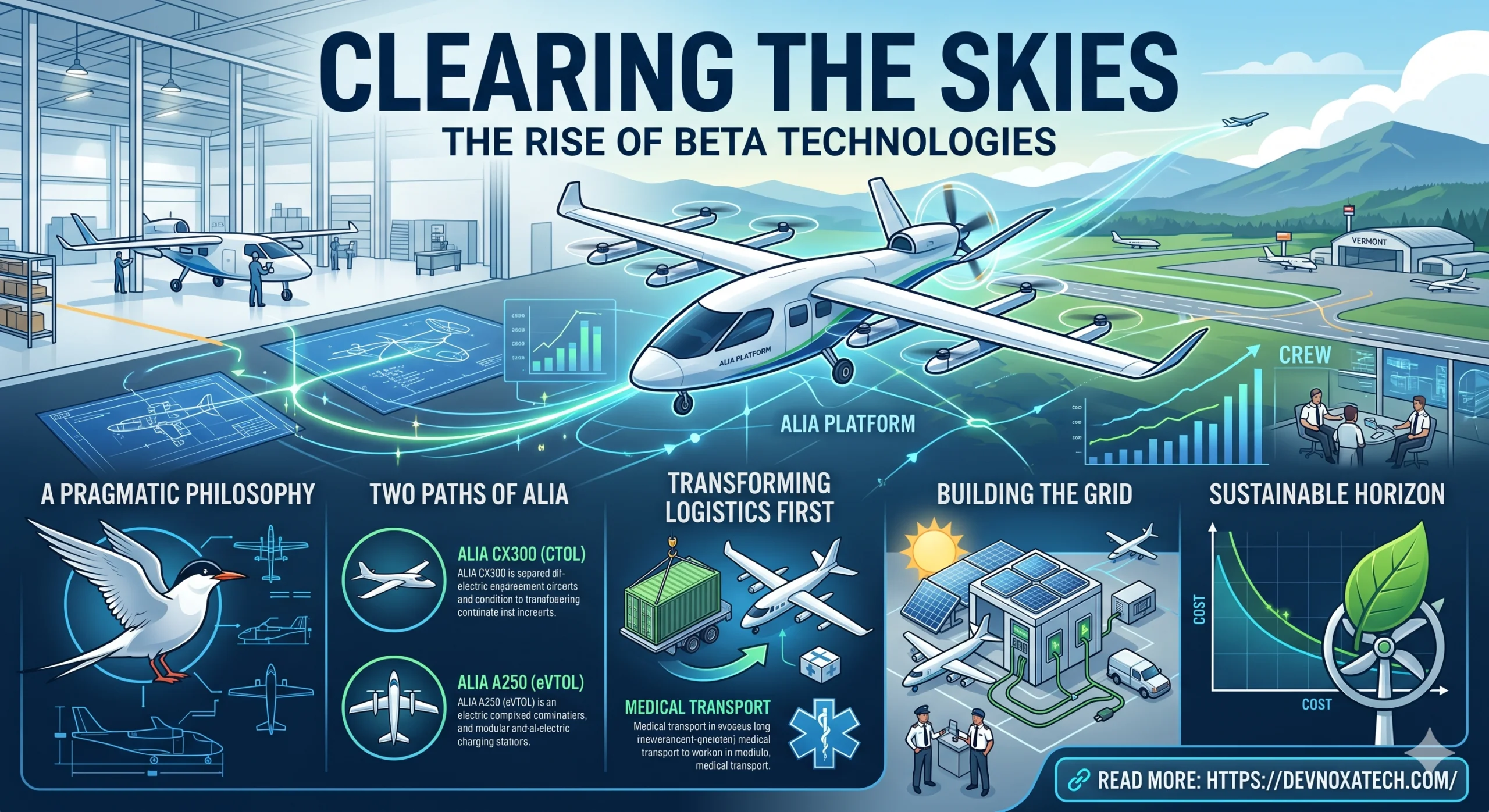

The dream of electric aviation has floated on the horizon for decades, often dismissed as a far-off fantasy restricted by the heavy weight of traditional batteries and the immense energy required to lift a vehicle into the air. Today, that narrative is shifting rapidly. At the forefront of this quiet revolution is Beta Technologies, an aerospace company based in Vermont that has stopped treating electric flight as an experimental science project and started treating it as a scalable commercial reality. By focusing on practical design, multi-stage growth, and a massive charging infrastructure, the company is reshaping how people and goods will move across regions.
A Pragmatic Philosophy of Flight
Unlike many startups in the advanced air mobility sector that raced to build highly complex aircraft with pivoting wings or tilting rotors, Beta Technologies chose a path of deliberate simplicity. Founded by engineer and former professional hockey player Kyle Clark, the company took design cues from nature, specifically the Arctic Tern. This bird is famous for covering incredible distances during migration, using long, swept wings to maximize efficiency.
This inspiration led to the creation of the Alia platform. Beta realized that complexity is the enemy of safety, manufacturing, and regulatory certification. Instead of combining vertical lift and forward propulsion into a single pivoting mechanism, they kept them separate or focused on traditional flight paths first. This pragmatic approach allowed them to get off the ground faster and prove their technology in real-world environments while others remained stuck on drawing boards or in early prototyping phases.
The Two Paths of Alia
The company has cleverly divided its focus into two distinct aircraft models built on the same core airframe, battery system, and avionics. This shared DNA allows them to streamline their engineering and maximize their progress with regulators.
The first model is the Alia CX300, a conventional takeoff and landing aircraft. It looks and flies like a traditional airplane, using a single electric pusher motor at the back and a long, graceful wing to create lift. Because it utilizes existing airport runways, it avoids the extreme energy drain required to hover or lift straight up. This model has already completed massive milestone flights, traveling thousands of miles across state lines, operating in busy commercial airspace, and conducting real-world cargo demonstration flights across Europe and New Zealand.
The second model is the Alia A250, an electric vertical takeoff and landing vehicle. This version adds four fixed horizontal rotors along the wings to allow for vertical lifts and landings, similar to a massive drone, before using the rear propeller to push it forward. By keeping the lifting rotors fixed and separate from the cruise propeller, Beta eliminated hundreds of moving parts that could potentially fail. This makes the aircraft far easier to maintain and much simpler for the Federal Aviation Administration to certify.
Transforming Logistics First
While many competitors have captured public attention with promises of futuristic passenger air taxis buzzing over congested cities, Beta Technologies made a strategic pivot to focus heavily on cargo, medical logistics, and military applications first. Moving freight instead of people offers a much smoother path to commercial viability. It allows the company to log thousands of operational hours, refine its battery systems, and prove its safety record without the intense regulatory hurdles associated with early stage passenger transit.
This strategy has attracted immense corporate backing. Global logistics giants like UPS have placed major orders, intending to use the electric aircraft to connect regional distribution hubs. The military has also taken notice, with both the United States Air Force and Army partnering with the company to test how electric flight can support cargo transport, medical evacuations, and remote logistics. By tackling these vital, mission-driven operations first, the company is building an economic and operational foundation that will eventually pave the way for everyday passenger flights.
Building the Electric Grid of the Air
An electric airplane is only as useful as the grid available to power it. Recognizing this bottleneck early on, Beta did something unusual for an aircraft manufacturer. They dedicated massive resources to building a cross-country network of rapid charging stations. These are not proprietary plugs hidden away in private hangars. They are designed to be interoperable, meaning they can charge electric ground support vehicles, cars, and aircraft from other manufacturers.
The company has successfully rolled out over one hundred charging sites across the nation. Many of these installations feature standalone structures built from recycled shipping containers. These structures include crew lounges, sleeping quarters, and flight planning spaces, effectively creating modern, self-contained rest stops for the pilots of tomorrow. By addressing the infrastructure problem simultaneously with aircraft development, they are ensuring that their fleet won’t be stranded at airports without the means to power back up.
The Financial and Industrial Pivot
The transition from a bold startup to an industrial powerhouse became undeniable following a successful public market debut and major funding rounds that raised over a billion dollars. This capital has allowed the company to scale up its massive production facility at the Burlington International Airport in Vermont. Rather than relying on third-party suppliers for critical components, they manufacture their own electric motors, assemble their own battery packs, and validate their systems in-house.
This vertical integration provides strict control over quality and safety, which is paramount when dealing with aviation authorities. The financial stability gained from commercial backlogs worth billions of dollars ensures that the intense research and development expenses can be sustained as the company pushes through the final, rigorous phases of official aerospace certification.
A Sustainable Horizon
The environmental argument for electric aviation is clear, but Beta has won over partners by focusing equally on the economic argument. Operating an all-electric aircraft dramatically lowers energy and maintenance costs compared to traditional gas-guzzling turboprops. There are no complex internal combustion engines requiring frequent overhauls, and the cost of electricity per hour of flight is a mere fraction of traditional aviation fuel.
As the aviation industry faces mounting pressure to reduce its carbon footprint, the work being done in the rolling hills of Vermont offers a tangible, actionable blueprint. By combining simple engineering, a focus on regional logistics, and a commitment to building a nationwide charging grid, Beta Technologies is proving that the future of flight is not just clean, quiet, and sustainable, it is already here.
To explore more about advanced tech solutions and digital evolution, visit devnoxa tech