
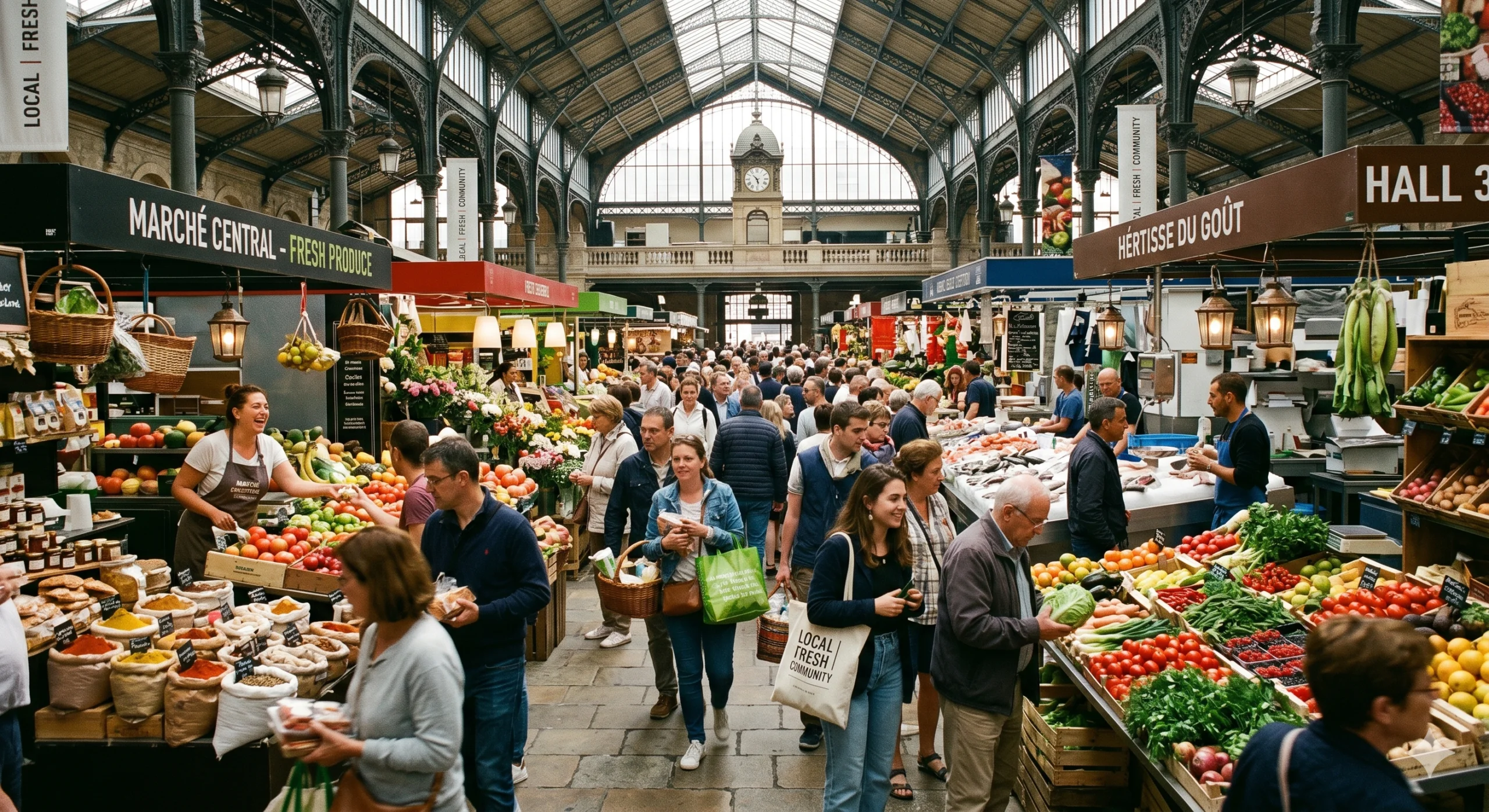

Long before modern shopping malls or digital marketplaces existed, human settlements grew around centralized trading areas. In ancient times, these were known as agoras in Greece or forums in the Roman Empire. As cities expanded through the middle ages and into the industrial era, these open-air clearings transformed into structured, often architecturally magnificent, covered central markets.
Architects in the nineteenth and twentieth centuries designed these buildings to be civic showpieces. They utilized iron, glass, and grand stone facades to signal prosperity. Walking into an older central market today is often a historical journey. You can observe the high vaulted ceilings designed to keep air circulating over fresh produce and the historic layouts that have guided shoppers for generations. These structures were built to last, meant to anchor the community and handle the daily influx of thousands of citizens seeking sustenance.
A Sensory Awakening Like No Other
To truly experience a city, one must immerse themselves in the atmosphere of its central market. The experience is an intense awakening of the senses that cannot be replicated by standard grocery stores. Long before you even step inside the building, the air becomes thick with overlapping aromas. The sharp scent of roasted coffee beans mingles with the earthy fragrance of fresh spices, the sweet perfume of ripe fruits, and the distinct, briny smell of the seafood section.
Visually, these markets are a kaleidoscope of colors and movement. Stalls are stacked impossibly high with seasonal produce, vibrant textiles, or local handicrafts. Pyramids of bright red tomatoes sit alongside deep green herbs and exotic fruits unique to the region.
The auditory environment is just as dynamic. The space is filled with a unique symphony composed of vendors calling out their daily specials, customers bargaining over prices, the rhythmic chopping of butchers, and the constant hum of footsteps on stone floors. It is a chaotic yet beautifully synchronized ballet of human interaction.
The True Economic Anchor
Beneath the vibrant sensory layer lies a highly efficient and vital economic machine. Central markets are critical foundations for local economies. Unlike massive multinational retail chains where profits are often funneled away from the immediate community, the money spent here stays local.
These markets provide low-barrier business opportunities for small-scale entrepreneurs, family farmers, independent butchers, and local artisans. A single stall can sustain a family for generations, creating a reliable path to financial stability. Furthermore, the economic impact extends far beyond the physical walls of the market. It encompasses a massive network of local farmers, transport drivers, suppliers, and maintenance workers who keep the ecosystem running smoothly.
For the consumer, the central market serves as an equalizer. By cutting out middle corporate layers, these spaces provide access to fresh, high-quality, and nutritious food at highly competitive prices. This accessibility makes them absolutely essential for the food security of urban populations, particularly low-income families.
Preservation of Cultural Identity
In an era where globalization threatens to standardize city life, central markets stand as stubborn bastions of local identity. They are repositories of culinary heritage and regional traditions.
If you want to know what a region truly values, look at what is prominently displayed on the tables of its central market. Here, you will find rare heirloom varieties of vegetables that corporate supermarkets refuse to stock because they don’t transport well. You will find specific cuts of meat or types of fish necessary for traditional holiday dishes, and prepared foods made from recipes passed down through families.
Moreover, these markets are inherently multicultural spaces. As new immigrant communities integrate into a city, they often find their first footing in the central market, introducing new ingredients, flavors, and customs. The market evolves into a living archive of the city’s demographics, reflecting its past while absorbing its future.
The Social Fabric of the City
Beyond the exchange of goods and currency, central markets fulfill a deep psychological and social need for human connection. In a world increasingly dominated by self-checkout lanes and isolated digital transactions, the market forces people to interact face-to-face.
Shopping here is a conversational experience. Customers develop personal relationships with their preferred vendors, exchanging family updates, recipes, and neighborhood gossip along with their purchases. It is a place where different social classes, ethnicities, and generations rub shoulders in pursuit of the same daily necessities.
In this sense, the central market serves as a democratic civic space. It acts as a community center where the pulse of public opinion can be felt, and where the isolation of modern urban life is temporarily dissolved through shared human experiences.
Meeting the Challenges of Tomorrow
Despite their historical importance, central markets face significant challenges in the modern era. The rapid rise of mega-supermarkets, convenience store chains, and online grocery delivery services has shifted consumer habits. Younger generations, accustomed to the convenience of digital shopping, sometimes view traditional markets as inconvenient or chaotic.
To survive, many central markets are undergoing thoughtful reinventions. Cities are investing in upgrading infrastructure, improving sanitation, and integrating modern payment systems while carefully preserving the historic charm of the buildings. Many markets have successfully embraced the food hall concept, blending traditional grocery stalls with artisanal eateries, coffee shops, and cultural event spaces to attract a wider demographic.
Ultimately, the enduring appeal of the central market lies in its authenticity. While technology can optimize convenience, it cannot replicate the soul, community spirit, and vibrant sensory experience of a traditional marketplace. As long as people crave real connection and authentic food, these central hubs will remain indispensable fixtures of our urban landscapes.
For more insights into modern business solutions and digital growth, visit devnoxa tech