
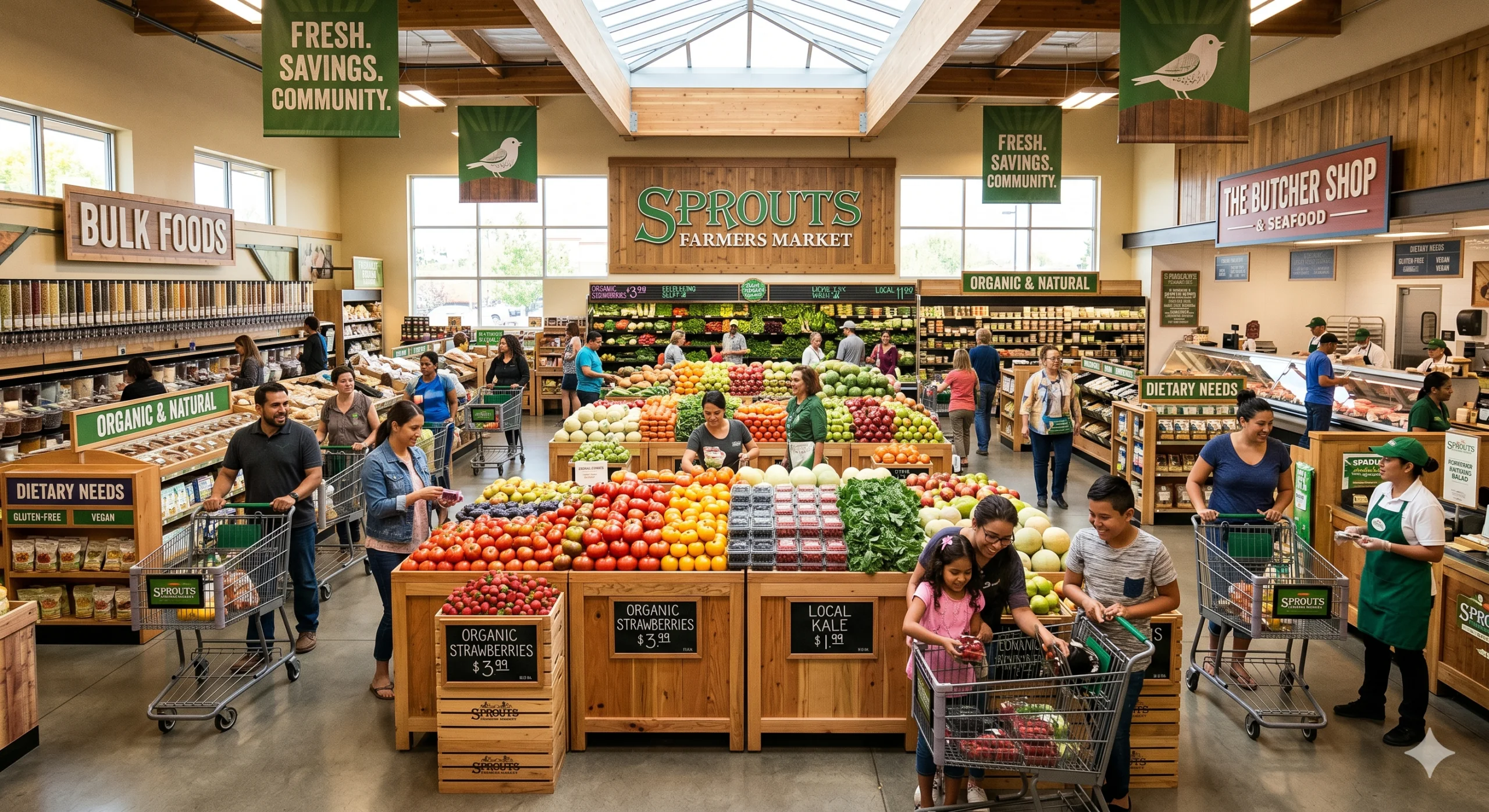

When you walk into a traditional supermarket, you are usually greeted by towers of cereal boxes, soft drink displays, and a maze of processed foods. The fresh produce section is often tucked away in a corner. Sprouts Farmers Market turned that blueprint completely upside down. By placing an open-air, farm-style produce market right at the center of the store, Sprouts captured a massive shift in how people want to eat. Today, it stands as one of the fastest-growing grocery chains in the United States, proving that healthy eating does not have to be an expensive luxury.
The Roots of a Different Grocery Store
The story of Sprouts began in 2002 in Chandler, Arizona. The Boney family, who already had deep roots in the grocery and fruit stand business, wanted to create a space that felt like an old-school farmers market but offered the convenience of a full-service grocery store. They recognized a growing frustration among consumers. People wanted fresh, natural, and organic foods, but they were tired of paying astronomical prices at high-end specialty markets.
From its very first store, Sprouts committed to a specific layout and philosophy. They kept the store footprint much smaller than a conventional supermarket. Instead of a massive, overwhelming warehouse, a typical Sprouts is around thirty thousand square feet. The center of the store features low-profile shelving, ensuring that no matter where you stand, you can look across the entire space and see the bright colors of fresh fruits and vegetables. This open-air design removes the clinical, claustrophobic feeling of modern grocery shopping and replaces it with a warm, welcoming environment.
The Produce Mountain at the Center
At Sprouts, produce is not just a department; it is the main event. By placing the fruits and vegetables in the absolute center of the store rather than along the perimeter, Sprouts makes a psychological statement about what matters most. This setup allows them to buy in massive quantities directly from growers, which keeps costs surprisingly low.
On any given day, the center market features cheap local favorites alongside exotic discoveries like dragon fruit, starfruit, and heirloom tomatoes. Because the inventory moves incredibly fast, the items are often fresher than what you find at standard supermarkets. For the budget-conscious shopper who still wants to eat clean, this central hub is a game-changer. It dispels the myth that buying fresh fruits and vegetables requires a massive grocery budget.
Embracing the Massive Bulk Food Movement
Beyond the fresh produce, the bulk food section is arguably the most famous feature of a Sprouts store. Long rows of transparent bins hold hundreds of different items, including raw nuts, seeds, grains, dried fruits, granola, and even chocolate-covered treats.
The bulk section serves two major purposes: sustainability and personalization. In an era where single-use plastic packaging is a major environmental concern, buying from bulk bins allows shoppers to use minimal packaging. More importantly, it gives customers ultimate control over their portions. If a recipe calls for exactly two tablespoons of flaxseeds, you do not have to buy a whole pound bag that will sit in your pantry for a year. You can scoop exactly what you need. This drastically reduces food waste and saves shoppers money, making healthy baking and cooking accessible to everyone.
Catering to Specialized Diets and Lifestyles
One of the biggest challenges of modern grocery shopping is reading tiny ingredient labels to see if a product fits your dietary needs. Sprouts built its brand identity around solving this exact headache. They have become the ultimate destination for people following specialized lifestyles, whether that means keto, paleo, plant-based, gluten-free, dairy-free, or raw food diets.
The store uses clear, colorful icons on its shelves to help shoppers quickly identify products that match their preferences. Their product buyers are famously quick to stock innovative, up-and-coming brands that you cannot find anywhere else. If a small company creates a great new cauliflower-based pizza crust or a dairy-free avocado oil mayo, it will likely land on a Sprouts shelf long before it hits a traditional supermarket chain. This focus on curation makes shopping exciting; it transforms a chore into a treasure hunt for health enthusiasts.
Balances Quality and Affordability
A major reason why Sprouts has succeeded where other natural food stores have struggled is its approach to pricing. For a long time, eating organic was associated with a high price tag. Sprouts challenged this norm by introducing an extensive private-label line. The Sprouts Brand offers thousands of products, from organic coconut oil and almond milk to gluten-free crackers and frozen organic berries.
By working directly with manufacturers to create these store-brand items, they cut out the middleman and pass the savings on to the consumer. These products often match or exceed the quality of national organic brands while costing significantly less. This private-label strategy ensures that shoppers do not have to choose between their physical health and their financial health.
The Evolution of the Modern Butcher Shop
While plant-based diets are highly celebrated at Sprouts, the company has also reinvented the traditional meat and seafood counter. Their service bath meat department focuses heavily on sourcing attributes that modern consumers care about, such as grass-fed beef, organic chicken, and sustainable seafood.
The butchers on-site grind sausage fresh daily, using unique spice blends like chicken fontina or spicy Italian pork. They also offer pre-marinated meats and skewers, catering to busy families who want a high-quality, home-cooked meal without spending an hour prepping ingredients in the kitchen. This blend of old-school craftsmanship and modern convenience sets their butcher counter apart from the pre-packaged, styrofoam-wrapped options found elsewhere.
Building a Community Beyond the Checkout Lane
Ultimately, what keeps people returning to Sprouts is the unique culture and community atmosphere. The employees are specifically trained to be approachable and knowledgeable. If you are unsure how to cook a specific type of squash or want to know which vitamin supplement might support your joint health, the staff is encouraged to stop and help you figure it out.
The company also places a strong emphasis on corporate social responsibility. Through their Sprouts Healthy Communities Foundation, they donate millions of dollars to local non-profit organizations, school gardens, and food rescue programs. They ensure that unsellable but perfectly edible food from their stores is directed to local food banks rather than landfills. This commitment to doing good makes consumers feel better about where they spend their hard-earned dollars.
Sprouts Farmers Market proved that grocery shopping does not have to be a sterile, frustrating experience dominated by giant food conglomerates. By championing fresh produce, affordable organics, and an easy-to-navigate store layout, they created a shopping experience that truly honors the health of the consumer. As the world continues to prioritize wellness and real food, the Sprouts model offers a bright, refreshing path forward for the future of retail. devnoxa tech