
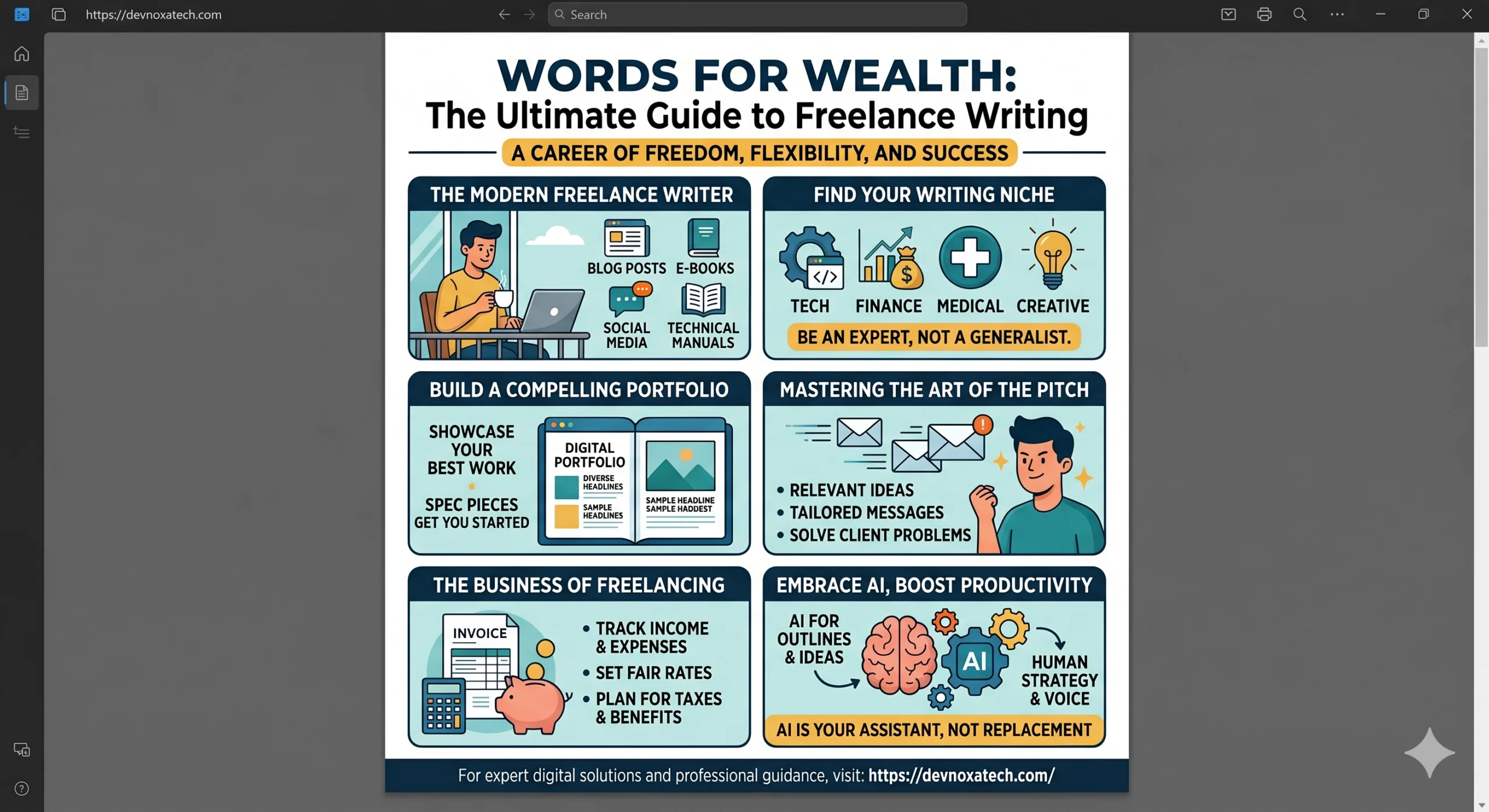

The traditional nine-to-five workday is losing its grip on the modern workforce. Today, professionals desire autonomy, flexibility, and the freedom to choose their tasks. This shift has fueled the rise of the freelance economy, with writing emerging as one of its most accessible and lucrative sectors. Freelance writing is no longer just a side hustle for English majors. It has evolved into a full-fledged global industry where wordsmiths can build sustainable, highly profitable careers. If you have a passion for language and an appetite for independence, entering this field could be your ticket to professional liberation.
Defining the Modern Freelance Writer
A freelance writer is a self-employed professional who produces text for various clients, ranging from digital startups to multinational corporations. Unlike a staff writer, a freelancer works on a project-by-project basis. One week you might draft a thought-leadership piece for a tech CEO, and the next, you could write a series of product descriptions for an e-commerce brand.
The scope of this profession is incredibly vast. It spans blog posts, academic essays, technical manuals, social media captions, ghostwritten books, and email marketing campaigns. This variety ensures that the work rarely becomes monotonous, offering a continuous stream of intellectual stimulation.
Finding Your Profitable Writing Niche
When starting out, many writers make the mistake of trying to write about everything for everyone. While being a generalist can help you gain initial experience, true financial success lies in specialization. Finding a niche allows you to position yourself as an expert rather than a commodity.
High-paying niches often require specialized knowledge. Technical writing, medical writing, SaaS software documentation, and financial copy are historically lucrative. If you can explain complex financial regulations or break down advanced coding concepts into plain English, businesses will pay a premium for your skills. Look for the intersection of what you enjoy, what you know, and what industries have substantial marketing budgets.
Building a Compelling Portfolio
You cannot land high-quality clients without showing them what you can do. A portfolio is your professional calling card. In the digital age, a digital portfolio is non-negotiable. It should showcase your best work and demonstrate your versatility within your chosen niche.
If you are just starting and have no published work, do not despair. You can create spec pieces. Write high-quality articles on topics you wish to be hired for and publish them on free platforms like Medium, or host them on your personal website. Ensure your writing is polished, free of grammatical errors, and structured for online readability with short paragraphs and bullet points.
Mastering the Art of the Pitch
Securing consistent work requires active prospecting. Pitching is the process of reaching out to editors, content managers, and business owners to offer your writing services. A successful pitch is rarely about you; it is about how you can solve a problem for the client.
When drafting a pitch, research the target publication or company thoroughly. Identify a gap in their current content strategy and propose specific, highly relevant article ideas. Keep your email concise, professional, and tailored. Explain briefly why you are the right person to write this piece, and include links to your relevant portfolio samples. Consistency is key here; pitching is a numbers game that requires resilience.
Navigating Client Relations and Contracts
Working for yourself means you are also your own customer service department. Managing client relationships professionally is what separates amateurs from high-earning freelancers. Clear communication is the foundation of any successful freelance relationship.
Always establish project scopes, deadlines, and payment terms before typing the first word. Utilizing written contracts protects both you and your client from misunderstandings. Be receptive to constructive criticism during the editing phase, but set clear boundaries regarding the number of free revisions you will provide. Delivering high-quality work on or before the deadline will guarantee repeat business and valuable referrals.
The Business Side of Freelancing
Many talented writers fail at freelancing because they forget that they are running a business. Writing is only half the job. The rest of your time will be spent on administration, invoicing, marketing, and financial planning.
You must track your income and expenses meticulously for tax purposes. Since freelancers do not receive employer-sponsored benefits, you need to budget for your own health insurance, paid time off, and retirement savings. Setting your rates can be challenging, but avoid undercutting yourself. Value your time, factor in your overhead costs, and remember that you are providing a specialized service that drives business growth.
Overcoming Common Freelance Challenges
The freelance lifestyle offers incredible freedom, but it also comes with unique hurdles. The most prominent challenge is the feast-or-famine cycle, where periods of overwhelming work alternate with dry spells of no income. To combat this, never stop marketing yourself, even when your schedule is full.
Isolation is another common issue. Working alone from home can impact your mental well-being. Make an effort to work from coffee shops or co-working spaces occasionally, and connect with other freelancers online to build a support network. Finally, imposter syndrome will likely rear its head. Trust your skills, keep learning, and remember that every expert was once a beginner.
Embracing Artificial Intelligence
The rise of artificial intelligence tools has generated anxiety among digital creators. However, instead of viewing AI as a threat, successful freelance writers view it as a powerful assistant. AI can help with brainstorming topic ideas, generating article outlines, and proofreading drafts.
What AI cannot replicate is human emotion, unique personal experiences, investigative journalism, and deep strategic thinking. Brands are increasingly craving authentic, human-centric content to stand out in a sea of generic, AI-generated text. By leveling up your research skills, developing a unique narrative voice, and focusing on high-level content strategy, you will remain indispensable.
The Future of the Written Word
The demand for high-quality content is not going away. As long as businesses need to communicate with customers, launch products, and build authority on the internet, they will need skilled writers. The freelance writing career path is dynamic, evolving, and highly rewarding for those willing to put in the effort.
It requires discipline, continuous learning, and thick skin, but the rewards are unmatched. You gain the ability to work from anywhere in the world, set your own schedule, and directly control your earning potential. If you are ready to take control of your professional destiny, grab your laptop, start sharpening your words, and leap into the vibrant world of freelance writing.
For expert digital solutions and professional guidance on navigating the evolving digital landscape, visit devnoxa tech