
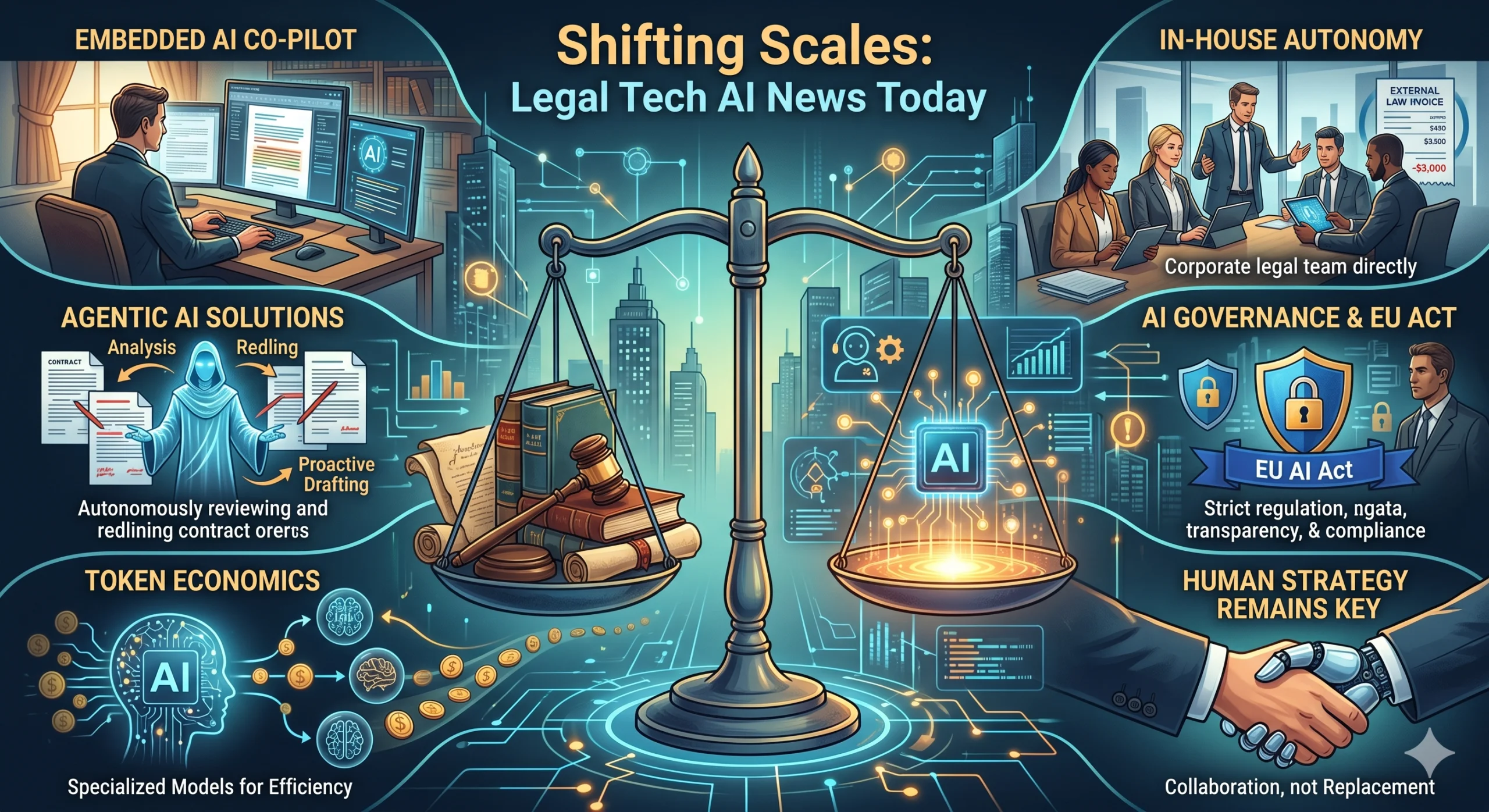

The relationship between the legal tech profession and artificial intelligence has crossed a critical threshold. The era of hesitant experimentation, characterized by tentative pilot programs and cautious sandboxes, has officially concluded. In its place stands a landscape where generative AI is no longer a futuristic novelty but a foundational pillar of daily operational strategy.
As law firms and corporate legal departments embed these advanced tools deeply into their workflows, the conversation has fundamentally shifted. It is no longer a question of whether artificial intelligence belongs in the law, but rather how to govern its expansion, manage its soaring infrastructure costs, and harness its power without sacrificing the irreplaceable value of human judgment.
The Rise of Embedded and Ambient Systems
One of the most defining shifts in recent legal technology is the transition from standalone AI platforms to ambient, workflow-native assistants. During the initial wave of adoption, attorneys were forced to disrupt their natural workflows, constantly copying and pasting text into isolated, third-party browser windows to summarize documents or analyze clauses.
Today, that structural friction has largely vanished. The most effective AI solutions are now quietly baked into the very infrastructure legal professionals live in every day: document management systems, email clients, contract lifecycle tools, and e-discovery platforms.
This evolution into ambient AI means the technology acts less like an external oracle and more like an active, digital co-pilot. As a lawyer drafts a contract or reviews a deposition transcript, the system works continuously in the background, proactively surfacing relevant internal precedents, flagging anomalous liability clauses, and suggesting contextual revisions.
By removing the need to consciously “ask AI” for help, the technology has achieved a level of seamless adoption that traditional software took decades to replicate.
Agentic AI Moves Beyond Reactive Tasks
The capabilities of legal AI have progressed far beyond mere text summarization and keyword searches. The legal sector is witnessing the widespread deployment of agentic AI: multi-agent systems designed to operate with a high degree of autonomy, understanding the ultimate goal of a complex task rather than just executing single, isolated prompts.
In practice, an agentic system does not simply wait for a lawyer to ask for a contract review. Instead, when a new vendor agreement lands in an inbox, the AI agent can autonomously retrieve the company’s internal legal playbooks, cross-reference the new contract against historical corporate standards, identify high-risk deviations, and generate a fully redlined draft alongside a strategic summary for human review.
This transition from reactive tools to proactive digital assistants is fundamentally accelerating deal cycles and litigation preparation, enabling lean teams to handle volumes of work that previously required armies of junior associates.
The Unexpected Reality of Token Economics
While the operational benefits of advanced large language models are undeniable, the legal technology sector has collided with a sobering economic reality: the rising cost of computational power. As legal AI applications transition toward highly intensive reasoning models and autonomous agentic workflows, the volume of data being processed has grown exponentially.
In the world of AI, every word processed or generated costs “tokens”. Because legal work naturally demands the ingestion of massive document sets, multi-page briefs, and exhaustive historical case files, law firms are discovering that running these advanced systems is becoming increasingly expensive.
An agentic AI system that repeatedly reads, analyzes, and cross-references thousands of pages to ensure absolute accuracy burns through tokens at an unprecedented rate.
This growing financial pressure is forcing a strategic pivot across the industry. Rather than blindly routing every simple legal inquiry through the newest, most expensive frontier models, firms and tech developers are actively diversifying.
There is a major surge in the fine-tuning of smaller, specialized, open-source models. By training targeted models on domain-specific legal data, organizations can achieve identical, if not superior, accuracy for specific tasks like contract compliance or trademark analysis, at a mere fraction of the operational cost.
In-House Autonomy and the Shift in Power
The democratization of sophisticated legal AI is structurally altering the balance of power between corporate legal departments and traditional external law firms. Historically, corporate legal teams relied heavily on outside counsel to handle labor-intensive, large-scale tasks such as extensive M&A due diligence, massive document discovery, and routine contract drafting.
Armed with specialized AI platforms, in-house legal departments are aggressively bringing these functions internal. Surveys indicate that a vast majority of corporate legal leaders plan to significantly decrease their reliance on external law firms for routine drafting and contract lifecycle management.
Because an internal team can now leverage AI to execute the heavy lifting of a first-pass contract review or regulatory compliance check in a matter of minutes, the traditional billable hour model is facing intense strain. Corporate clients are no longer willing to pay premium hourly rates for work that an algorithm can accurately draft in seconds, forcing law firms to rebalance their staffing models and shift toward fixed-fee, value-driven pricing structures.
Governance and the EU AI Act Mandate
As the autonomy of legal AI increases, the industry is confronting a heightened regulatory environment. The legal profession operates on a strict foundation of ethical duty, confidentiality, and absolute accountability. Consequently, the loose deployment of generic AI tools is rapidly giving way to strict, architecture-level governance.
A major catalyst for this institutional shift is the formal implementation of regulatory frameworks like the European Union AI Act. Under these stringent guidelines, AI applications used within the administration of justice and legal services are explicitly classified as high-risk systems.
This classification mandates absolute transparency, rigorous risk management, and mandatory human oversight, backed by severe financial penalties for organizational non-compliance.
As a result, modern legal tech procurement is no longer driven by flashy features or impressive demos. The priority has shifted entirely toward auditability, data lineage, and explainability. Law firms must be able to definitively trace exactly how an AI tool arrived at a specific legal conclusion or citation.
Furthermore, data privacy guarantees have become absolute dealbreakers. Judicial rulings have made it clear that utilizing generative tools without ironclad contractual assurances that client data will remain isolated and untrainable puts the sacred privilege of attorney-client confidentiality at catastrophic risk.
The Permanent Necessity of Human Expertise
Amid the rapid acceleration of software capabilities, a universal consensus has solidified across the global legal ecosystem: artificial intelligence will not replace attorneys. Legal practice is inherently a human endeavor, deeply rooted in nuance, cultural context, empathy, and strategic risk ownership.
An AI can identify an anomaly in a non-disclosure agreement, summarize a five-hundred-page judicial opinion, or predict litigation outcomes based on historical data patterns. What it cannot do is counsel a terrified executive through a public relations crisis, navigate the emotional subtleties of a boardroom dispute, or make the final, high-stakes moral judgment on whether a business should settle a highly ambiguous lawsuit.
The evolution of legal technology has successfully redefined the attorney’s role from a manual information processor to a high-value strategic architect. By automating the administrative friction that has historically bogged down the profession, AI is liberating lawyers to do what they do best: provide wisdom, exercise ethical judgment, and deliver creative solutions to complex human problems.
For more insights on cutting edge technological solutions and digital transformation, visit devnoxa tech