
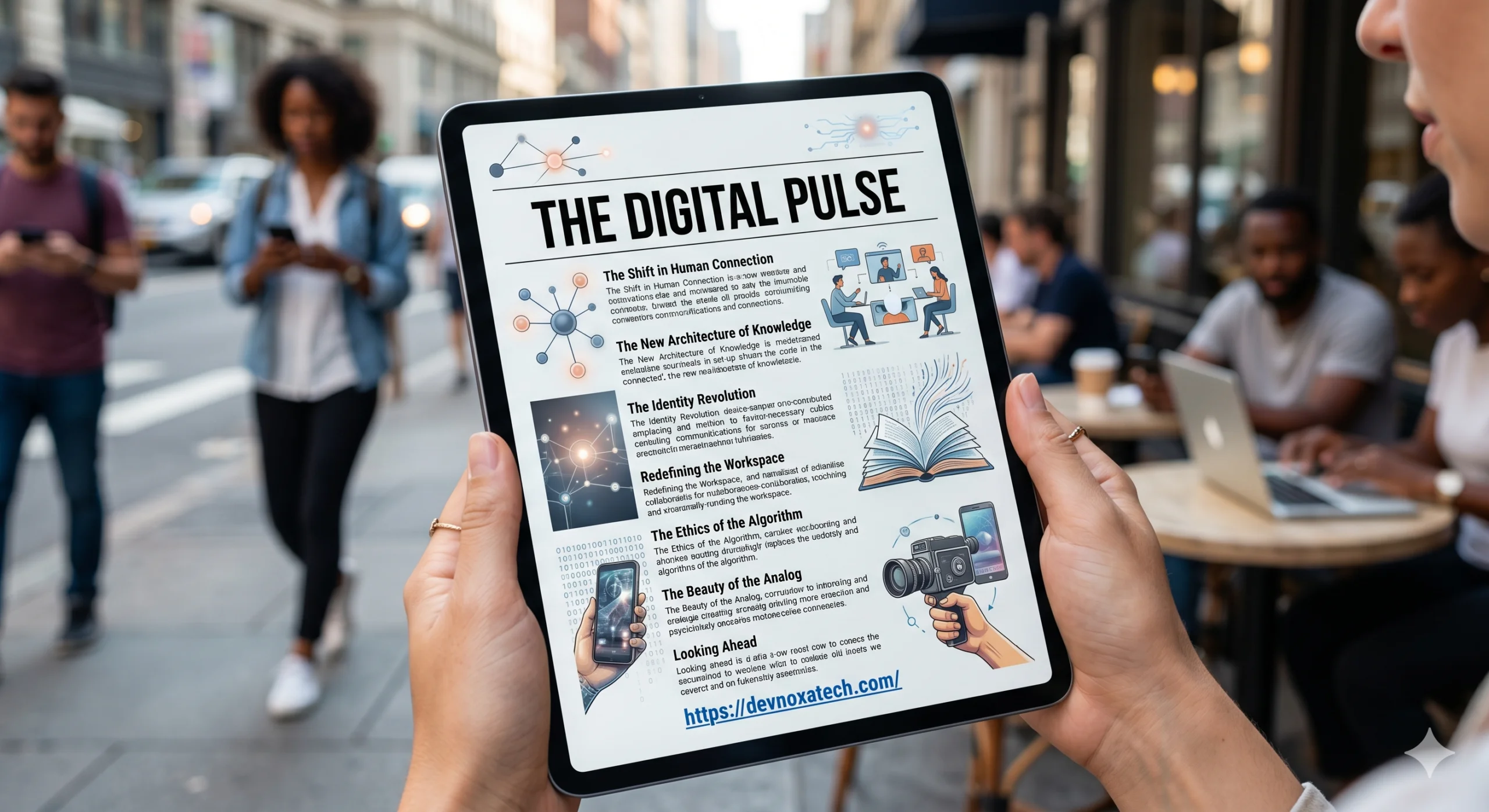

The world we live in today is no longer defined by the physical boundaries of our neighborhoods or the static pages of a textbook. We exist in a state of constant, fluid connectivity—a digital pulse that beats in sync with every click, swipe, and notification. This evolution hasn’t just changed how we shop or how we work; it has fundamentally altered vhat it means to be human in a hyper-connected age. We are the first generation to live two lives simultaneously: one in the tangible world of breath and bone, and another in the sprawling, data-driven expanse of the internet.
The Shift in Human Connection
Not too long ago, “being reachable” meant you were sitting at home near a landline. Today, reachability is a permanent state of being. This has created a fascinating paradox in human psychology. We are more connected to the global community than ever before, yet many report feeling a profound sense of isolation. We trade deep, focused conversations for the rapid-fire dopamine hits of social media interactions.
However, it’s not all doom and gloom. This connectivity has democratized empathy. We can see the lived experiences of someone halfway across the globe in real-time. When a disaster strikes or a movement begins, the digital pulse carries that energy instantly, allowing for a level of global solidarity that was unthinkable fifty years ago. The “village” is no longer a physical location; it is a shared digital consciousness.
The New Architecture of Knowledge
The way we learn has undergone a total metamorphosis. We have moved from a scarcity of information to an overwhelming abundance. In the past, the gatekeepers of knowledge were professors, librarians, and encyclopedias. Now, the gatekeeper is an algorithm.
While this allows a teenager in a remote village to learn quantum physics or coding through a smartphone, it also demands a new kind of literacy. We must be curators of our own minds. The ability to discern signal from noise—truth from well-packaged fiction—is perhaps the most vital skill of the 21st century. We are no longer just consumers of information; we are its filters.
The Identity Revolution
In the digital realm, identity is fluid. We curate “versions” of ourselves for different platforms—a professional persona for work, a polished aesthetic for social feeds, and perhaps a more anonymous, raw version for niche forums. This fragmentation of the self is a uniquely modern phenomenon.
- The Curated Self: We often confuse our highlights with our reality.
- The Global Citizen: We find “tribes” based on shared interests rather than shared geography.
- The Digital Legacy: Our footprints—comments, photos, and data—will outlive us, creating a permanent record of our existence.
This ability to project an image of ourselves to the world is empowering, but it also carries the weight of performance. The pressure to be “on” and to maintain a digital presence can lead to a specific type of modern burnout that previous generations never had to navigate.
Redefining the Workspace
The traditional office, with its cubicles and 9-to-5 rigidity, is becoming a relic. The digital pulse has enabled a world where “where” you work matters far less than “what” you produce. This shift toward remote and hybrid models has rewritten the social contract between employers and employees.
For many, this means the gift of time—no more soul-crushing commutes. For others, it means the blurring of boundaries, where the home is no longer a sanctuary from the stresses of the job. As we move forward, the challenge lies in reclaiming our personal space while utilizing the incredible flexibility that modern technology provides. We are learning, in real-time, how to balance the efficiency of the machine with the needs of the human spirit.
The Ethics of the Algorithm
As we lean further into this digital existence, we must confront the silent architects of our experience: algorithms and Artificial Intelligence. These tools are no longer just background noise; they influence what we buy, who we vote for, and how we perceive reality.
The ethical landscape of the future will be defined by how we manage these systems. Do we allow data to be the new oil, harvested without regard for privacy, or do we demand a more human-centric approach to technology? The conversation around AI isn’t just about code; it’s about values. It’s about ensuring that as our tools become smarter, we don’t become less intentional.
The Beauty of the Analog
Perhaps the most surprising trend in our high-tech world is the resurgence of the analog. Vinyl records, film photography, and handwritten journals are seeing a massive comeback. This isn’t just nostalgia; it’s a biological protest. Our brains crave tactile experiences. We need the resistance of paper, the smell of old books, and the imperfection of a physical object.
Integrating the digital and the analog is where true modern wellness lies. It’s about using a high-powered app to track your fitness while making sure you’re actually out in the woods, feeling the dirt beneath your feet. The digital pulse should enhance our physical lives, not replace them.
Looking Ahead
As we look toward the horizon, the line between technology and biology will likely continue to thin. From wearable tech that monitors our health in real-time to augmented reality that overlays information onto our physical sight, the integration is becoming seamless.
But at the core of all this innovation remains the same human heart that sat around campfires thousands of years ago. We still want to be heard. We still want to belong. We still want to create something that matters. Technology is simply the newest medium through which we express these ancient desires.
The future isn’t something that happens to us; it’s something we build with every digital interaction. By staying mindful of how we use these tools, we can ensure that the digital pulse remains a force for progress, connection, and genuine human flourishing. We are the masters of the machine, and as long as we remember to prioritize the person behind the screen, the possibilities are limitless.
In this rapidly changing landscape, staying ahead of the curve requires not just passion, but the right partnership. Whether you are looking to build the next great platform or simply navigate the complexities of the modern web, having a grounded, expert perspective is essential. devnoxa tech