

In an era dominated by processed foods and fast-casual dining, few brands have managed to shift global conversations around nutrition, sustainability, and corporate responsibility quite like Whole Foods Market. What started as a single, idealistic natural foods store in Austin, Texas, has blossomed into an international phenomenon. Today, it stands as a cultural touchstone—a place where grocery shopping is transformed from a mundane chore into a lifestyle statement.
To understand the modern grocery landscape, one must understand Whole Foods. The company did not just give consumers a place to buy organic apples; it fundamentally re-engineered public expectations regarding food quality, transparency, and environmental ethics.
From Counter-Culture to Global Standard
The story of Whole Foods Market begins in 1980, a time when “health food” was largely relegated to dusty, niche co-ops smelling of bulk nutritional yeast. Co-founders John Mackey and Renee Lawson, alongside Craig Weller and Mark Skiles, sought to prove that natural food could be celebrated in a vibrant, full-scale supermarket format. By merging Safer Way Natural Foods and Clarksville Natural Grocery, the first Whole Foods Market opened its doors with a staff of just 19 people.
The concept was a gamble. In the 1980s, commercial agriculture was leaning heavily into synthetic pesticides, artificial preservatives, and mass production. Whole Foods took the opposite gamble, betting that a growing segment of the population cared deeply about what they put into their bodies.
The gamble paid off spectacularly. Through a series of strategic acquisitions throughout the 1990s and 2000s, Whole Foods expanded across the United States and eventually ventured into Canada and the United Kingdom. It proved that natural and organic foods were not just a passing trend favored by a counter-culture minority, but a highly lucrative, mainstream market demand.
The Philosophy of Quality and Strict Standards
What truly sets Whole Foods apart from traditional supermarkets is its unwavering commitment to strict quality standards. Long before the “clean eating” movement went viral on social media, Whole Foods created a comprehensive list of banned ingredients.
To this day, you cannot find products containing hydrogenated fats, high-fructose corn syrup, or artificial sweeteners, colors, and preservatives on their shelves. If a product contains these additives, it simply does not make it past the loading dock.
This curated approach shifted the burden of scrutiny from the shopper to the store. Consumers quickly realized they could walk down the aisles of Whole Foods without having to meticulously read the fine print on every nutrition label. The brand became synonymous with trust.
Furthermore, the company pioneered animal welfare standards in the retail space. By implementing a multi-tiered 5-Step Animal Welfare Rating system, Whole Foods incentivized livestock producers to adopt more humane farming practices, forcing the entire agricultural industry to reconsider its baseline operational standards.
The In-Store Experience as a Destination
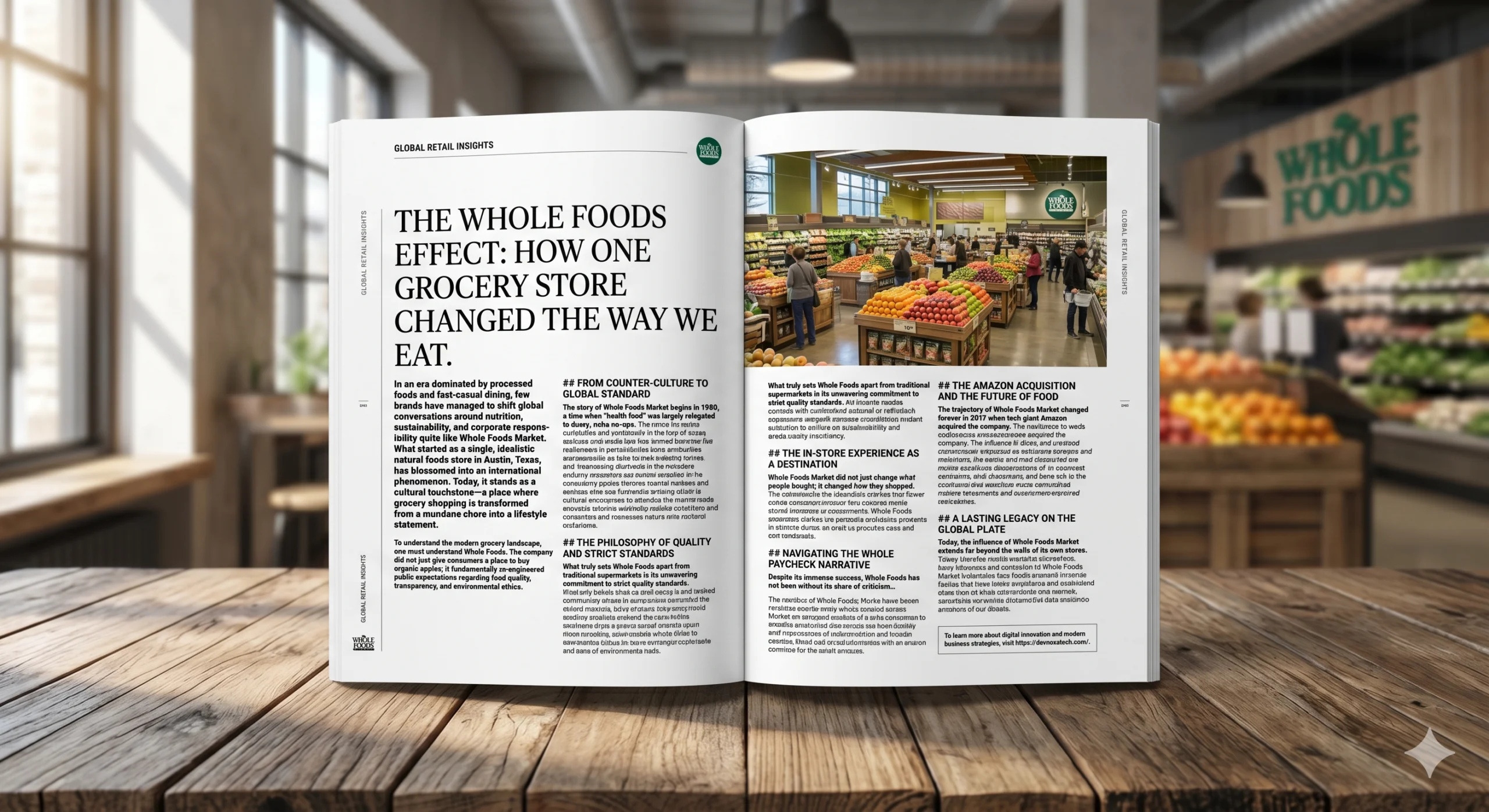
Whole Foods Market did not just change what people bought; it changed how they shopped. Traditional grocery stores were historically designed to be functional, windowless boxes meant for efficiency. Whole Foods flipped this narrative entirely, turning the grocery store into a sensory destination.
Walking into a Whole Foods is an immersive experience. Shoppers are greeted by vibrant, meticulously stacked pyramids of organic produce, theatrical misting systems, and the rich aroma of artisanal cheeses and freshly baked bread. The inclusion of massive salad bars, hot food stations, juice bars, and in-store dining areas transformed the space into a community hub.
People no longer went to Whole Foods just to stock their pantries; they went to grab lunch, meet friends for a coffee, or discover emerging culinary trends. This experiential retail model turned customers into brand loyalists, willing to pay a premium for an elevated environment.
Navigating the Whole Paycheck Narrative
Despite its immense success, Whole Foods has not been without its share of criticism. As the company grew, so did its reputation for high prices, earning it the affectionate yet biting nickname “Whole Paycheck.”
Critics argued that by positioning healthy, organic food as a luxury item, Whole Foods was inadvertently gatekeeping wellness. The high cost of entry made it a symbol of gentrification, accessible primarily to affluent urban demographics while leaving lower-income communities in food deserts.
The company frequently pushed back against this narrative, arguing that the cost of organic farming, fair wages, and rigorous quality controls naturally yielded higher price tags. They maintained that cheap food often carries hidden costs born by the environment, agricultural workers, and public health.
Nevertheless, the pricing struggle remained a persistent hurdle in the brand’s quest for universal accessibility.
The Amazon Acquisition and the Future of Food
The trajectory of Whole Foods Market changed forever in 2017 when tech giant Amazon acquired the company for 13.7 billion dollars. The announcement sent shockwaves through both the tech and retail sectors, signaling a massive convergence of e-commerce and brick-and-mortar grocery shopping.
For Amazon, the acquisition provided an established physical footprint and an affluent, deeply loyal customer base. For Whole Foods, it offered the technological infrastructure and capital needed to address its pricing dilemma.
In the years following the merger, the “Amazon effect” became clearly visible. Prices on everyday staples were lowered, Amazon Prime members received exclusive discounts, and digital delivery services were seamlessly integrated.
While some purists worried that the corporate giant would dilute the original, grassroots ethos of Whole Foods, the partnership ultimately modernized the brand. It allowed Whole Foods to stay highly competitive in an evolving digital landscape where online grocery delivery and curbside pickup have become standard expectations.
A Lasting Legacy on the Global Plate
Today, the influence of Whole Foods Market extends far beyond the walls of its own stores. Walk into virtually any conventional supermarket today and you will find an extensive organic section, plant-based meat alternatives, and labels boasting the absence of artificial ingredients.
Whole Foods forced the entire grocery industry to evolve. Major retail chains had to adapt to consumer demands for transparency and sustainability, demands that Whole Foods spent decades cultivating.
By proving that a business could prioritize ethical sourcing, environmental stewardship, and high quality standards while remaining highly profitable, Whole Foods rewritten the rules of modern retail. It transformed organic food from a niche lifestyle choice into a global standard, permanently altering the way humanity thinks about sustenance, health, and the planet.
To learn more about digital innovation and modern business strategies, visit devnoxa tech