
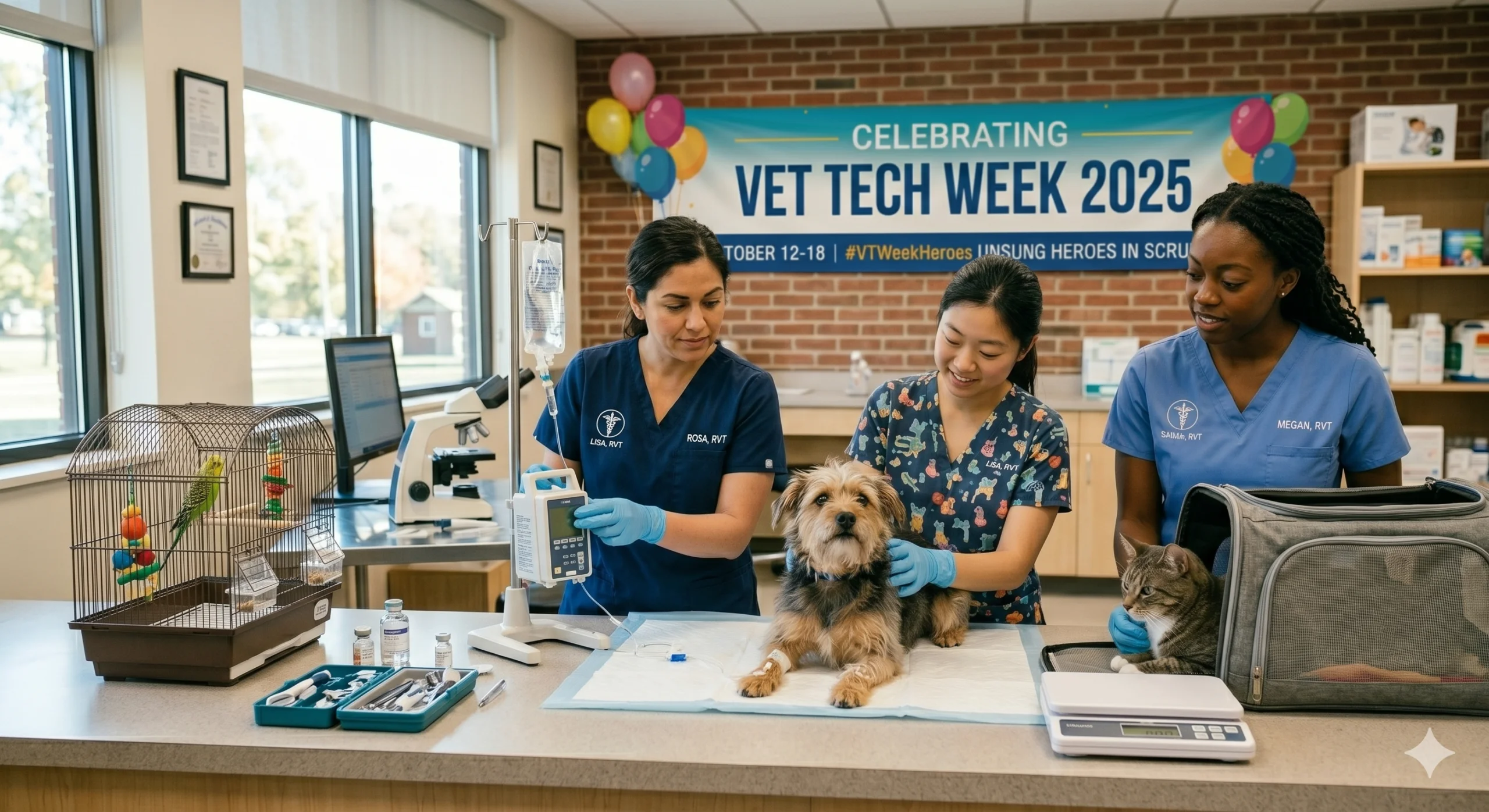

If you have ever spent a frantic night in an emergency animal hospital or brought a new kitten in for its first round of shots, you have met a veterinary technician. They are the people who meet you at the door with a clipboard and a calm demeanour, the ones who whisk your pet into the “back” for treatments, and the ones who stay by the side of a recovering patient long after the lights in the lobby have dimmed. National Veterinary Technician Week is more than just a date on the calendar. It is a vital opportunity to pull back the curtain on one of the most demanding, emotionally taxing, and essential roles in modern medicine.
To understand the importance of this week, we have to look past the popular image of someone simply playing with puppies and kittens all day. While the occasional cuddle is a much needed perk, the reality of the job is a blend of high stakes science, physical labour, and deep emotional labour. A veterinary technician is a nurse, a phlebotomist, an anaesthetist, a dental hygienist, a radiographer, and a grief counsellor all rolled into one. They are the bridge between the veterinarian and the patient, and often the bridge between the clinic and the pet owner.
The Evolution of the Role
The profession has come a long way from its early days. Decades ago, those assisting veterinarians were often trained on the job with little formal education. Today, the landscape is entirely different. Most technicians are graduates of accredited college programmes where they study microbiology, pharmacology, anatomy, and surgical nursing. They must pass rigorous national board exams to earn their credentials. Depending on where they live, they might be called ‘licensed’, ‘registered’, or ‘certified’ veterinary technicians.
This professionalisation is critical because the medicine they practise is becoming increasingly complex. In a modern veterinary hospital, you will find equipment that rivals human hospitals. Technicians are expected to operate ventilators, manage sophisticated IV pumps, and monitor complex anaesthesia for everything from a routine spay to advanced spinal surgery. They are the first line of defence when a patient’s vital signs begin to dip, and their quick thinking often makes the difference between a successful recovery and a tragic outcome.
A Day in the Life
A typical day for a technician rarely follows a predictable schedule. It often starts before the sun comes up, checking on patients that stayed overnight. They assess pain levels, administer medications, and ensure every animal is clean, fed, and comfortable. Once the clinic doors open, the pace accelerates.
In the exam room, a technician is an expert communicator. They have to ask the right questions to get a clear history from an owner who might be stressed or confused. They have to translate “doctor speak” into plain English so that a family understands why their senior dog needs blood work or why a specific diet is life saving.
Behind the scenes, the work is even more intense. In the laboratory, they are peering through microscopes to identify parasites or abnormal cells. In the radiology suite, they are using precision and patience to get clear images of a wiggly animal’s internal organs. In the surgical suite, they are the patient’s guardian, meticulously tracking heart rate, blood pressure, and oxygen levels while the veterinarian focuses on the procedure itself.
Through all of this, they are physically active. They are lifting heavy dogs, restraining frightened cats with a “fear free” touch, and standing on their feet for ten or twelve hours at a time. It is a job that requires a high level of physical stamina and a thick skin, often literally, as scratches and bruises are part of the daily uniform.
The Emotional Weight
Beyond the physical and intellectual demands, there is the emotional toll. Veterinary medicine carries a unique burden known as compassion fatigue. Technicians see animals at their worst. They see the results of neglect, the trauma of accidents, and the slow decline of chronic illness. They are the ones who hold the paw of a pet during their final moments so they don’t have to be alone, often while hiding their own tears so they can remain a pillar of strength for the grieving owner.
This emotional labour is why Vet Tech Week is so important. It is a moment for the community to acknowledge that these professionals carry a heavy weight. It is a time to say that their empathy does not go unnoticed. When a technician goes home at the end of the shift, they don’t just leave the job at the door. They wonder if the cat in the ICU made it through the night. They worry about the owner who couldn’t afford the surgery. This deep level of caring is what makes them great at their jobs, but it is also what makes the job so incredibly difficult.
Celebrating Innovation and Skill
As we celebrate this week, we also celebrate the future of the profession. Veterinary technicians are increasingly specialising in areas like internal medicine, emergency and critical care, anaesthesia, and even behaviour. These specialists have gone through years of extra training to provide a level of care that was once unimaginable in the veterinary field.
We are also seeing a shift in how technology supports these teams. From digital record keeping that allows for better continuity of care to advanced diagnostic tools that provide instant answers, the modern technician is a tech savvy professional. They are constantly learning, adapting to new protocols, and finding better ways to advocate for their patients.
How to Show Your Appreciation
If you are a pet owner, you don’t have to wait for a specific week to show your gratitude, but Vet Tech Week provides a great excuse to do something special. A simple thank you note is often the most cherished gift a technician can receive. Knowing that their hard work made a positive impact on a family’s life can fuel them through weeks of difficult shifts.
Many clinics appreciate healthy snacks, coffee, or even a shout out on social media. However, the greatest gift you can give a technician is your trust and your patience. When you follow their advice on preventative care or stay calm when the clinic is running behind due to an emergency, you are respecting their expertise and the reality of their work environment.
The Unbreakable Bond
At the heart of everything a veterinary technician does is the human animal bond. They do this job because they believe that animals deserve a voice and a high standard of medical care. They do it because they believe that the love people have for their pets is worth protecting.
Whether they are working in a small town clinic, a sprawling university hospital, or a wildlife rescue centre, their goal is the same: to heal, to comfort, and to educate. They are the unsung heroes in scrubs who make the world a kinder place for our four legged, winged, and scaled companions.
As we look toward the future, the role of the veterinary technician will only continue to grow in importance. As medicine advances and our pets live longer lives, the need for skilled, compassionate nursing care will be higher than ever. This week, and every week, we owe them a debt of gratitude for their tireless dedication to the creatures who cannot thank them themselves. devnoxa tech