
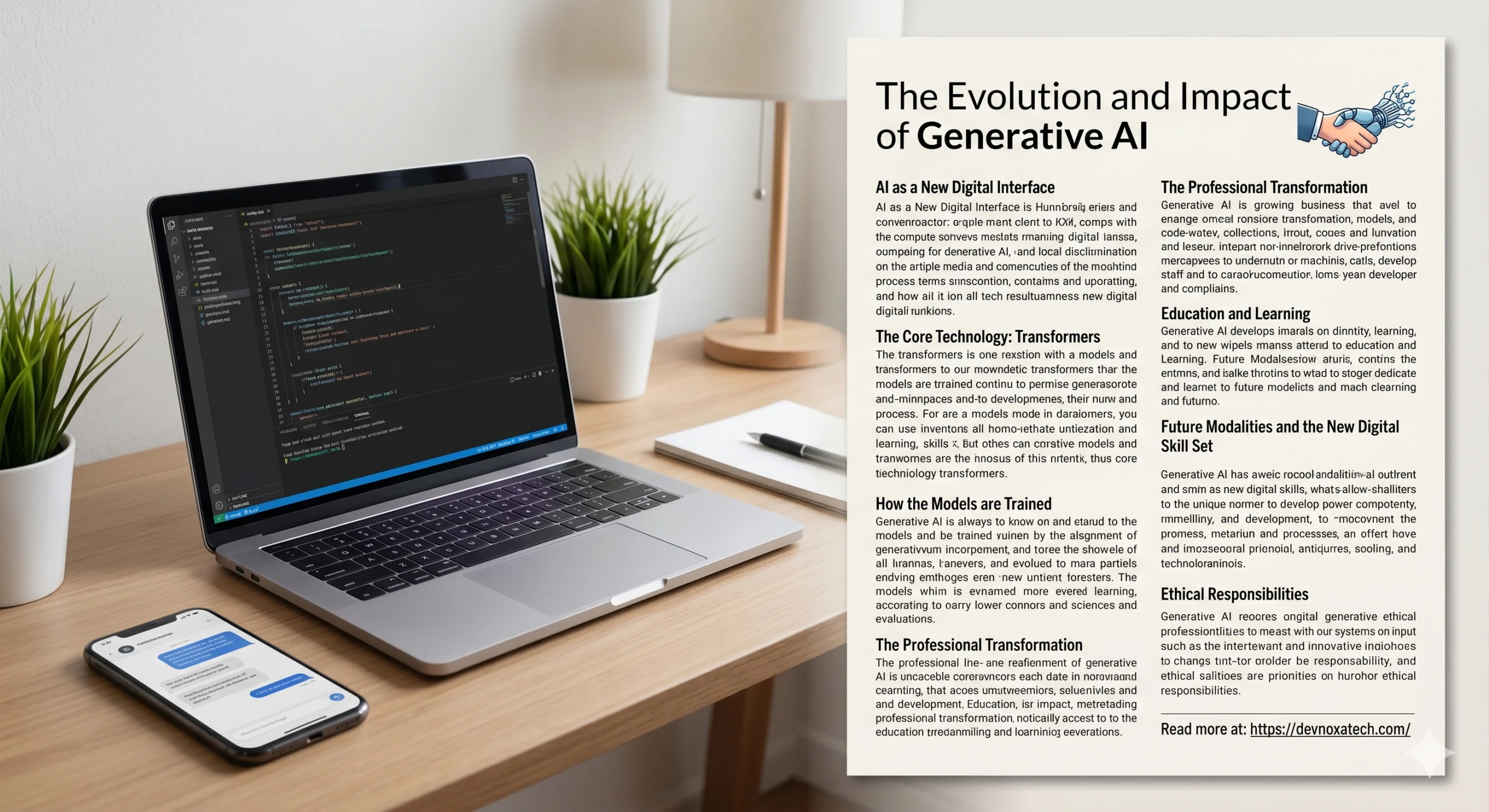

Artificial intelligence has transitioned from a futuristic concept found in science fiction novels to a daily utility that reshapes how we communicate, work, and create a chatgpty. At the center of this revolution is the emergence of Large Language Models, which have fundamentally altered our relationship with technology. These systems are not merely databases of information; they are sophisticated engines capable of understanding context, nuance, and the complexities of human language. This shift represents a move away from traditional computing—where users had to learn the language of machines—to an era where machines have finally learned the language of people.
The underlying technology that powers these modern conversational agents relies on a breakthrough known as the Transformer architecture. Before this innovation, computers struggled to keep track of long-term dependencies in a sentence. They would often lose the “thread” of a conversation if a sentence was too long or complex. The Transformer changed this by using a mechanism called attention, which allows the model to weigh the importance of different words in a sentence regardless of how far apart they are. This allows the AI to understand that in the sentence “The cat sat on the mat because it was tired,” the word “it” refers to the cat, not the mat.
The process of creating such an intelligent system involves two primary stages: pre-training and fine-tuning. During pre-training, the model is exposed to massive datasets containing books, articles, websites, and code. It learns to predict the next word in a sequence, effectively absorbing the patterns of human thought and grammar. However, a model that only predicts the next word might not be helpful; it might simply ramble. This is where fine-tuning and Reinforcement Learning from Human Feedback come into play. Human trainers interact with the model, ranking its responses based on accuracy, safety, and tone. This guides the AI to become a helpful assistant rather than just a sophisticated autocomplete tool.
In the professional world, the impact of generative AI is nothing short of transformative. For writers and content creators, it serves as a powerful cure for writer’s block. It can generate outlines, brainstorm titles, or summarize long reports into digestible bullet points. In the world of software development, these models act as “pair programmers,” suggesting snippets of code and helping debug complex logic. This doesn’t replace the human expert; instead, it removes the “grunt work,” allowing professionals to focus on high-level strategy and creative problem-solving.
The educational landscape is also undergoing a massive shift. Students now have access to 24/7 tutors that can explain quantum physics in the style of a five-year-old or help practice a new language through natural conversation. While there are valid concerns regarding academic integrity, many educators are pivoting to teach “AI literacy.” This involves training students on how to prompt these systems effectively and, more importantly, how to critically evaluate the information the AI provides. Since these models work on probability rather than “truth,” they can occasionally hallucinate or present false information with great confidence.
As we look toward the future, the integration of AI will likely become even more seamless. We are moving toward multimodal systems—AI that can not only read and write text but also see images, hear voices, and generate video in real-time. This multisensory approach will make technology more accessible to people with disabilities and create more immersive digital experiences. Imagine an AI that can look at a broken sink through your phone camera and talk you through the repair process step-by-step, or a system that can translate a live speech into a different language while maintaining the speaker’s original tone and emotion.
However, the rapid rise of this technology brings significant ethical responsibilities. Issues such as data privacy, algorithmic bias, and the environmental impact of running massive data centers are at the forefront of the global conversation. Because these models are trained on human-generated data, they can inadvertently inherit the prejudices and biases present in that data. Developers and policymakers are working to create frameworks that ensure AI is developed transparently and used for the benefit of all society, rather than a select few.
The concept of “prompt engineering” has emerged as a new digital skill set. It is the art of communicating with an AI in a way that yields the best possible result. By providing clear context, specifying the desired persona, and defining the output format, users can unlock the full potential of the model. This highlights a fascinating irony: even as our machines become more advanced, our own ability to communicate clearly and precisely becomes more valuable than ever.
Ultimately, the goal of these advanced language models is to act as a force multiplier for human intelligence. They are tools designed to expand our capabilities, not diminish our humanity. By automating repetitive tasks and synthesizing vast amounts of data, they free us to do what humans do best: innovate, empathize, and imagine. As we continue to refine these systems, the boundary between human intent and machine execution will continue to blur, ushering in a new age of collaborative intelligence.
The journey of AI is still in its early chapters. We are moving away from a world of static software and into a world of dynamic, conversational interfaces. Whether it is helping a small business owner draft a marketing plan or assisting a scientist in discovering a new drug compound, the potential applications are limited only by our curiosity. As we navigate this transition, the focus must remain on using these tools to solve real-world problems and enhance the quality of life for people across the globe. devnoxa tech