
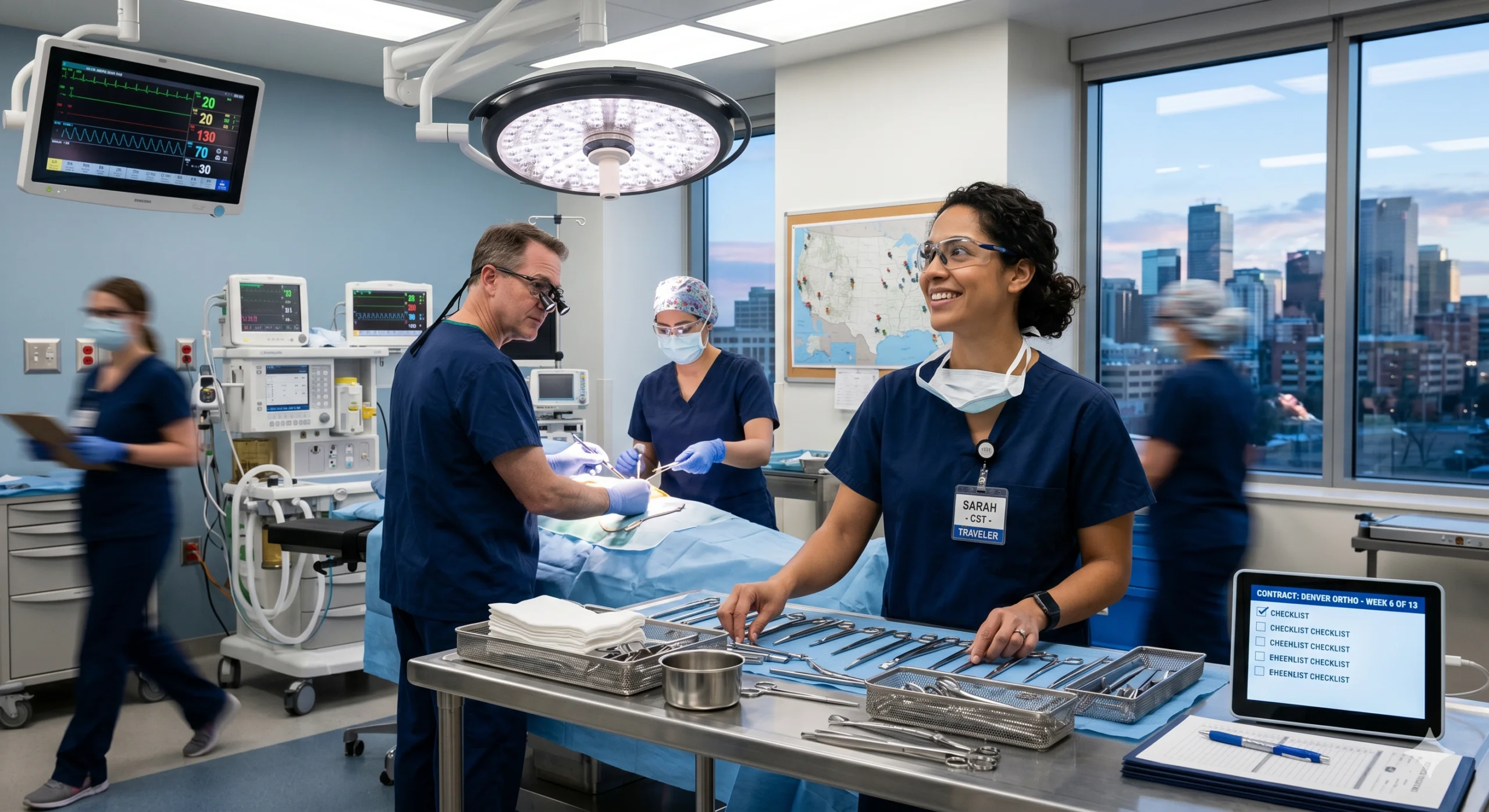

For many healthcare professionals, the traditional nine to five in a single hospital can eventually start to feel like a routine. While the work itself remains vital, the environment can become static. This is where the world of travel and surgical technology offers a thrilling alternative. As of 2026, the demand for travel surgical technologists CSTs is at an all time high, driven by a national shortage of specialised staff and an ageing population requiring more elective and emergency procedures. Choosing a path as a traveller means trading the comfort of the familiar for the excitement of the unknown, all while significantly boosting your earning potential and professional skill set.
What Exactly Is a Travel Surgical Technologist?
At its core, a travel surgical tech performs the same critical duties as a permanent staff member. They are the guardians of the sterile field, the right hand of the surgeon, and the meticulous organisers of the operating room. They set up the surgical instruments, assist in draping the patient, and anticipate every move the surgeon makes to ensure the procedure flows without a hitch.
The “travel” aspect comes in the form of short term contracts, typically lasting thirteen weeks. Instead of being employed by a specific hospital, you work for a healthcare staffing agency that matches your skills with facilities in need. One month you might be assisting in a high stakes trauma centre in downtown Chicago, and the next, you could be working in a serene outpatient surgery centre in the foothills of the Colorado Rockies. This lifestyle offers a unique blend of professional consistency and geographic variety.
The Financial Advantage: More Than Just a Pay cheque
One of the primary drivers for entering the travel circuit is the financial reward. Because travel surgical techs are often brought in to fill urgent gaps or cover seasonal surges, hospitals are willing to pay a premium for their expertise. In 2026, it is not uncommon for travel techs to earn double sometimes even triple the hourly rate of their permanent counterparts.
The compensation package for a traveller is also structured differently. It often includes:
- Tax Free Stipends: A significant portion of a traveller’s pay is often allocated for housing, meals, and incidental expenses. If handled correctly, these stipends can be tax exempt, drastically increasing your take home pay.
- Completion Bonuses: Many agencies offer bonuses for successfully finishing a contract, providing a nice financial “crescendo” at the end of each assignment.
- Travel Reimbursement: Most contracts include funds to cover the cost of getting to your new city, whether that’s a cross country flight or a long haul road trip.
Professional Growth and the “Master of All Trades”
Beyond the money, travelling is one of the fastest ways to become an elite professional in the operating room. Every hospital has its own protocols, its own preferred instruments, and its own unique team dynamics. As a traveller, you are forced to adapt and adapt quickly.
By working in diverse environments, you gain exposure to a wider variety of surgical specialities. You might spend a quarter focusing on orthopaedics in a specialised sports medicine clinic, only to move into neurosurgery or cardiovascular cases in a major university hospital. This breadth of experience makes you incredibly valuable. When a hiring manager sees a resume filled with successful assignments at top tier facilities, they know they are looking at someone who is versatile, unflappable, and technically proficient.
The Challenges of Life on the Road
Of course, the travel lifestyle isn’t all scenic views and high pay cheques. It requires a certain personality type to thrive. The most successful travellers are those who are fiercely independent and socially adaptable.
The most common challenges include:
- The “First Day” Jitters: You are essentially starting a new job every three months. You have to learn where the supply room is, how the surgeons like their back tables set up, and the names of your new coworkers all over again.
- Distance from Home: Being away from friends and family for months at a time can lead to homesickness. While technology makes staying in touch easier, missing birthdays, holidays, or simple weekend hangouts can be tough.
- Housing Logistics: While agencies provide stipends, finding short term, furnished housing in a new city can be a stressful puzzle to solve, especially in high demand markets like California or New York.
How to Get Started: The Requirements for 2026
To jump into the travel market, you can’t just be a “newbie”. Most agencies and hospitals require at least one to two years of recent, full time experience in a high volume surgical setting. This ensures that you have the “muscle memory” needed to walk into a new OR and be productive from day one.
You will also need:
- CST Certification: National certification through the NBSTSA (National Board of Surgical Technology and Surgical Assisting) is the gold standard and is required by almost all travel agencies.
- BLS/ACLS Certification: Up to date Basic Life Support and, in some cases, Advanced Cardiovascular Life Support certifications are mandatory.
- A Solid Recruiter: Your relationship with your recruiter is the most important part of your travel career. They are your advocate, your negotiator, and your problemsolver when things go sideways on an assignment.
Conclusion: Is the Traveller Life for You?
The world of travel surgical tech jobs is a fast paced, high reward career path that offers unparalleled freedom. It is a chance to see the country, build a massive professional network, and take control of your financial future. If you are a skilled tech who craves adventure and isn’t afraid of a little change, the road is calling. In 2026, there has never been a better time to take your skills on the road and make a lasting impact on patients across the nation. devnoxa tech