
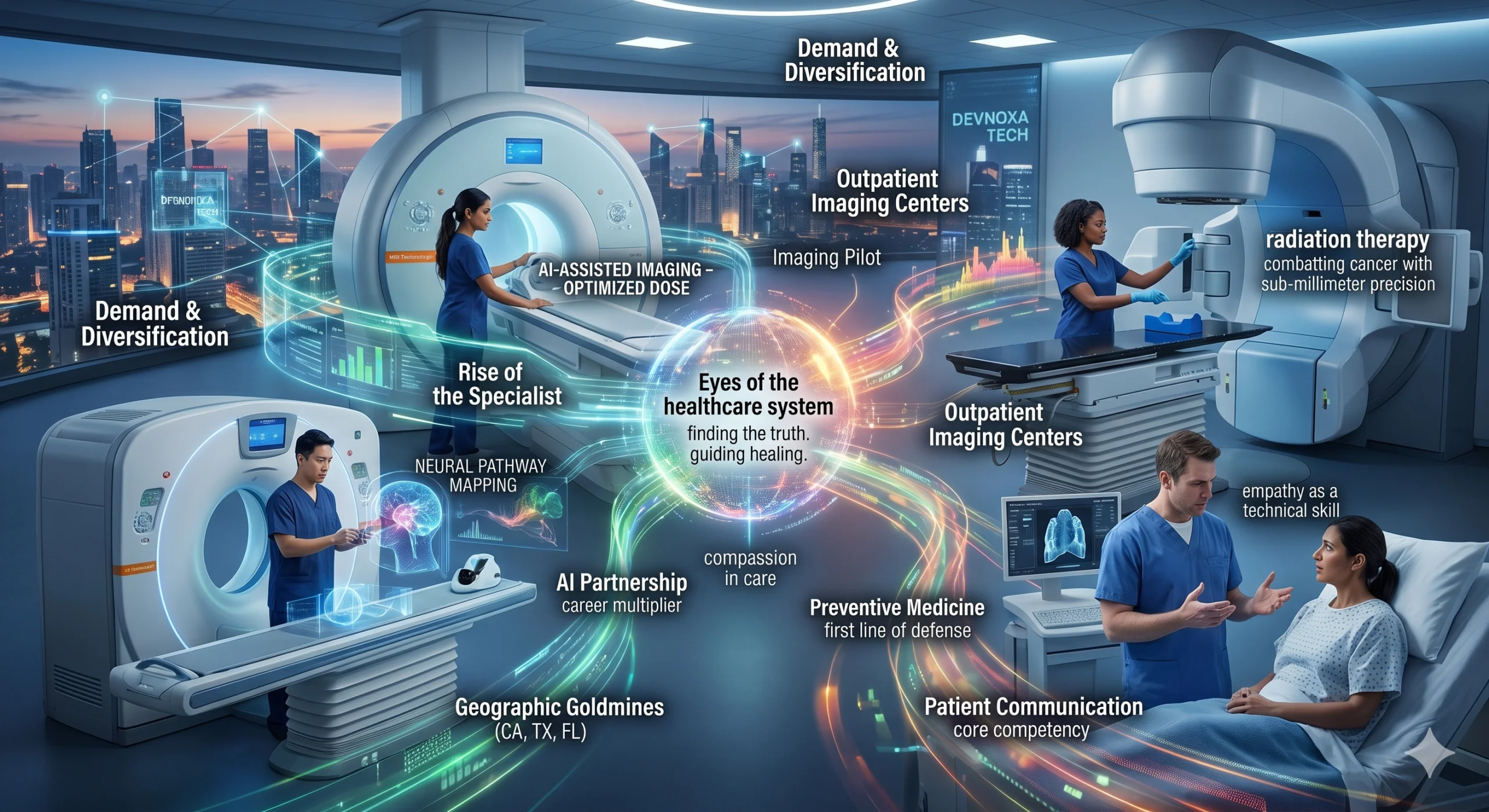

In 2026, a “Rad Tech job” is no longer just about standing behind a lead glass window. It is a dynamic career that sits at the intersection of human empathy and cutting edge science. Whether you are interested in the fast paced environment of a trauma center or the specialized world of outpatient oncology, the current market offers a clear roadmap for success and financial stability.
The 2026 Job Market: Demand and Diversification
The demand for radiologic technologists is currently driven by a perfect storm of factors: an aging global population, a rise in chronic disease management, and a massive shift toward Preventive Medicine. In 2026, diagnostic imaging is the first line of defense in modern healthcare, and the market reflects this.
Where the Jobs Are
While hospitals remain the primary employers, we have seen a significant “migration” of roles into specialized settings.
- Outpatient Imaging Centers: These are currently the fastest growing employer segment. They offer more predictable schedules and are increasingly equipped with the same high end tech found in major hospitals.
- Orthopedic and Neurology Clinics: These private practices are hiring specialized rad techs to provide immediate, on site diagnostics, streamlining the patient experience.
- Mobile Imaging Units: A rising trend in 2026, mobile units bring X-ray and ultrasound services directly to long term care facilities and rural communities, creating unique roles for techs who enjoy travel and independence.
The Rise of the Specialist
In 2026, the key to a high paying, sustainable career in radiology is specialization. While a general “X-ray Tech” license is the foundation, the industry is increasingly rewarding those who pursue advanced certifications.
High Demand Modalities
- MRI Technologists: Magnetic Resonance Imaging remains the “gold standard” for soft tissue. In 2026, MRI techs are in exceptionally high demand, particularly as new “low helium” and “open” MRI systems make the technology more accessible to smaller clinics.
- CT Technologists: Computed Tomography is the workhorse of the emergency room. Techs with CT expertise are seeing some of the highest salary growth in 2026, driven by the need for rapid diagnostics in stroke and trauma cases.
- Cardiac Interventional Radiographers: As cardiovascular disease remains a primary health concern, the “Cath Lab” is a high stakes, high reward environment for techs who want to be at the heart of surgical interventions.
The AI Partnership: 2026’s Competitive Edge
A common question in 2026 is whether AI is replacing rad tech jobs. The reality is quite the opposite: AI is a career multiplier.
Modern imaging software now handles the “heavy lifting” of image reconstruction and initial metadata tagging. This doesn’t mean the tech is less important; it means the tech is now an Imaging Pilot. In 2026, the most successful rad techs are those who are “AI-literate.” They use deep learning tools to reduce scan times by up to 50% and utilize AI-driven cameras to ensure perfect patient positioning on the first try.
Employers are currently prioritizing candidates who can demonstrate proficiency with these “Smart Scanners.” Being the bridge between the AI algorithm and the patient’s comfort is the ultimate job security in the current decade.
Geographic Goldmines: Where the Money Is
In 2026, salary is heavily influenced by location and cost of living.
- California and New York: These states continue to offer the highest nominal salaries, often exceeding $100,000 for experienced specialists. However, the high cost of housing in hubs like San Francisco or Manhattan remains a significant factor.
- Texas and Florida: These are currently considered “Growth Hotspots.” With no state income tax and a massive influx of retirees, these states are seeing robust hiring and offer some of the best “purchasing power” for new graduates.
- Arizona and Colorado: These states have emerged as “Innovation Hubs” for radiology, offering a high quality of life paired with competitive wages in growing metropolitan areas like Phoenix and Denver.
The Human Element: Empathy as a Technical Skill
Despite all the automation, the “human wording” of a rad tech’s day is what defines their value. In 2026, patients are more informed but also more anxious. The ability to explain a complex 3D scan to a nervous patient or to maintain a calm, professional presence in a busy trauma bay is a skill that no algorithm can replicate.
The job market is increasingly valuing Patient Communication as a core competency. Technologists who can combine “high tech” with “high touch” are the ones being recruited for leadership roles and clinical coordinator positions.
Building Your 2026 Career Strategy
For those looking to enter the field or make a move this year, the strategy is clear:
- Get Certified Early: Pursue your primary ARRT (or regional equivalent) credentials but have a plan for a second modality within 24 months.
- Embrace the Cloud: Familiarize yourself with cloud-native PACS (Picture Archiving and Communication Systems) and remote consultation tools.
- Network in Niche Groups: The 2026 job market is highly social. Joining specialized radiology forums and attending regional conferences like the 2026 “Rad Tech World” events can lead to unadvertised “hidden” job opportunities.
Conclusion: A Career with Vision
Radiologic technology in 2026 is a field of immense possibility. It offers the stability of a healthcare career with the excitement of a tech job. By focusing on specialization, staying ahead of the AI curve, and never losing sight of the patient behind the image, you can build a career that is both financially rewarding and deeply meaningful.
The “kaleidoscope” of the profession is shifting every day, and for the right candidate, the view has never been better.
For those looking to build their own technical foundations or seeking a partner to navigate the high-stakes world of digital growth and medical innovation, the journey begins with understanding the framework of the future. devnoxa tech
Follow-up Question: Are you looking to enter a specific modality like MRI or CT, or are you more interested in the general job market trends for new graduates?