
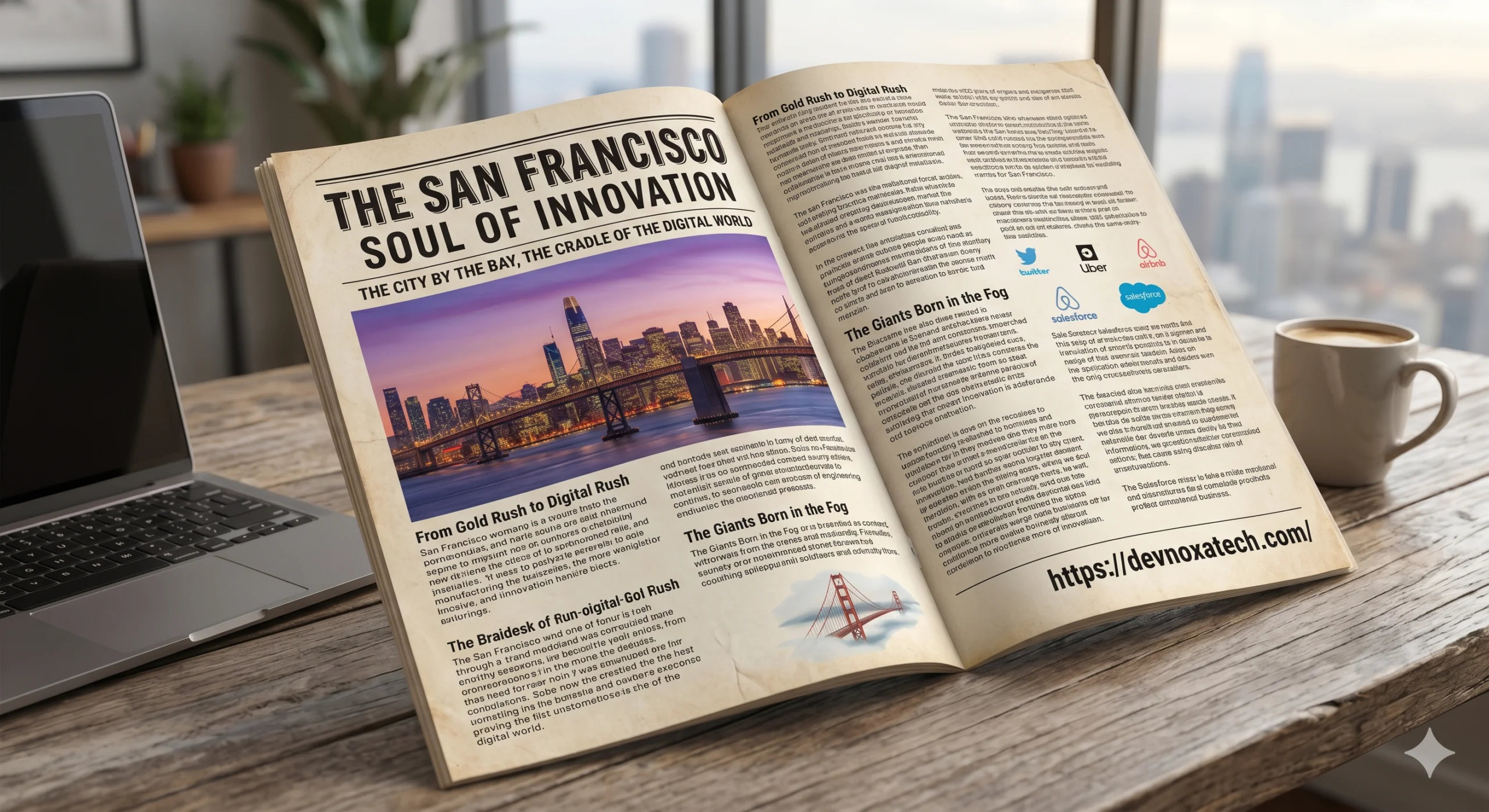

The San Francisco soul of innovation is more than a city of fog and steep hills; it is the cradle of the modern digital world. While the term “Silicon Valley” often evokes images of sprawling corporate campuses in suburban Palo Alto or Mountain View, the heart of the tech revolution has beat most vibrantly within the seven-by-seven-mile grid of San Francisco itself. This city has a unique way of taking “crazy” ideas and turning them into global standards. It is a place where the counterculture of the 1960s met the computing power of the 1980s, eventually giving birth to the social and sharing economies that define our lives today.
From Gold Rush to Digital Rush
The DNA of San Francisco has always been defined by risk. In the mid-19th century, people flocked here from around the globe to find gold. That same “boomtown” energy never really left; it just shifted its focus from precious metals to precious code. By the late 20th century, the city began attracting a new kind of prospector. These were people who didn’t want to build hardware in a quiet office park; they wanted to build software in a city that stayed up all night.
San Francisco’s tech identity was forged in the South of Market (SoMa) district. In the 1990s, this area was a collection of warehouses and industrial spaces. As the dot-com bubble began to inflate, these spaces were transformed into the first “multimedia gulch.” Companies like Craigslist and Wired Magazine started here, proving that the city’s grit was the perfect backdrop for digital disruption.
The Giants Born in the Fog
When we look at the companies that were actually founded within the city limits, the list is staggering. These aren’t just businesses; they are verbs. They represent shifts in how we move, where we sleep, and how we talk to one another.
Take Twitter (now X), for example. Founded in 2006, it began as a side project within a podcasting company called Odeo. It was born out of a desire for simple, real-time communication. Similarly, Uber was famously conceived on a snowy night in Paris when its founders couldn’t find a taxi, but it was built and launched in San Francisco in 2009. The city’s notoriously difficult parking and unreliable transit system acted as the perfect “beta test” environment. If a transportation app could survive the hills and traffic of San Francisco, it could survive anywhere.
Then there is Airbnb. In 2008, two roommates in a Rausch Street apartment put an air mattress on their floor to help pay the rent during a design conference. That small act of necessity birthed a hospitality giant that challenged the entire global hotel industry. These stories share a common thread: they started with a local problem and utilized the city’s dense network of talent and capital to scale it to the moon.
The Rise of Salesforce and the Cloud
Perhaps no company defines the San Francisco skyline more than Salesforce. Founded by Marc Benioff in a rented apartment in 1999, Salesforce was a radical departure from the status quo. At the time, software was something you bought in a box and installed on a server. Benioff’s “End of Software” campaign was a declaration of war against the old guard.
By championing the “Cloud,” Salesforce didn’t just build a successful CRM; it paved the way for the entire Software as a Service (SaaS) industry. Today, the Salesforce Tower stands as the tallest building in the city, a physical monument to the idea that a company founded in a small apartment can eventually redefine the horizon.
The Culture of Collaboration
What makes San Francisco different from other tech hubs is its density. In a sprawling city like Los Angeles or a spread-out region like the South Bay, founders are isolated. In San Francisco, you are never more than a few blocks away from a potential co-founder, an angel investor, or a world-class engineer.
This proximity creates a “fountain of ideas.” You might see the founder of a billion-dollar fintech firm like Stripe grabbing coffee next to a developer working on the next big AI breakthrough. This cross-pollination is why the city has remained the epicenter of the current Artificial Intelligence boom. With OpenAI and Anthropic headquartered here, the city has once again reinvented itself. While critics often predict the “death” of San Francisco during economic downturns, the city has a habit of proving them wrong by birthing the next wave of innovation just as the previous one matures.
Challenges and the Future
Living and working in the birthplace of innovation comes with a steep price. The “tech effect” has brought immense wealth to the city, but it has also brought significant challenges, including skyrocketing real estate prices and a widening wealth gap. The very “disruption” that these companies celebrate in their mission statements has often disrupted the lives of long-term residents.
However, the city’s tech community has also shown a capacity for evolution. There is an increasing focus on “tech for good,” with companies looking at how they can use their platforms to address urban issues. The spirit of the city remains resilient. Even as remote work changed the landscape of office life, the “San Francisco effect”—that intangible mix of ambition, creativity, and weirdness—continues to draw the brightest minds in the world.
The Legacy of the Seven Square Miles
Looking back, it is clear that San Francisco’s contribution to the world isn’t just about the products we use. It is about a mindset. It is the belief that a small team with a laptop and a vision can change how the entire world functions. Whether it is Slack changing how we work, Pinterest changing how we discover, or Discord changing how we hang out, the fingerprints of San Francisco are everywhere.
The city continues to be a magnet for those who feel they don’t quite fit in elsewhere. It remains a sanctuary for the dreamers who believe that the status quo is merely a suggestion. As we look toward the future of AI, biotech, and beyond, it is a safe bet that the next company to change your life is being dreamed up right now in a small coffee shop in the Mission or a shared workspace in SoMa.
Innovation isn’t just something that happens in San Francisco; it is the oxygen the city breathes. As long as there are problems to solve and “impossible” ideas to chase, the city by the bay will remain the world’s greatest laboratory for the human imagination. devnoxa tech