

The world of healthcare is moving faster than ever, and pharmacy tech salary are the engine keeping the gears turning. Whether you are considering a career change or you are already behind the counter, the question of “how much can I actually make?” is usually top of mind. In 2026, the answer is more nuanced than a single number. The pharmacy technician role has evolved from simple pill-counting to a complex position involving insurance navigation, sterile compounding, and digital inventory management.
Because the role has grown, the pay has followed suit. However, your paycheck will depend heavily on where you live, where you work, and how many certifications you carry. Let’s break down the current landscape of pharmacy tech salaries and what the future holds for this essential profession.
The Big Picture: National Averages and Ranges
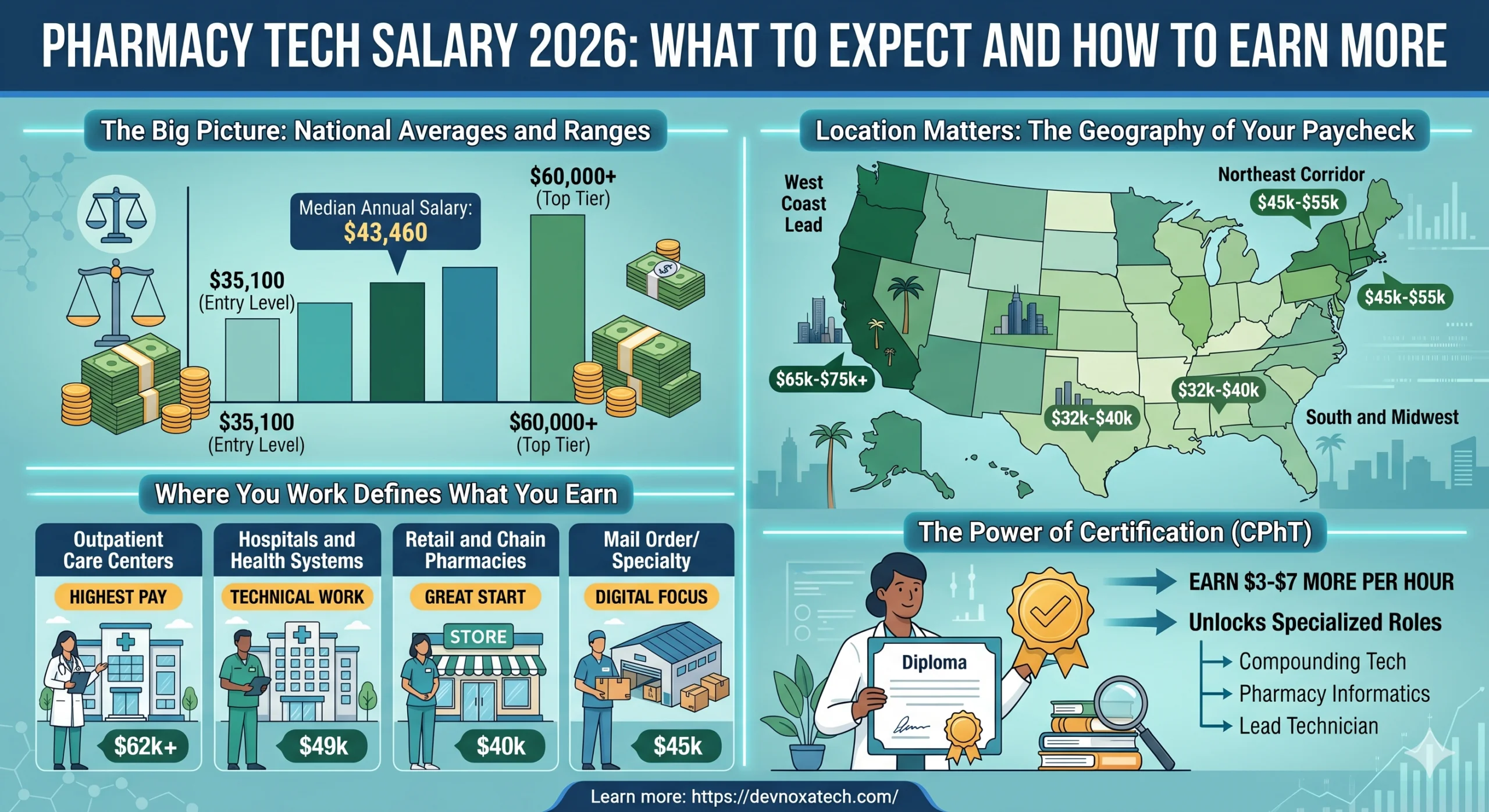
As we move through 2026, the median annual salary for a pharmacy technician in the United States sits around $43,460. While that provides a baseline, it doesn’t tell the whole story. The “floor” for entry-level roles in some retail settings might start near $35,100, while top-tier technicians in specialized environments are breaking the $60,000 barrier.
On an hourly basis, most technicians find themselves earning between $18 and $25 per hour. The shift toward higher wages has been driven by a combination of high demand, an aging population requiring more medication, and the increasing clinical responsibilities being placed on pharmacy staff.
Location Matters: The Geography of Your Paycheck
Where you clock in is perhaps the biggest factor in your earning potential. The cost of living and state regulations regarding technician duties create massive swings in pay.
- The West Coast Lead: States like Washington and California continue to lead the pack. In some California metro areas, such as San Jose or San Francisco, median salaries can soar above $70,000.
- The Northeast Corridor: High demand in states like Massachusetts and New York keeps wages competitive, often ranging between $45,000 and $55,000.
- The South and Midwest: While these regions often have a lower cost of living, the average salaries reflect that, typically hovering between $32,000 and $40,000.
If you are mobile, moving to a high-demand state can result in an immediate 20% to 30% pay bump, though it is always wise to weigh that against the local cost of housing.
Where You Work Defines What You Earn
Not all pharmacies are created equal. The setting you choose will dictate your daily stress levels and your bank balance.
1. Outpatient Care Centers and Government Roles
These are currently the “gold mines” for technicians. Working for a federal agency or a specialized outpatient clinic often brings the highest pay, with some roles averaging over $62,000. These positions usually come with robust benefits and more predictable schedules than retail.
2. Hospitals and Health Systems
Inpatient pharmacy technicians generally earn more than their retail counterparts, with a median around $49,000. The work is more technical, often involving IV room compounding and delivering medications to various floors.
3. Retail and Chain Pharmacies
This is where the majority of technicians start. While retail (like CVS, Walgreens, or grocery store pharmacies) often offers lower starting pay—around $40,000—they are excellent places to gain experience and often provide tuition assistance for those looking to get certified.
The Power of Certification (CPhT)
If there is one “cheat code” to increasing your salary, it is becoming a Certified Pharmacy Technician (CPhT). In 2026, employers are increasingly viewing certification not as an “extra” but as a requirement for any role above entry-level.
Certified technicians typically earn $3 to $7 more per hour than those who are uncertified. Beyond the immediate pay raise, certification opens doors to specialized roles like:
- Compounding Technician: Mixing custom medications.
- Pharmacy Informatics: Managing the software and data systems.
- Lead Technician: Supervising a team and handling scheduling.
Factors That Will Drive Growth in 2026
The job outlook for pharmacy technicians is projected to grow by about 6% to 7% over the next decade, which is faster than the average for many other careers. Several factors are pushing this trend:
- The Silver Tsunami: As the Baby Boomer generation ages, the volume of prescriptions being filled is hitting record highs.
- Expanded Scope of Practice: Many states now allow technicians to perform tasks previously reserved for pharmacists, such as administering vaccines or performing final product checks (Tech-Check-Tech). As responsibilities increase, so does the leverage to ask for higher pay.
- Technology Integration: Technicians who are tech-savvy and can manage automated dispensing robots or complex insurance billing software are becoming invaluable to employers.
Beyond the Base Salary: Benefits and Perks
When evaluating a pharmacy tech offer, don’t just look at the hourly rate. In 2026, the “total compensation” package is more important than ever. Many employers are offering:
- Sign-on Bonuses: It is not uncommon to see $1,000 to $3,000 bonuses for technicians willing to commit to a one or two-year contract in high-demand areas.
- Shift Differentials: Working nights, weekends, or holidays in a hospital can add an extra $2 to $5 per hour to your base pay.
- Professional Development: Many hospitals will pay for your CPhT exam fees and continuing education credits.
Final Thoughts: Is It a Good Career Path?
Pharmacy technology is a stable, “recession-proof” career. People will always need medication, regardless of the economy. While the starting pay might feel modest in some regions, the ceiling is much higher than it used to be. By focusing on certification, gaining experience in a hospital setting, and staying on top of new pharmacy technologies, you can turn a “job” into a high-paying professional career.
The path to a higher salary is clear: start with the basics, get certified as quickly as possible, and don’t be afraid to transition into specialized settings where your skills are in the highest demand. devnoxa tech