
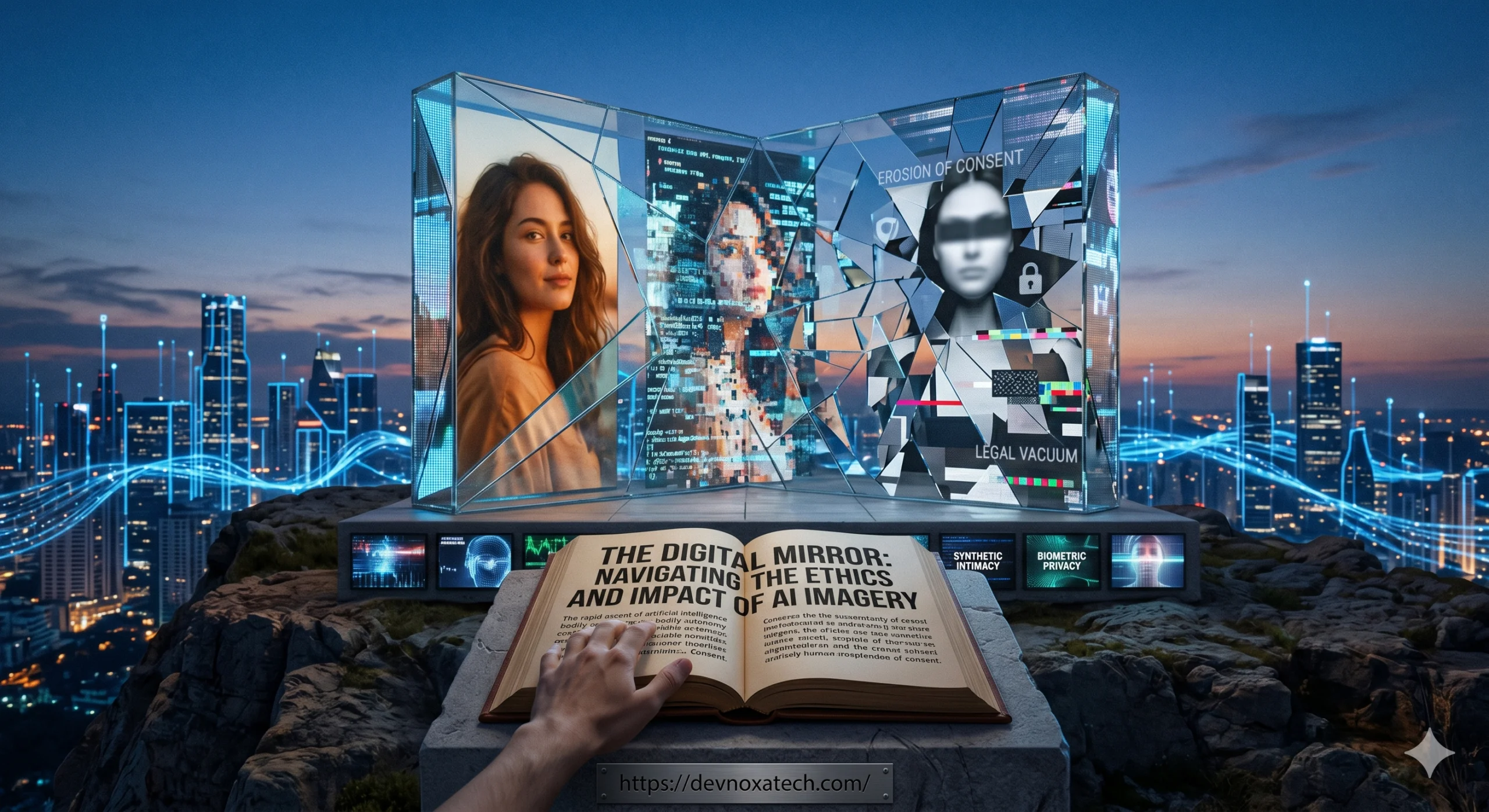

The rapid ascent of artificial intelligence has fundamentally altered our relationship with visual media. We have moved from an era where “seeing is believing” to a landscape where any image can be a sophisticated fabrication. While AI’s potential for creative expression and scientific advancement is staggering, it has also opened a Pandora’s box regarding bodily autonomy, consent, and the ethics of synthetic nudity. The intersection of AI Nude and intimate imagery represents one of the most significant challenges to digital privacy and human dignity in the modern age.
The Rise of Synthetic Intimacy
The technology underlying AI-generated imagery—specifically generative adversarial networks (GANs) and diffusion models—was originally designed to push the boundaries of art and data visualization. However, as these tools became more accessible, they were quickly repurposed. Today, software can strip clothing from photographs or generate hyper-realistic nude figures from simple text prompts. This isn’t just a technological milestone; it’s a social turning point.
When we talk about synthetic nudity, we aren’t just discussing pixels. We are discussing the representation of the human form without the consent of the individual being depicted. This technology allows for the creation of “deepfakes” that are often indistinguishable from reality, blurring the line between a person’s actual physical life and a fabricated digital avatar.
The Erosion of Consent
At the heart of the controversy is the concept of consent. In a traditional context, sharing intimate imagery is an act of trust. AI bypasses this social contract entirely. By using a handful of public photos from a social media profile, an actor can generate explicit content featuring someone who never agreed to participate in such imagery.
This creates a new form of digital violence. The victim’s likeness is weaponized against them, often leading to psychological trauma, reputational damage, and professional fallout. Because the images look real, the burden of proof often falls on the victim to “prove” they aren’t the person in the photo—a difficult task in an era where digital forensics is constantly playing catch-up with generative algorithms.
The Psychological and Social Toll
The impact of non-consensual AI-generated imagery extends far beyond the immediate shock. It fosters a culture of surveillance and insecurity. If anyone can be “undressed” by an algorithm, the very idea of public space and digital presence becomes a liability. This has a disproportionate effect on women and marginalized communities, who are most frequently targeted by these technologies.
Furthermore, the proliferation of hyper-realistic, AI-perfected bodies sets impossible standards for human appearance. While traditional airbrushing has existed for decades, AI takes this to an extreme, generating bodies that are anatomically perfect yet fundamentally non-existent. This feeds back into a loop of body dysmorphia and a warped perception of human intimacy.
The Legal and Regulatory Vacuum
Lawmakers around the world are currently scrambling to address this issue. Most existing laws regarding harassment or copyright were written before AI could generate a photorealistic face in seconds. Is an AI-generated image of a person technically a “photo” of them if no camera was involved? Is it a copyright violation of their face?
Legislation like the “DEFIANCE Act” and various regional privacy laws are beginning to categorize non-consensual AI imagery as a distinct crime. However, enforcement remains a hurdle. Many of the platforms hosting this content operate in jurisdictions with lax oversight, and the decentralized nature of the internet makes “taking down” an image nearly impossible once it has been shared.
The Role of Technology Companies
The builders of these AI models hold a significant portion of the responsibility. Many developers have implemented “safety filters” to prevent the generation of explicit content, but “jailbreaking” these filters has become a common pastime in certain corners of the internet. Open-source models, while vital for democratic access to technology, also make it harder to enforce ethical guardrails.
Tech companies are now exploring “watermarking” and “metadata fingerprinting” to identify AI-generated content. If an image can be instantly identified as synthetic by a web browser or social media platform, its power to deceive is greatly diminished. However, this requires a level of global cooperation among tech giants that is historically rare.
Looking Toward the Future
The conversation around AI and nudity is a microcosm of the larger debate over AI ethics. It forces us to ask: Just because we can build something, should we? The answer isn’t to ban AI—the technology is already here and offers too much benefit in fields like medicine and design to be discarded. Instead, the focus must shift toward accountability.
We need a multi-pronged approach:
- Education: Teaching users about the existence of deepfakes so they view digital content with a critical eye.
- Legislation: Creating clear, enforceable laws that protect bodily autonomy in the digital sphere.
- Engineering: Developing AI that respects human boundaries by design, rather than as an afterthought.
Ultimately, the goal is to ensure that as we move further into a digital future, we don’t leave our human values behind. Our likeness and our bodies are the most personal things we own; technology should be used to empower that ownership, not undermine it. devnoxa tech