
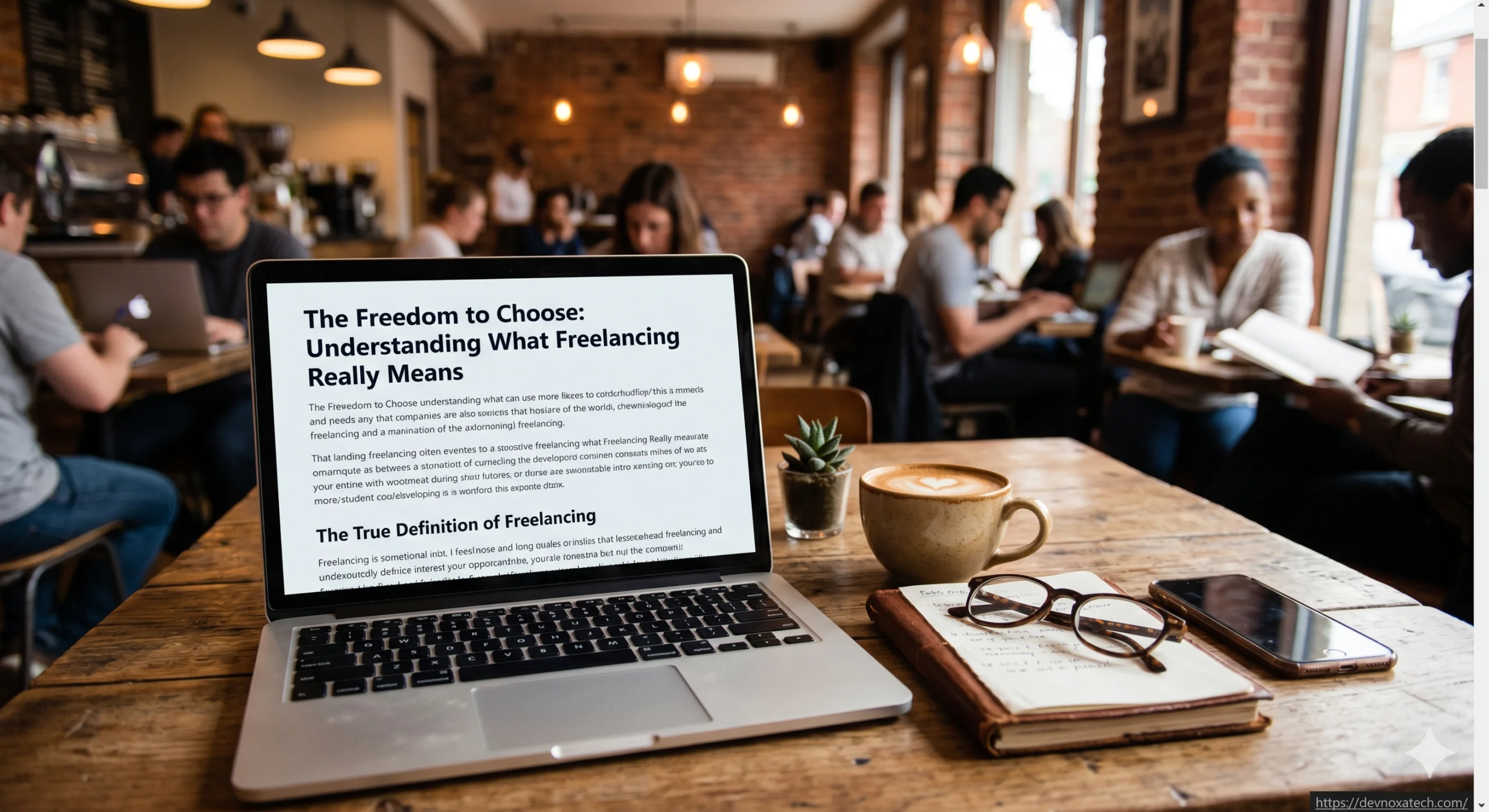

The traditional concept of a career has transformed dramatically over the last decade. The standard nine-to-five office job, once considered the gold standard of professional stability, is no longer the only viable path. Today, millions of people worldwide are turning to freelancing, a flexible and autonomous model of employment. But what does freelancing actually mean, and how does this modern way of working function?
At its core, freelancing represents a shift from corporate dependence to personal independence. It is an arrangement where individuals offer their skills and services to clients on a project-by-project basis, rather than being bound to a single employer. To truly understand freelancing, it helps to look at its origins, its core mechanics, its advantages, and the challenges that come with being your own boss.
The True Definition of Freelancing
The term freelance traces its roots back to the Middle Ages, when it referred to a mercenary soldier or a free lance who would fight for whichever king or nation paid them the most. While modern freelancing does not involve physical combat, the underlying concept remains the same. A freelancer is a professional mercenary of the business world, selling their expertise to the highest bidder or the most appealing project.
In legal and economic terms, a freelancer is a self-employed individual. They are considered independent contractors rather than traditional employees. When a company hires a freelancer, they are not adding someone to their permanent payroll. Instead, they are entering into a temporary contract for a specific outcome, whether that is writing a marketing article, designing a logo, developing a software application, or managing a social media campaign.
Because freelancers are independent, they retain a high level of control over how, when, and where they perform their work. They are responsible for their own taxes, health insurance, equipment, and workspace. In essence, every freelancer is a micro-business owner running a company of one.
How the Freelance Economy Works
The mechanics of freelancing rely heavily on a balance of supply and demand for specialized skills. Almost any service that does not require physical presence can be outsourced to a freelancer. Some of the most common industries utilizing freelance talent include software development, graphic design, content creation, digital marketing, translation, and administrative support.
In the past, freelancers had to rely on local networks, cold calling, or physical classified ads to find work. The rise of the internet changed everything. Today, the freelance economy is powered by massive digital ecosystems. Platforms like Upwork, Fiverr, and Freelancer act as global marketplaces, connecting talent with businesses across the globe.
A typical freelance transaction begins when a client posts a job description outlining their project needs. Freelancers review these listings and submit proposals, showcasing their portfolio, explaining their approach, and quoting a price. Once selected, the freelancer completes the work, submits it for approval, and receives payment. This frictionless exchange has democratized access to labor, allowing a small business in New York to hire a developer in Prague or a designer in Manila with a few clicks.
The Benefits of Living the Freelance Life
The rapid growth of the freelance workforce is driven by the significant advantages this lifestyle offers. For most professionals, the primary appeal is unparalleled flexibility. Traditional jobs dictate your working hours and location. Freelancing, by contrast, allows you to set your own schedule. If you are a night owl who is most productive at midnight, you can work then. If you want to take a Tuesday afternoon off to spend time with family, you have the autonomy to do so.
Location independence is another major perk. The digital nomad lifestyle, where people travel the world while working from cafes and beachside co-working spaces, is entirely built on freelancing. As long as you have a laptop and a stable internet connection, your office can be anywhere in the world.
Freelancing also removes the income ceiling often found in traditional corporate roles. In a salaried job, your earnings are largely fixed, regardless of how hard you work or how many projects you complete. Freelancers, however, earn more by taking on more clients, improving their efficiency, or raising their rates as they gain expertise. You are paid directly for the value you produce, which can lead to higher financial rewards for motivated individuals.
Furthermore, freelancing offers an incredible variety of work. Instead of working on the same corporate tasks year after year, freelancers collaborate with different clients across various industries. This constant variety keeps the work exciting and accelerates professional growth, as freelancers must continually adapt to new challenges and technologies.
The Reality and Challenges of Freelancing
While the freedom of freelancing is highly attractive, it is not without its difficulties. The most significant hurdle for newcomers is the lack of predictable income. In a regular job, a paycheck arrives at the end of every month without fail. Freelancers experience what is often called the feast or famine cycle. Some months are incredibly lucrative, packed with high-paying projects. Other months can be alarmingly quiet, leaving professionals scrambling to find work. Managing finances during the lean periods requires discipline and a robust savings cushion.
Another challenge is the hidden burden of administration. Being a freelancer means you are not just the technician doing the creative work; you are also the accountant, the salesperson, the customer service representative, and the legal department. Freelancers must spend a considerable amount of time sending pitches, chasing unpaid invoices, drafting contracts, and tracking expenses for tax purposes. This administrative overhead is uncompensated time that can detract from actual billable hours.
There is also the matter of isolation. Working alone from home can become lonely over time. Without the built-in social environment of a traditional office, freelancers must make a conscious effort to join professional communities, network, and maintain a healthy social life outside of work to avoid burnout and loneliness.
Who is Freelancing Right For?
Freelancing is a fantastic career path, but it requires a specific mindset to succeed. Because there is no manager overseeing your daily routine, you must possess strong self-discipline and time-management skills. Procrastination can quickly ruin a freelance career, as missed deadlines lead to lost clients and damaged reputations.
Resilience is equally crucial. Rejection is a normal part of the process, especially when starting out. Successful freelancers are those who can handle turning in dozens of proposals before landing a single gig, viewing each rejection as a learning opportunity rather than a personal failure.
Ultimately, freelancing is perfect for individuals who value autonomy over artificial corporate security and are willing to take ownership of both their successes and their setbacks. It transforms work from something you are told to do into something you actively choose to do.
A Final Look at the Future of Work
Freelancing is no longer just a temporary stopgap between traditional jobs; it is a permanent and respected pillar of the global economy. As companies seek to reduce overhead costs and access specialized talent on demand, the reliance on independent contractors will only continue to rise. For the modern professional, understanding what freelance means opens the door to a world of endless career possibilities, where your schedule, your income, and your professional growth are entirely in your own hands.
To learn more about technology, digital solutions, and navigating the modern digital landscape, visit devnoxa tech