
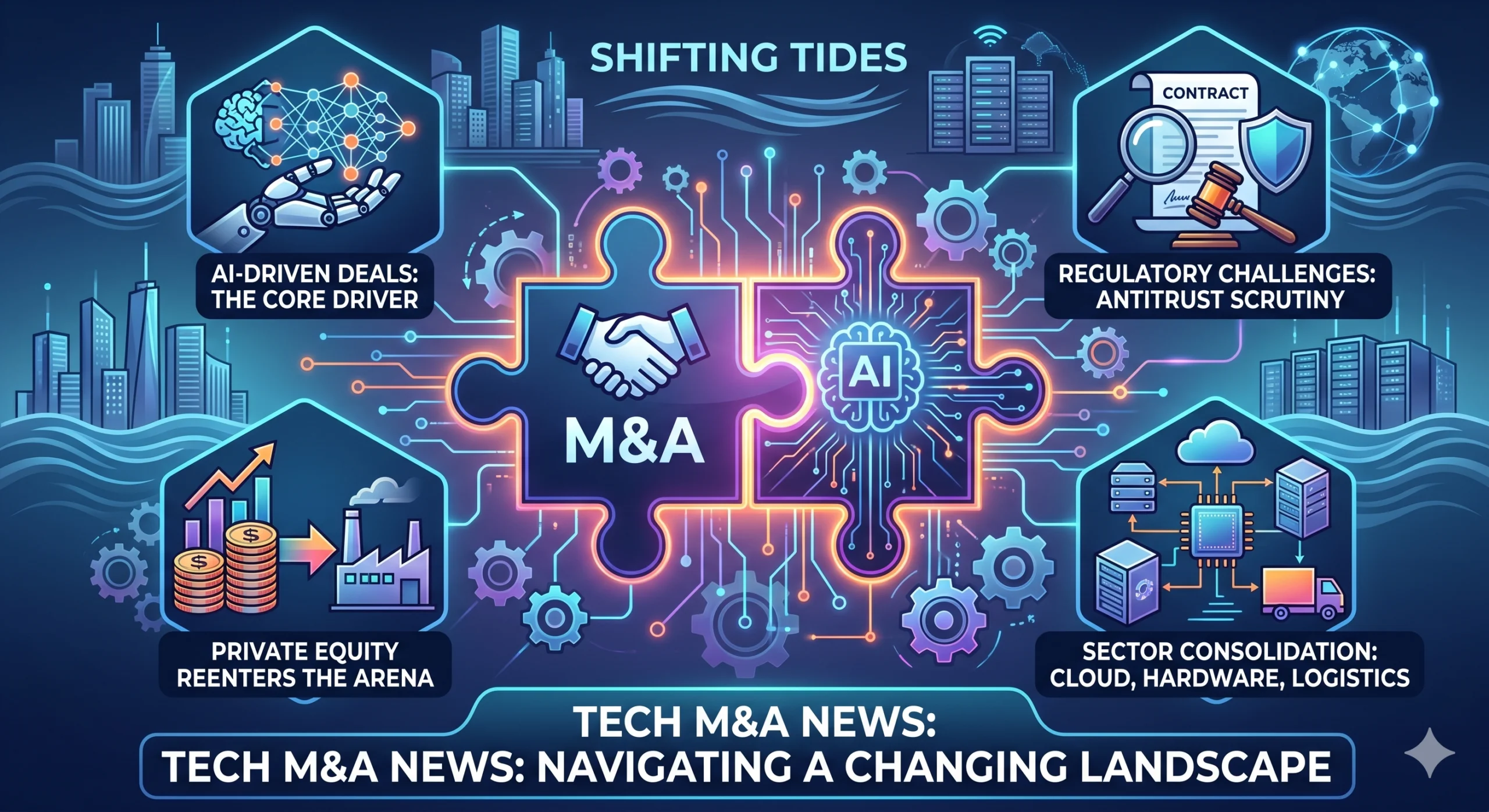

The landscape of technology mergers and acquisitions is experiencing a profound transformation. After a period of cautious waiting, strategic buyers and private equity firms are returning to the negotiating table with a renewed focus. The current wave of dealmaking looks very different from the hyper inflated market of a few years ago. Today, transactions are defined by a clear focus on artificial intelligence, stricter valuation metrics, and complex regulatory challenges of tech m&a news
The Core Driver of Modern Deals
Artificial intelligence is no longer just a buzzword in corporate boardrooms. It has become the primary catalyst for modern technology acquisitions. Companies across every industry are realizing that building proprietary AI infrastructure from scratch is both time consuming and expensive. As a result, established tech giants and traditional enterprises are acquiring specialized AI startups to immediately absorb their talent and intellectual property.
This shift has changed how companies are valued. Instead of looking purely at user growth or top line revenue, buyers are performing deep technical diligence. They are scrutinizing data rights, checking the legal foundations of training models, and assessing the true performance of algorithms. A startup with unique, legally compliant datasets is currently holding a significant advantage in negotiation leverage.
Stricter Structural Realities
The days of unrestricted spending and massive cash offers have largely faded. Buyers are much more disciplined about risk management, which has fundamentally changed how deals are structured. Earnouts, which are contractual provisions where the seller gets additional compensation if the business hits specific future financial goals, have become standard practice.
Staged investments are also gaining popularity. Rather than buying a company outright on day one, acquiring firms often secure a minority stake with a clear option to purchase the remainder of the business later. This protects the buyer if the technology fails to scale while still allowing the founders to benefit from an eventual full exit.
Navigating Regulatory Frameworks
Antitrust scrutiny has reached historically high levels, forcing corporate development teams to completely rethink their timelines. Regulatory bodies globally are no longer just looking at massive horizontal mergers that create instant monopolies. They are actively reviewing vertical integrations and even minor investments that could limit future competition.
Because of this intense oversight, leaked deals have become a major liability. Industry data indicates that over 50 percent of technology transactions face leaks before an official announcement is ready. This has forced companies to implement rigorous internal controls, utilize isolated clean teams during due diligence, and draft protective post termination protocols to shield trade secrets if a deal collapses at the finish line.
Core Pillars of Sector Consolidation
While software continues to lead overall deal volume, several specialized sectors are seeing intense consolidation. The push for comprehensive digital infrastructure is driving major moves in the hardware and enterprise space.
- Cloud and Infrastructure: Companies are shifting from basic outsourcing to full ecosystem orchestration. Buyers are actively combining cloud computing, data architecture, and AI capabilities into single platforms.
- Semiconductors: The immense computational demands of AI have turned chip manufacturing facilities into highly prized assets. Large scale strategic investments, such as Intel’s multi billion dollar chip manufacturing facility deals, highlight the urgency to secure hardware supply chains.
- Logistics and Supply Chain: Traditional sectors like agriculture and food supply are being transformed through tech acquisitions. Major IT consulting firms are buying up supply chain tech providers to introduce automated, AI driven logistics to legacy industries.
Private Equity Reenters the Arena
Private equity firms backed by significant capital are no longer sitting on the sidelines. Unlike the corporate buyers who focus primarily on strategic technology integration, financial sponsors are looking for value chain consolidation.
They are targeting mature tech companies that possess stable, recurring revenue streams and clear paths toward automation. By implementing tighter operational efficiency and integrating complementary software tools, private equity players are successfully building highly resilient platforms capable of weathering broader macroeconomic shifts.
Future Outlook for Tech Founders
For entrepreneurs looking to position their companies for an acquisition, the metrics for success have permanently evolved. Buyers are heavily prioritizing profitability, clean data governance, and defensible technology over rapid, unbacked scaling.
Founders must be prepared for longer, more invasive due diligence processes. Success in the current market requires clear proof of how a technology integrates into a buyer’s existing ecosystem, along with a transparent plan for managing regulatory hurdles.
To explore more insights on modern digital solutions and enterprise technology strategies, visit Devnoxa Tech.