
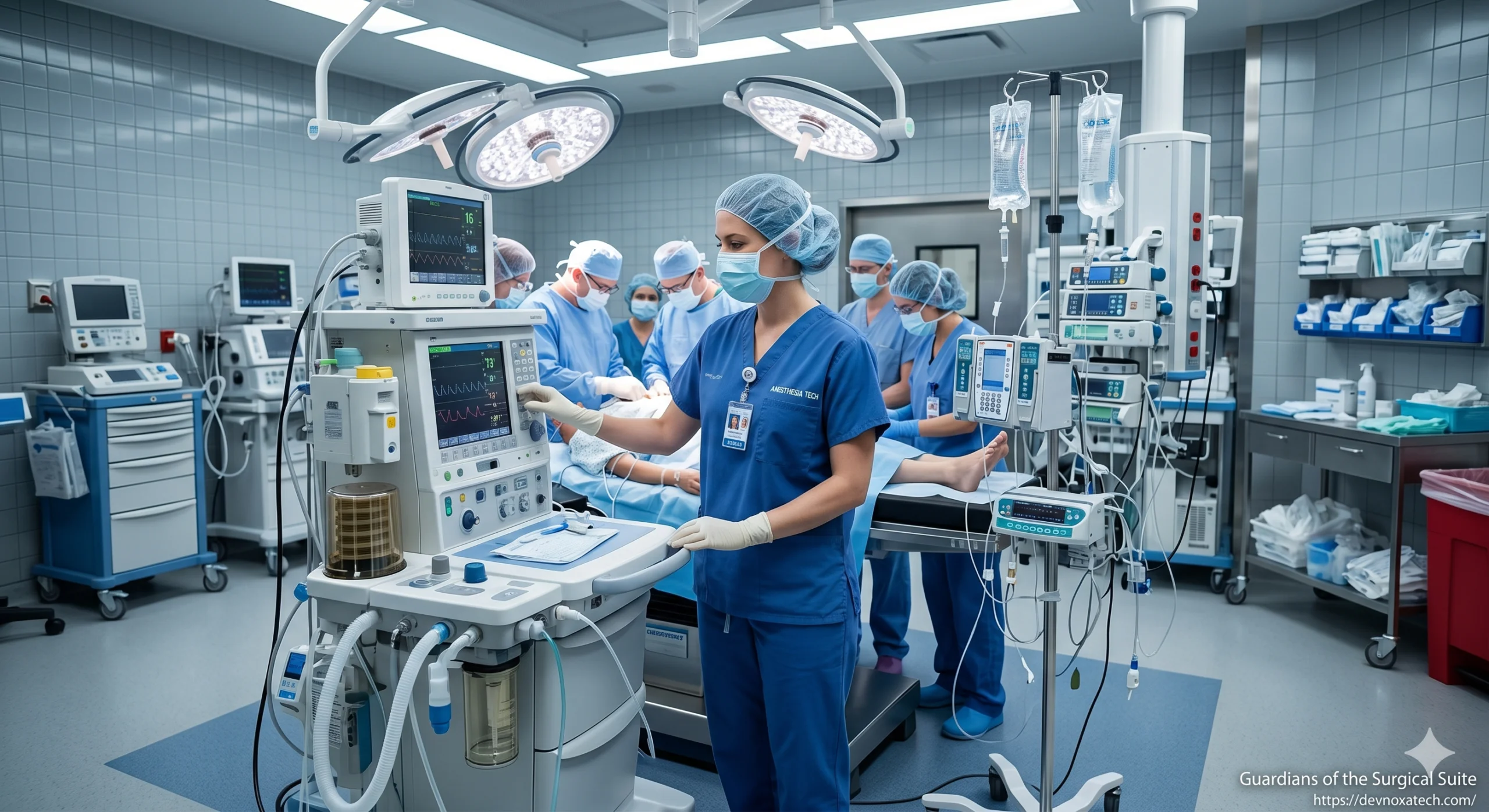

The hum of the operating room is a symphony of controlled chaos. Surgeons prep their instruments, nurses verify patient charts, and the air is thick with a sterile, focused energy. Yet, amidst the high-stakes drama of a surgical procedure, there is a figure often positioned at the head of the bed, quietly ensuring that the most critical balance of all—the line between consciousness and safety—is maintained. This is the world of the Anesthesia Technologist.
Often overshadowed by the high profile of surgeons or the specialized role of the anesthesiologist, anesthesia techs are the backbone of perioperative care. They are the technical wizards and the logistical masters who ensure that when a patient goes under, every piece of equipment, every vial of medication, and every monitor is functioning with absolute precision.
The Technical Heart of the OR
At its core, the role of an anesthesia tech is about readiness. Long before a patient is wheeled into the room, the tech is already at work. They are responsible for the complex “anesthesia workstation,” a machine that would look like a spaceship console to the untrained eye. This machine regulates the flow of oxygen, nitrous oxide, and volatile anesthetic gases that keep a patient in a state of controlled unconsciousness.
A tech doesn’t just turn the machine on; they perform rigorous safety checks. they calibrate sensors, check for leaks in the breathing circuits, and ensure that the backup manual ventilation systems are functional. In a world where a five-second delay in oxygen delivery can lead to catastrophic outcomes, the tech’s meticulousness is the first line of defense.
Beyond the machine itself, they manage a vast inventory of supplies. From endotracheal tubes and laryngoscopes to advanced hemodynamic monitoring lines that track blood pressure from inside the artery, the tech ensures that every tool is sterile, organized, and within the anesthesiologist’s reach.
The Right Hand of the Clinician
While anesthesia technologists do not personally administer the drugs that induce sleep, they are the essential partners to the Anesthesiologist and the Certified Registered Nurse Anesthetist (CRNA). During the “induction” phase—the moments when a patient is transitioned from awake to asleep—the room is a hive of activity. The tech stands ready to assist with intubation, passing instruments, and stabilizing the patient’s airway.
If a “Difficult Airway” occurs—a situation where it is hard to get a breathing tube into a patient—the anesthesia tech is the person who knows exactly where the fiber-optic scopes and emergency glidescopes are kept. They are trained to anticipate the clinician’s needs before they are even voiced. This unspoken communication is what separates a chaotic emergency from a controlled intervention.
The Complexity of the Modern OR
As surgery has become more advanced, so has the technology supporting it. Modern anesthesia techs are now required to understand cell-saver technology, which allows a patient’s own blood to be collected, cleaned, and reinfused during major surgeries like heart transplants or orthopedic reconstructions. They manage Point-of-Care (POC) testing, running rapid blood gas analysis to check a patient’s pH and electrolyte levels in real-time.
They also handle the “teardown” and turnover. In a busy hospital, efficiency is vital. Once a surgery ends, the tech must rapidly sanitize the equipment, replace disposables, and reset the room for the next case. This cycle happens multiple times a day, requiring a high level of physical stamina and mental alertness.
Education and the Path to the Profession
Becoming an anesthesia tech isn’t just about showing up; it’s a career path that has seen a significant shift toward formal education. In years past, many techs were trained on the job, moving up from general hospital orderly positions. Today, the industry standard has moved toward Associate Degree programs and national certification through the American Society of Anesthesia Technologists and Technicians (ASATT).
Students study anatomy, physiology, pharmacology, and physics. They need to understand how gases behave under pressure and how different drugs interact with the body’s cardiovascular system. This academic foundation allows them to not just follow orders, but to understand the “why” behind the clinical decisions being made.
The Human Element
Despite the heavy focus on machinery and logistics, the anesthesia tech is deeply involved in patient care. They are often one of the last voices a patient hears before drifting into a medically induced sleep. A kind word, a warm blanket, or a steady hand on a shoulder can make a world of difference to a person facing the vulnerability of surgery.
The tech is also a guardian of the sterile field. They are another set of eyes in the room, watching for breaks in technique or shifts in the patient’s vital signs. They are the quiet sentinels who ensure that the environment remains as safe as humanly possible.
Challenges and Rewards
The job is not without its stresses. Anesthesia techs work long hours, often on call for late-night emergencies or trauma cases. They are exposed to trace anesthetic gases, various pathogens, and the high-pressure environment of the surgical department. It is a role that requires a thick skin and an even quicker mind.
However, the rewards are profound. There is a unique satisfaction in knowing that a complex heart surgery went smoothly because you prepared the equipment perfectly. There is pride in being the person the doctor looks to when things get difficult, knowing you have the right tool ready.
Conclusion
The anesthesia technologist represents the intersection of medicine and technology. They are the unsung heroes of the operating room, the grease in the gears of the surgical machine. While they may not always get the public recognition of a surgeon, their impact is felt in every successful recovery and every safe discharge. They are the masters of the “behind-the-scenes,” proving that in the world of medicine, the smallest details often carry the greatest weight.
As medical technology continues to evolve with AI-driven monitoring and robotic-assisted surgeries, the role of the anesthesia tech will only grow in importance. They will remain the bridge between the complex machines of the future and the human lives they are designed to save. devnoxa tech