
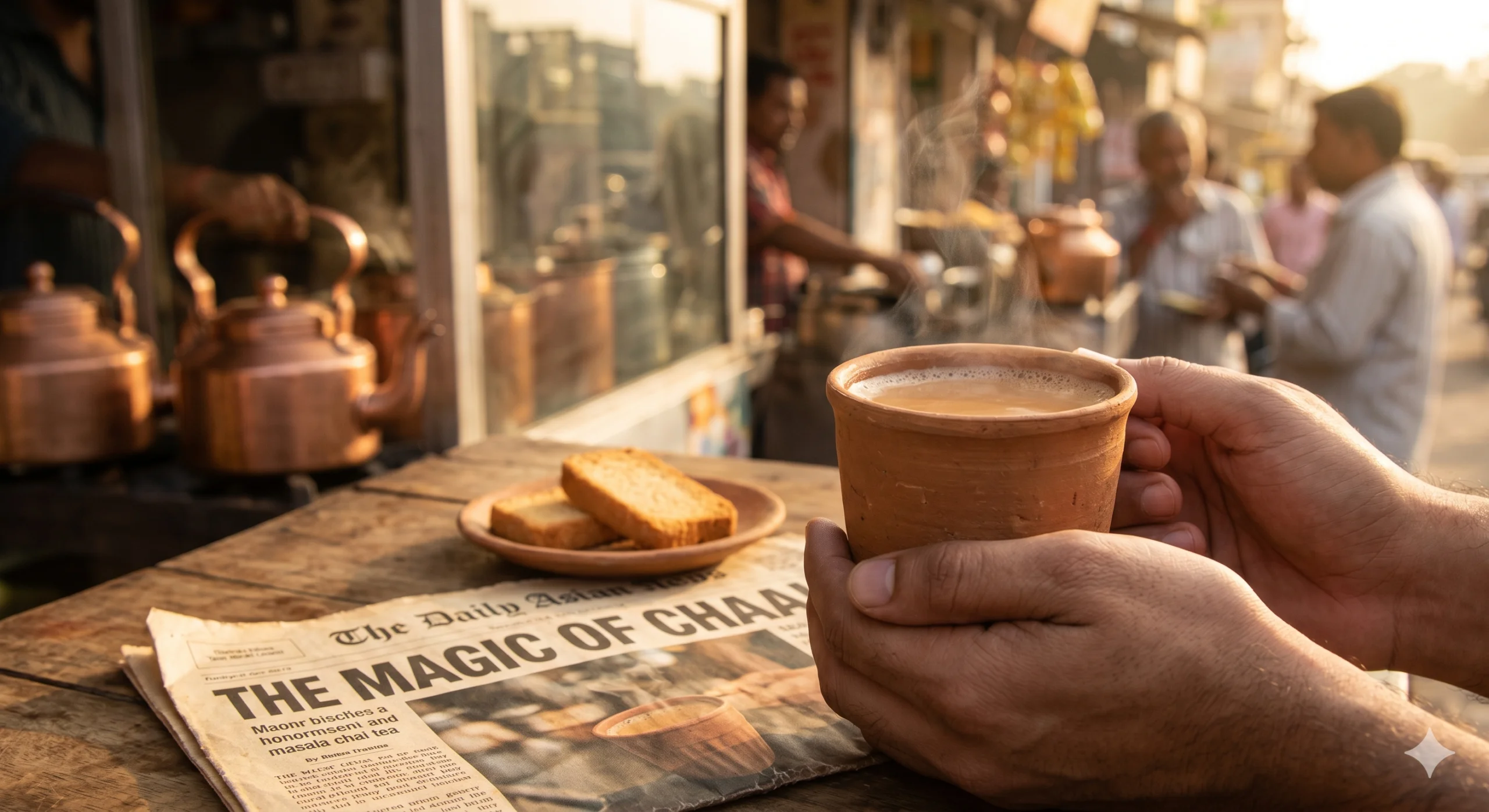

There is a certain rhythm to life that often goes unnoticed until we pause to hold a warm cup in our hands. In many parts of the world, particularly across South Asia, the Middle East, and East Africa, this rhythm is dictated by a single word: Chaa. While the rest of the world might call it tea, “chaa” is more than just a beverage. It is a cultural heartbeat, a social glue, and a daily ritual that transcends class, religion, and geography. To understand chaa is to understand the art of slowing down in a world that is constantly rushing.
The story of chaa is one of transformation. It began thousands of years ago as a medicinal herb in ancient China, but as it traveled across the Silk Road and through colonial trade routes, it morphed into something entirely different. When it reached the Indian subcontinent, it met milk, sugar, and spices, evolving into the creamy, soul-warming concoction we recognize today. This evolution reflects the resilience and creativity of the people who adopted it. They took a simple leaf and turned it into a symbol of hospitality.
In any typical household in Pakistan or India, the day does not truly begin until the stove is lit and the pot is set to boil. There is a specific sound to this ritual: the sharp strike of a match, the soft hiss of the gas, and eventually, the rhythmic bubbling of milk and water. The aroma follows soon after, a mix of earthy fermented leaves and the sweetness of simmering milk. This is the morning call to order. It is the time when families sit together, perhaps with a Marie biscuit or a piece of rusk, to discuss the day ahead. In these moments, chaa acts as a silent mediator, softening the edges of early morning grumpiness and bridging the gap between generations.
However, the true magic of chaa is found outside the home, at the “dhaba” or the roadside tea stall. These humble establishments are the democratic hubs of society. At a tea stall, you will find a laborer sitting on a wooden bench next to a businessman in a crisp suit. You will find students debating politics and elderly men reminiscing about the “good old days.” Here, chaa is the great equalizer. It doesn’t matter where you come from or how much money is in your pocket; the price of a cup is the same for everyone, and the warmth it provides is universal.
The preparation of chaa at these stalls is a performance in itself. The “Chaiwala” moves with a practiced grace, pouring the liquid from a height to create a frothy layer of foam on top. This technique, often called “pulling” the tea, isn’t just for show. It aerates the drink, enhancing the flavor and bringing it to the perfect drinking temperature. The tea is often cooked for hours, becoming thick, strong, and “kadak.” It is designed to wake you up, to give you the strength to finish a long shift, or to provide the fuel for a late-night study session.
Beyond the physical energy it provides, chaa carries an emotional weight. In many cultures, offering a cup of tea is the first gesture of welcome. If a stranger walks into a shop or a guest arrives unannounced at a home, the question is never “do you want tea?” but rather “how much sugar do you take?” To refuse a cup of chaa is almost a slight, a rejection of an offered friendship. It is the ultimate icebreaker. It fills the silences in awkward conversations and provides a reason to stay just a little bit longer when catching up with an old friend.
There are, of course, endless variations of chaa. In the mountains of Kashmir, you find “Kashmiri Chai” or “Noon Chai,” a beautiful pink liquid flavored with salt, bicarbonate of soda, and crushed pistachios. It is creamy, nutty, and perfect for the biting cold. In the bustling streets of Mumbai, you find “Cutting Chai,” served in small glasses because the tea is so strong you only need half a cup to get the kick. Then there is the “Masala Chai,” infused with ginger, cardamom, cinnamon, and cloves, turning the drink into a fragrant explosion of warmth that can cure everything from a common cold to a broken heart.
In the modern era, the culture of chaa is facing a new challenger: the rise of the coffee shop. High-end cafes with minimalist aesthetics and expensive espresso machines are popping up in every major city. Yet, chaa remains unshakable. While coffee is often associated with productivity and the “hustle” of professional life, chaa remains associated with “sukoon”—a word that translates roughly to peace or tranquility. You drink coffee to get to work; you drink chaa to enjoy the moment.
Even the vessel matters. Drinking chaa from a “piyali” (a small saucer-like cup) or a “duralex” glass feels different than drinking it from a ceramic mug. There is something tactile about holding a small, hot glass, feeling the heat seep into your palms on a rainy afternoon. In rural areas, some still prefer the “matka,” a small unglazed clay cup. Once the tea is finished, the cup is thrown back to the earth, returning to the soil from which it came. It is a poetic, biodegradable cycle that has existed long before “sustainability” became a buzzword.
In the diaspora, chaa serves as a bridge to a lost homeland. For those living thousands of miles away from the streets of Lahore, Delhi, or Dhaka, the smell of cardamom-infused tea is a form of time travel. It brings back memories of monsoon rains hitting dusty ground, the sound of cricket matches on the radio, and the laughter of cousins gathered on a terrace. It is a portable piece of heritage that can be recreated in any kitchen, anywhere in the world, as long as you have a few tea leaves and a bit of milk.
Ultimately, chaa is a testament to the beauty of the mundane. It teaches us that you don’t need much to find contentment. You don’t need a three-course meal or an expensive outing. Sometimes, all you need is a boiling pot, a few minutes of patience, and a companion to share the steam with. It is a reminder that life’s most profound connections often happen over the simplest things.
As the sun sets and the air cools, the blue flames of thousands of stoves flicker to life. The evening chaa is perhaps the most important of all. It marks the transition from the labor of the day to the rest of the night. It is a deep breath in liquid form. Whether it is a solo cup enjoyed in the quiet of a balcony or a noisy round shared at a roadside stall, chaa remains the golden thread that sews the fabric of daily life together. It is not just a drink; it is a way of being. devnoxa tech