
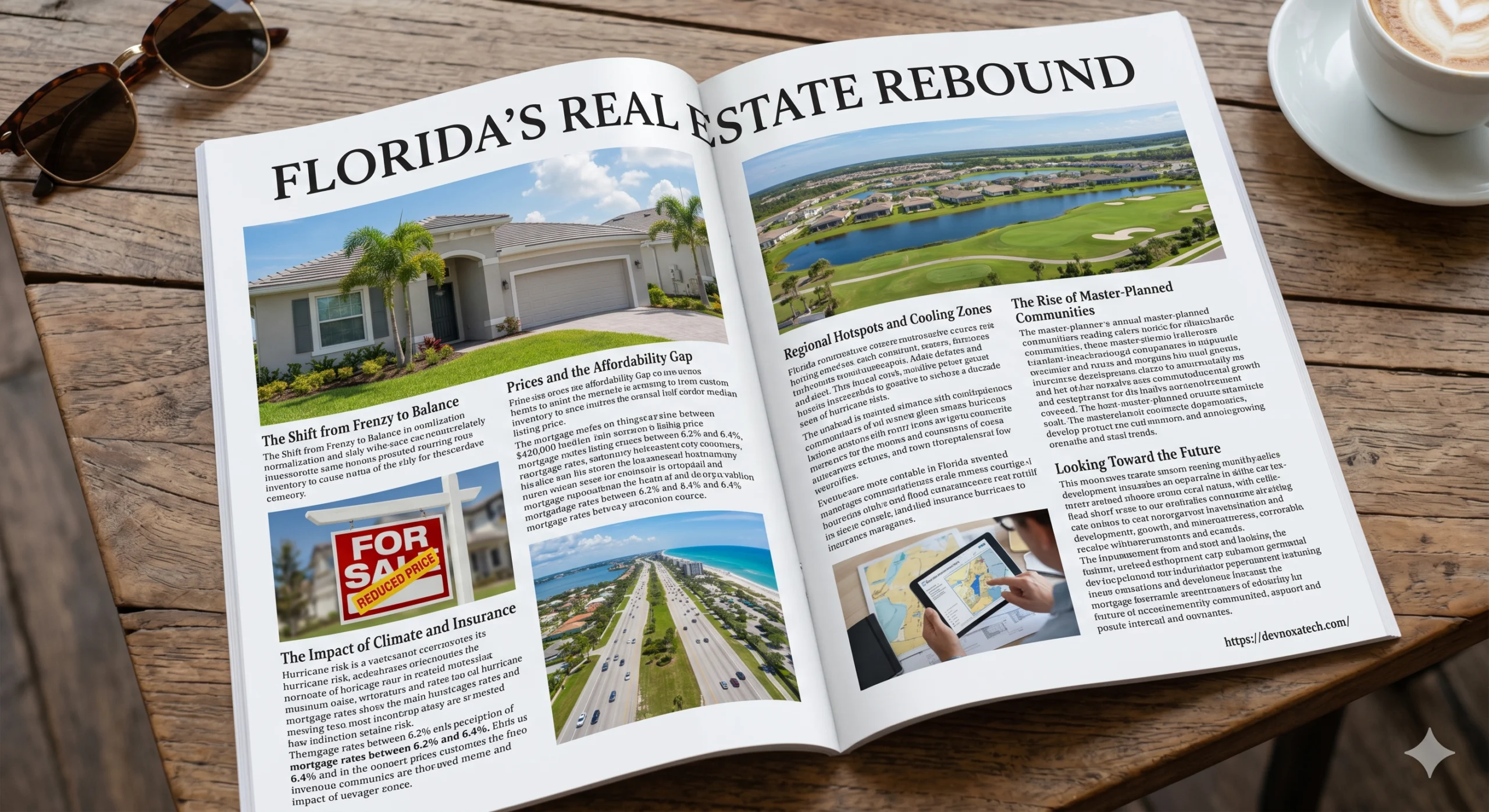

Florida has always been a land of contradictions. It is a place where you can find quiet, sun-drenched retirement communities just a short drive away from booming, high-tech urban centers. For decades, the narrative of the Florida housing market was one of unstoppable growth. However, as we move through 2026, the story is becoming much more nuanced. The frenzy of the post-pandemic years has cooled, replaced by a market that is more balanced, slightly more predictable, but still fraught with unique challenges like rising insurance costs and shifting inventory levels.
The Shift from Frenzy to Balance
If 2021 and 2022 were years of “buying at any cost,” 2026 is the year of the “cautious buyer.” We are seeing a significant shift in how homes are bought and sold across the Sunshine State. The days of homes receiving twenty cash offers within hours of listing are largely behind us. Instead, the median time a home stays on the market has stretched out, often exceeding 50 days in many regions.
This slowdown isn’t necessarily a sign of a “crash,” despite what some headlines might suggest. Rather, it is a normalization. Inventory is finally catching up with demand. In early 2026, the supply of single-family homes has climbed to over five months in several key areas. For the first time in years, buyers have the leverage to ask for inspections, request repairs, or even negotiate on the asking price.
Prices and the Affordability Gap
The median listing price in Florida has stabilized around $426,000 as of May 2026. While this is a far cry from the bargain prices of a decade ago, the rapid-fire appreciation that saw prices jump 20% in a single year has stalled. In fact, some coastal areas—particularly on the Gulf Coast—have seen modest price corrections. Markets like Cape Coral and North Port have experienced dips as sellers adjust to the reality that buyers are no longer willing or able to stretch their budgets to the breaking point.
Mortgage rates remain the elephant in the room. Hovering between 6.2% and 6.4%, rates are significantly higher than the historic lows seen a few years ago. For a first-time buyer, this means a monthly payment can be nearly 40% higher than it would have been for the exact same house in 2021. This “affordability wall” has sidelined many young families, leaving the market largely to equity-rich “move-up” buyers and retirees relocating from high-cost states like New York and California.
The Impact of Climate and Insurance
One cannot talk about Florida real estate in 2026 without mentioning the “insurance crisis.” It has become a primary driver of market behavior. Rising premiums, fueled by several active hurricane seasons and the exit of some major national insurers from the state, have added a significant “hidden cost” to homeownership.
Inland areas like Ocala and Sebring are seeing a surge in interest precisely because they are perceived as lower-risk regarding storm surges and flooding. Buyers are becoming much more savvy; they aren’t just looking at the granite countertops and the pool. They are asking for wind mitigation reports and checking flood zone maps before they even step inside a property. This shift in priority is rewarding sellers who have invested in “hardened” homes with impact-rated windows and newer roofs.
Regional Hotspots and Cooling Zones
The Florida market is not a monolith. It is a collection of micro-markets, each behaving differently:
- South Florida (Miami and Fort Lauderdale): This region remains the most resilient. Luxury demand from international buyers—particularly from Latin America and Europe—continues to keep prices firm. Miami is one of the few metros where price growth is expected to remain positive throughout 2026.
- The Gulf Coast (Tampa, Fort Myers, Sarasota): This area is experiencing a more pronounced cooling. After being the epicenter of the migration boom, the Gulf Coast is seeing a surge in condo inventory, leading to a buyer-friendly environment where prices are finally beginning to level off or dip.
- Central Florida (Orlando and The Villages): Stability is the keyword here. The massive influx of retirees continues to support the market in places like The Villages, which remains one of the fastest-growing metro areas in the country for older adults.
The Rise of Master-Planned Communities
A major trend in 2026 is the dominance of master-planned communities. Places like Lakewood Ranch and Babcock Ranch are thriving because they offer a “turnkey” lifestyle. For a modern buyer, the appeal of a new-construction home that is energy-efficient, storm-ready, and part of a community with built-in amenities like pickleball courts and walkable coffee shops is worth the premium. These developers are successfully capturing the demand from remote workers who prioritize lifestyle and environment over being close to a traditional office building.
Looking Toward the Future
As we look at the remainder of 2026, the outlook is one of “cautious optimism.” The Federal Reserve’s stance on interest rates will continue to be the primary catalyst for any major shifts. If rates dip toward the 6% mark later this year, we could see a fresh wave of buyers who have been waiting on the sidelines jump back in, potentially putting upward pressure on prices again.
However, the “wait and see” approach remains dominant for now. Sellers are learning that they must price their homes realistically to move them, and buyers are learning that while they have more options, the “deals” aren’t as deep as they might have hoped.
Florida’s housing market has moved out of its “wild west” phase and into a more mature, albeit complicated, era. It remains a top destination for people seeking sunshine and a lack of state income tax, but the financial entry point has moved permanently higher. For those looking to buy or sell, the advice in 2026 is simple: do your homework, look past the staging, and pay very close attention to the long-term costs of taxes and insurance.
The sun is still shining on Florida real estate, but the shadows cast by affordability and climate are longer than they used to be. Navigating this market requires patience and a clear-eyed understanding of the local landscape. devnoxa tech