
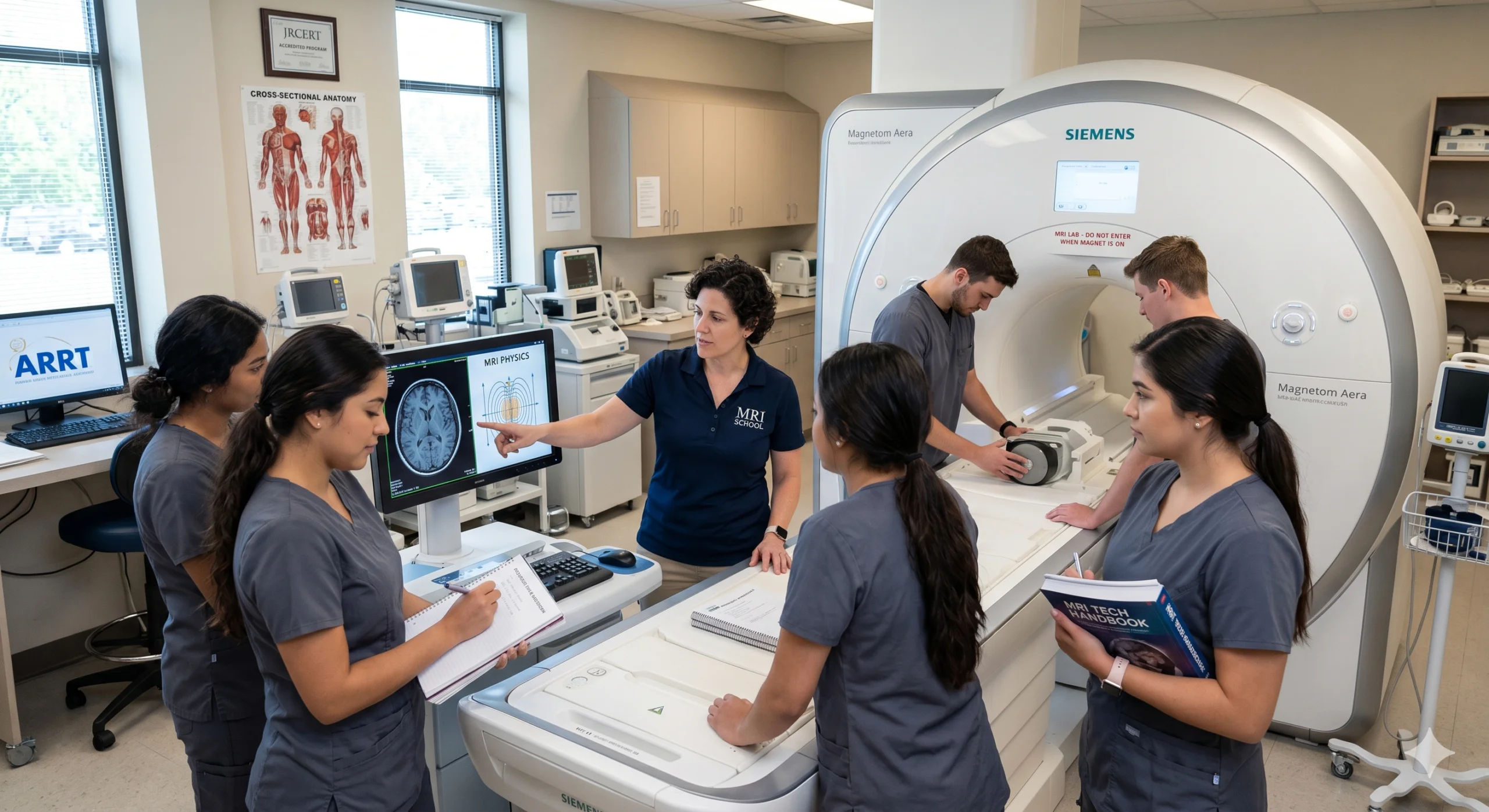

The world of modern medicine is a blend of biological expertise and high-tech engineering. Among the most vital roles in this ecosystem is the Magnetic Resonance Imaging (MRI) technologist. These professionals are the bridge between complex physics and patient care, capturing the detailed internal images that allow doctors to diagnose everything from torn ligaments to neurological disorders. If you are looking for a career that combines technical mastery with a human touch, attending an MRI tech school is your first step into a stable and rewarding field.
Understanding the Role
Before diving into the specifics of schooling, it is important to understand what the job actually entails. An MRI technologist operates sophisticated scanners that use powerful magnets and radio waves to create three-dimensional images of the body’s soft tissues. Unlike X-rays or CT scans, MRI does not use ionizing radiation, making it a preferred choice for many diagnostic needs.
However, the job is about more than just pushing buttons. You are responsible for patient safety—ensuring no metallic objects enter the high-magnet zone—and patient comfort. Many people feel claustrophobic or anxious inside an MRI machine, and a skilled tech is often the only thing keeping a patient calm enough to complete the scan.
Choosing the Right Educational Path
MRI tech schools generally offer three main routes to entry: certificate programs, associate degrees, and bachelor’s degrees. The path you choose often depends on your current educational background and how quickly you want to enter the workforce.
- Associate Degree: This is the most common route for those starting from scratch. These programs typically last two years and combine general education requirements with specialized radiologic technology courses. Most employers prefer candidates who have at least an associate degree.
- Certificate Programs: These are usually designed for individuals who are already “cross-trained” or registered in another imaging modality, such as X-ray (Radiography) or Sonography. These programs focus strictly on the MRI components and can often be completed in a year or less.
- Bachelor’s Degree: While less common for entry-level roles, a four-year degree can be beneficial if you eventually want to move into department management, education, or specialized research roles within the imaging field.
Core Curriculum and Skills
A quality MRI tech school doesn’t just teach you how to run a machine; it teaches you the “why” behind the image. The curriculum is a mix of hard science and interpersonal communication. You will likely spend a significant amount of time studying the following areas:
Section 1: MRI Physics and Instrumentation
This is often considered the most challenging part of the program. You will learn about nuclear magnetism, radiofrequency pulses, and how different pulse sequences create different types of “weights” in an image. Understanding the physics allows you to troubleshoot when an image looks blurry or distorted.
Section 2: Anatomy and Physiology
To be a good tech, you must be an expert in cross-sectional anatomy. You need to know exactly what a healthy liver looks like versus one with pathology, and you must understand how the body looks from the “inside out” in axial, sagittal, and coronal planes.
Section 3: Patient Care and Safety
Safety is the absolute priority in an MRI suite. Because the magnet is always on, you will learn rigorous screening protocols. You will also learn basic nursing skills, such as starting IVs for contrast agents and monitoring vital signs.
The Importance of Clinical Rotations
You cannot learn to be an MRI technologist solely from a textbook. Clinical rotations are the backbone of any reputable MRI tech school. During these rotations, you are placed in a hospital or an imaging center to work under the supervision of experienced technologists.
This “hands-on” time is where the theory becomes reality. You will learn how to position patients correctly, how to handle “difficult” scans where a patient cannot remain still, and how to interact with radiologists. These rotations also serve as a long-form job interview; many students are hired by their clinical sites before they even graduate.
Accreditation and Certification
When researching schools, the word “accreditation” is non-negotiable. You should look for programs accredited by agencies like the Joint Review Committee on Education in Radiologic Technology (JRCERT). Accreditation ensures that the program meets national standards for education and that your credits will be recognized by employers and certifying bodies.
Once you graduate, the final hurdle is the national certification exam, usually administered by the American Registry of Radiologic Technologists (ARRT) or the American Registry of Magnetic Resonance Imaging Technologists (ARMRIT). Passing this exam earns you the “R.T.(MR)” credentials, which are the gold standard in the industry. Most states and employers require this certification for you to practice legally.
Career Outlook and Growth
The demand for MRI technologists is consistently high. As the population ages, the need for diagnostic imaging grows. According to labor statistics, the field is expected to grow faster than the average for all occupations over the next decade.
The financial rewards are also significant. MRI technologists generally earn a higher median salary than X-ray techs due to the specialized nature of the equipment and the physics involved. Furthermore, once you are established, there are many avenues for specialization, such as functional MRI (fMRI) used in brain research or cardiac MRI.
Is This Career Right for You?
MRI tech school is demanding. It requires a high level of mathematical aptitude, a keen eye for detail, and a genuine desire to help people who may be in pain or under stress. You must be comfortable with technology that changes rapidly and be willing to be a lifelong learner.
If you enjoy a fast-paced environment where every day brings a different puzzle—figuring out the best way to visualize a specific injury or helping a nervous child get through their first scan—then this is a career that offers both job security and immense personal satisfaction.
Finding the Best School
When comparing schools, don’t just look at the tuition. Ask about their “registry pass rate”—the percentage of students who pass the ARRT exam on their first try. Ask about their clinical partnerships and the type of equipment they use in their labs. A school that invests in modern technology and strong clinical placements is an investment in your future.
In conclusion, the path through MRI tech school is a journey from student to specialist. It is a commitment to mastering a complex craft that saves lives every day. By choosing a program that emphasizes both the rigorous science of physics and the delicate art of patient care, you set yourself up for a career that is as intellectually stimulating as it is meaningful. devnoxa tech