
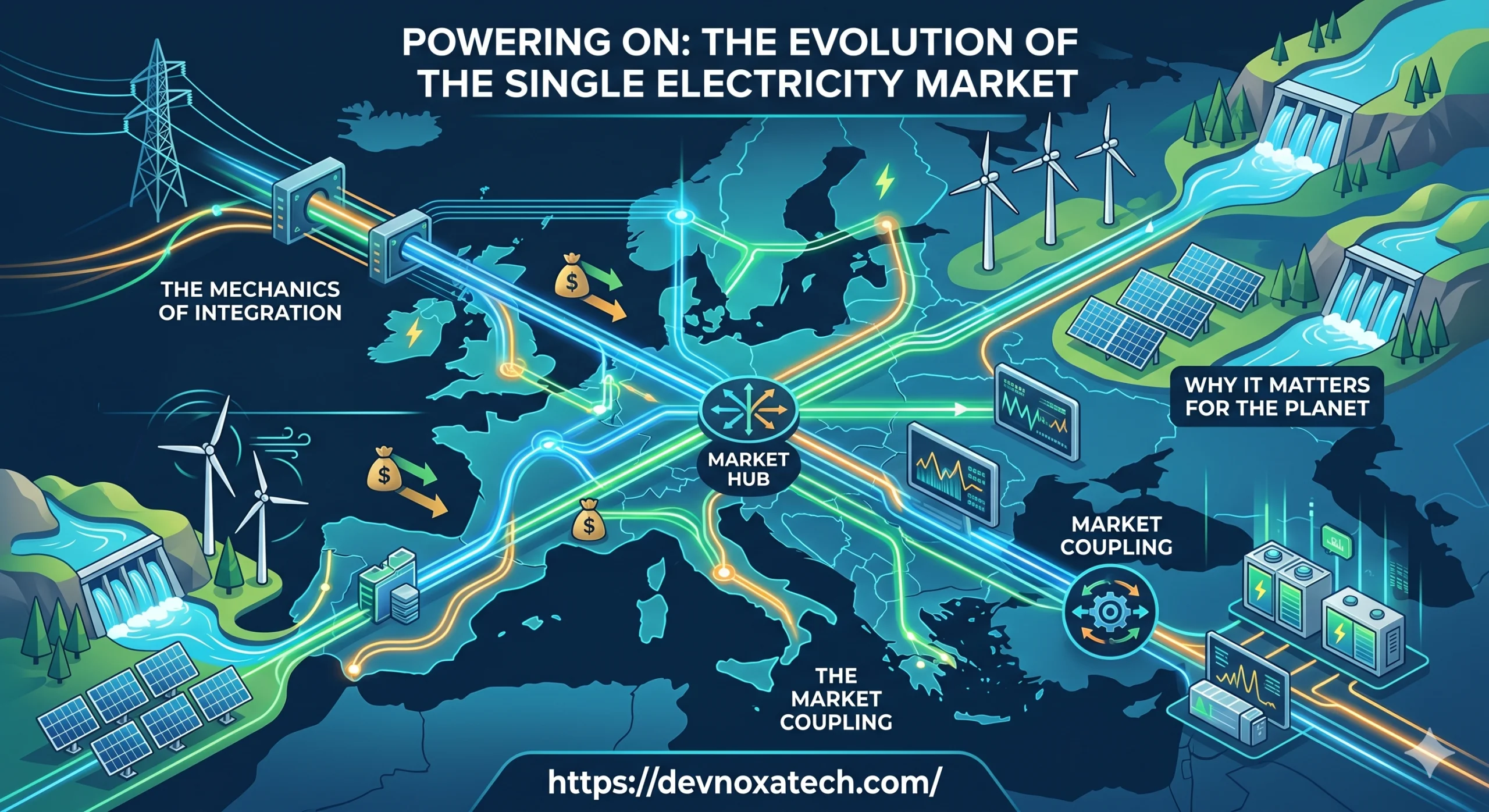

The concept of a Single Electricity Market (SEM) might sound like a dry topic for a policy briefing, but it is actually one of the most ambitious engineering and economic feats of the modern age. At its core, it represents the transition from isolated, national power grids to a fluid, borderless network where electrons flow as freely as data on the internet. This shift isn’t just about keeping the lights on; it’s about rethinking how we value energy, how we integrate renewables, and how we ensure that a flicker in one country doesn’t lead to a blackout in another.
To understand why the SEM is such a big deal, you have to look at how things used to be. For much of the 20th century, electricity was a local affair. Each country, and often each region, had its own state-owned monopoly that generated power, transported it across wires, and sent a bill to your door. These systems were sturdy but rigid. If one country had an excess of cheap wind power and its neighbor was burning expensive coal, there wasn’t much they could do to help each other. The “walls” between these markets meant higher prices for consumers and a massive amount of wasted energy.
The Single Electricity Market changes that narrative by creating a unified wholesale arena. In regions like Europe, this has been a decades-long project. The goal is to treat the entire continent as one massive pool of energy. By linking these markets, the system can automatically find the cheapest source of power available at any given second and move it to where demand is highest. If the sun is shining in Spain but the factories are humming in Germany, the market mechanisms ensure that solar energy travels north, displacing the need for a gas-fired plant to spin up in Berlin.
The Mechanics of Integration
How does this actually work on the ground? It relies on two main pillars: physical infrastructure and regulatory “coupling.” The physical side involves massive sub-sea cables and high-voltage land lines known as interconnectors. These are the highways of the energy world. Without them, the SEM is just a theoretical concept. The more interconnectors a region has, the more resilient its energy security becomes.
The regulatory side is where things get a bit more complex. Market coupling uses sophisticated algorithms to sync the price of electricity across borders. Instead of a trader in Dublin having to manually buy “space” on a cable to sell power to France, the market does it automatically. The price of power in different countries converges because the system is constantly moving energy from low-price areas to high-price areas until the gap closes. This efficiency is the “secret sauce” that drives down costs for the end user.
Why It Matters for the Planet
Perhaps the most compelling argument for a Single Electricity Market is its role in the green transition. We are currently moving away from “dispatchable” energy sources like coal and gas, which you can turn on and off whenever you want, toward “intermittent” sources like wind and solar. The problem with renewables is obvious: the wind doesn’t always blow and the sun doesn’t always shine.
A single market solves the intermittency problem through geographic diversity. It is almost always windy somewhere. By connecting the blustery coasts of the North Sea to the sun-drenched plains of Southern Europe, the grid can balance itself out. When the UK has a surplus of wind energy, it can export it; when the air is still, it can import hydro-power from Norway or nuclear energy from France. In this sense, the SEM acts as a giant battery, using the vastness of the geography to smooth out the peaks and troughs of renewable generation.
Challenges and the Human Element
Of course, building a borderless energy world isn’t without its friction. Different countries have different priorities. Some nations are heavily invested in nuclear, while others are sprinting toward 100% renewables. These differing “energy mixes” can lead to political tensions, especially when prices spike due to global events.
There is also the challenge of “grid congestion.” Just like a physical highway can get backed up during rush hour, an electrical grid can become overwhelmed if too much power tries to move through a narrow corridor. Solving this requires billions in investment to upgrade old wires and build new substations. It’s a race against time to ensure the “hardware” of our grids can keep up with the “software” of our market ambitions.
From a consumer perspective, the SEM is often invisible until something goes wrong. But when it works, it provides a silent safety net. It creates a competitive environment where energy providers have to be efficient to survive, which theoretically keeps a lid on prices. Moreover, it empowers smaller players. In a truly unified market, a community-owned wind farm in a rural village can, in theory, sell its power to a tech hub hundreds of miles away, bypassing the old-school gatekeepers of the energy industry.
The Future of the Grid
As we look toward the 2030s and 2040s, the Single Electricity Market will likely evolve into something even more granular. We are seeing the rise of “smart grids” where your electric vehicle or your home battery could participate in the market. Imagine a world where your car charges when there is a surplus of wind power in the system (and prices are low) and then sells a little bit of that power back to the grid when demand peaks.
The SEM provides the framework for this level of coordination. It turns electricity from a one-way commodity into a dynamic, two-way conversation. It is a testament to what can be achieved when nations decide that cooperation is more efficient than isolation. While the technical hurdles are high and the politics are often messy, the result is a cleaner, more stable, and more affordable energy future for everyone.
The journey toward a fully integrated market is far from over, but the foundations are set. As we continue to plug in more wind turbines, more solar panels, and more electric heat pumps, the invisible threads of the Single Electricity Market will be the thing that holds it all together, ensuring that the transition to a sustainable world is not just a dream, but a functional, powered reality. devnoxa tech