
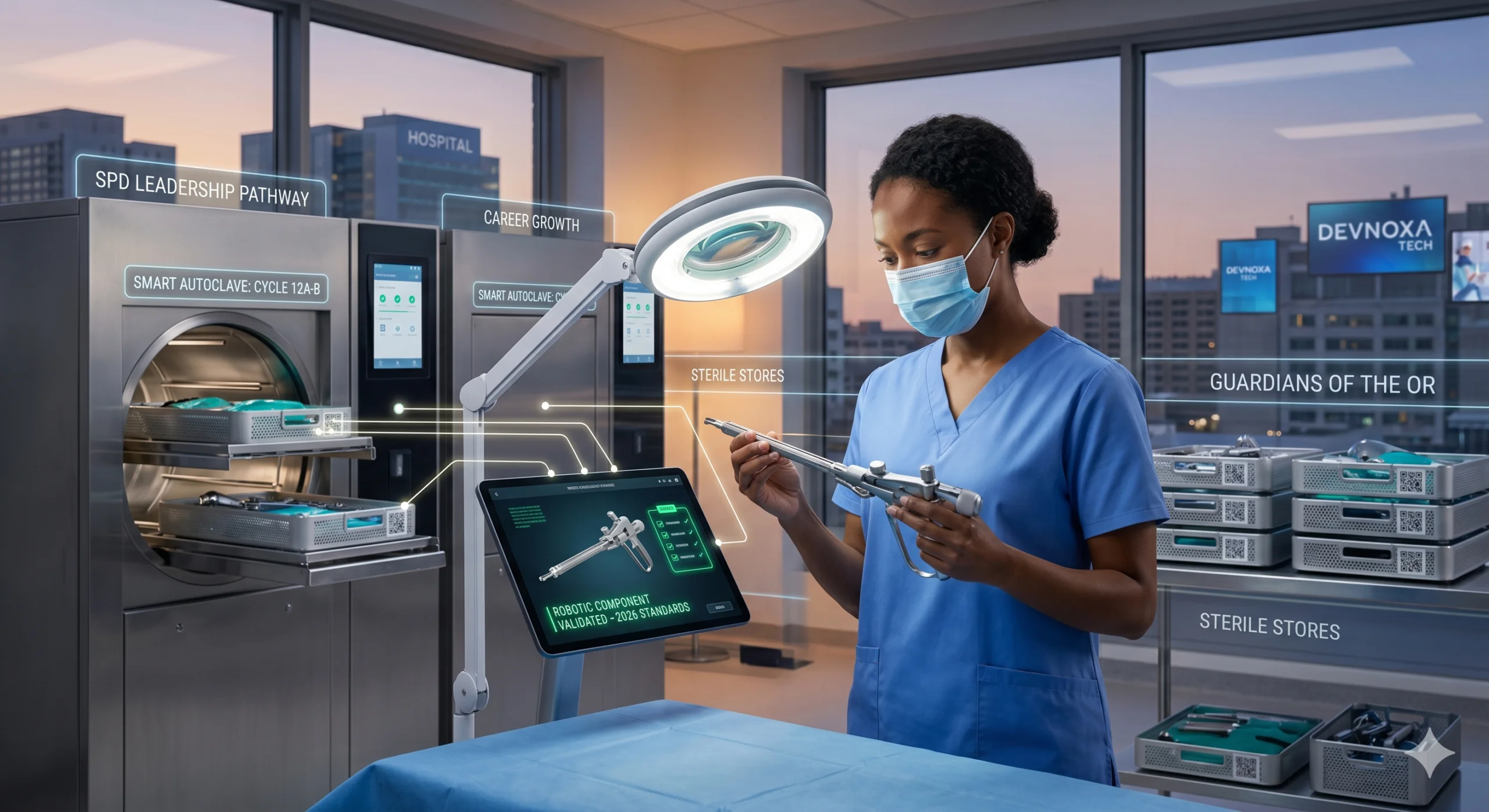

The heartbeat of a modern hospital doesn’t just pulse in the operating rooms or the emergency department. It resonates in a specialized, high stakes environment often hidden from the public eye: the Sterile Processing Department (SPD). If you have been searching for sterile processing tech jobs near you, you are looking into a career path that is currently experiencing a massive surge in demand. As we move through 2026, the intersection of healthcare and advanced technology has made the role of a Sterile Processing Technician (SPT) more critical than it has ever been. This is a profession for the meticulous, the disciplined, and those who want to save lives from behind the scenes. It is a world where “clean” is not good enough and where the smallest oversight can have global consequences for patient safety.
What is a Sterile Processing Technician?
Often referred to as the “guardians of the OR,” sterile processing technicians are responsible for decontaminating, inspecting, assembling, and sterilizing surgical instruments and medical equipment. In 2026, the tools they handle are no longer just simple scalpels and forceps. They are managing multi million dollar robotic surgery components, fiber optic endoscopes, and complex orthopedic power tools.
The job is a unique blend of manual dexterity and technical knowledge. A technician must understand microbiology to know how to kill invisible pathogens, chemistry to use the correct cleaning agents, and mechanical engineering to troubleshoot the massive industrial autoclaves and sonic cleaners that power the department.
Why the Demand is Spiking in 2026
The surge in job openings near you is driven by a few key factors. First, the aging population is requiring more elective and life saving surgeries. Second, the complexity of surgical instruments has increased, meaning hospitals need more specialized staff to handle the delicate reprocessing cycles. Finally, there is a nationwide push for higher safety standards, leading facilities to expand their SPD teams to ensure every tray is perfect every time.
The Daily Life in Sterile Processing
If you land a job in this field, your day will likely be divided into several distinct zones, each with its own set of technical challenges.
1. The Decontamination Zone
This is where the process begins. Wearing full Personal Protective Equipment (PPE) that often looks like a hazmat suit, technicians receive used instruments from the operating room. Using ultrasonic cleaners and manual scrubbing techniques, they remove “bioburden” the organic matter that can harbor bacteria. In 2026, many departments use automated tracking systems where every instrument is scanned to ensure it follows a specific, validated cleaning path.
2. Assembly and Inspection
Once clean, the instruments move to the assembly area. Here, technicians work under high power magnifying lights to inspect every hinge and serration for damage or remaining debris. They then “kit” the instruments into trays based on specific surgical recipes. If a heart transplant requires 120 specific tools, the SPT ensures that every single one is present, functional, and arranged for the surgeon’s ease of use.
3. Sterilization and Distribution
The final step is the autoclave. Using high pressure steam, ethylene oxide, or hydrogen peroxide plasma, the instruments are rendered sterile. Technicians must monitor the “vitals” of these machines temperature, pressure, and time to ensure the cycle was successful. Once cleared, the sterile sets are moved to “sterile stores” or sent directly to the OR for the next patient.
Education and Certification Paths
One of the most attractive aspects of sterile processing tech jobs is the accessibility of the career path. Unlike many healthcare roles that require four year degrees, you can often enter this field with a high school diploma and a specialized certification.
The Certification Standard
Most hospitals now require or highly prefer certification through bodies like the Healthcare Sterile Processing Association (HSPA) or CBSPD. These certifications, such as the Certified Registered Central Service Technician (CRCST), prove that you have mastered the complex regulations and biological principles required for the job.
In 2026, many local community colleges and vocational schools offer fast track programs that combine classroom learning with the 400 hours of hands on experience needed for full certification. If you are looking for jobs near you, check if local hospitals offer “earn while you learn” programs, where they pay for your training while you work as an uncertified tech or an aide.
Career Growth and the Tech Evolution
Sterile processing is no longer a “dead end” job. It is a foundational role that opens doors to several high level career paths.
- SPD Leadership: Many techs move into supervisory or departmental management roles, overseeing budgets of millions of dollars and teams of fifty or more people.
- Surgical Technology: Because SPTs know instruments better than anyone, they often transition into the OR as Surgical Technologists.
- Medical Device Representation: Manufacturers of surgical tools often hire experienced sterile processing techs as consultants or sales reps because they understand the technical lifecycle of the equipment.
The Digital Transformation
By 2026, the “Processing” part of the job has become highly digitized. Technicians now use tablet based tracking software that uses AI to predict which trays will be needed next based on the surgery schedule. They interact with “Smart Autoclaves” that send real time data to their phones. Being “tech savvy” is no longer a bonus; it is a requirement for the modern SPT.
Finding the Right Job Near You
When searching for sterile processing tech jobs in your area, it is important to look beyond just the hourly wage. Look for facilities that offer:
- Shift Differentials: Many SPDs run 24/7, and working evenings or weekends can significantly increase your pay.
- Tuition Reimbursement: Many hospital systems will pay for you to advance your education in nursing or healthcare administration.
- Modern Equipment: Working in a department with the latest technology makes the job safer and more efficient.
The “buzz” around healthcare careers often focuses on doctors and nurses, but the sterile processing tech is the unsung hero that makes all of their work possible. Without a clean, functional tray of instruments, the most talented surgeon in the world cannot perform.
The Human Impact
At the end of a long shift, a sterile processing tech can go home knowing that they prevented infections and saved lives. It is a job that requires a high level of integrity; when you are alone in the assembly room at 3:00 AM, the only thing ensuring that instrument is perfect is your own professional conscience.
As we move toward a future where healthcare is increasingly reliant on complex technology, the role of the sterile processing technician will only continue to grow in importance and respect. It is a stable, meaningful, and technically challenging career that offers a front row seat to the miracles of modern medicine.
For those looking to transition into a new career or looking for a partner to help navigate the technical requirements of the modern workforce, the right connections can make all the difference in your professional journey. devnoxa tech