
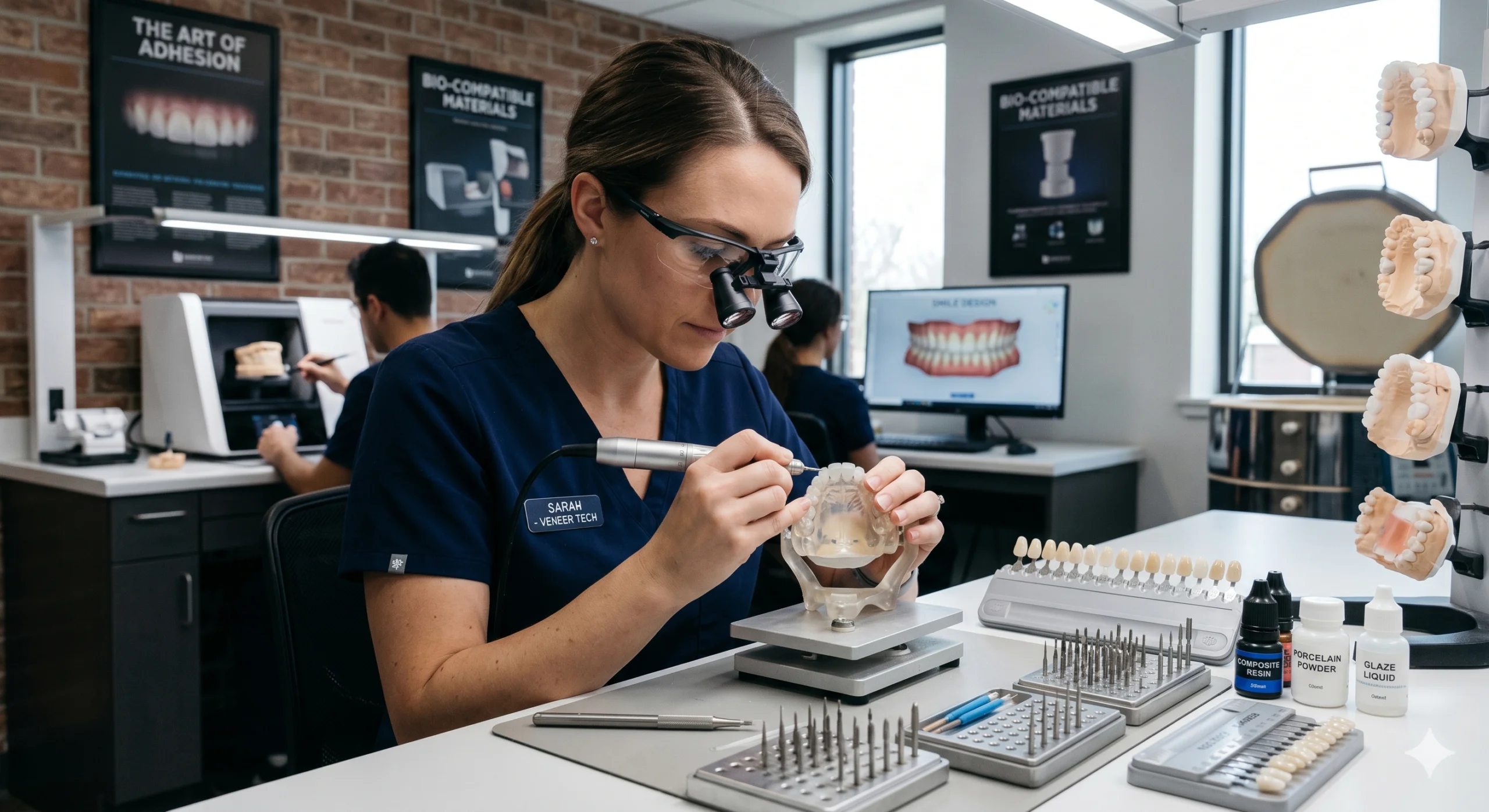

The quest for a perfect smile has been a part of human culture for centuries, but never has it been as accessible or as talked about as it is today. In the age of high definition cameras and social media, a person’s smile is often seen as their primary calling card. This cultural shift has led to the rapid rise of the veneer tech industry. While traditionally the realm of cosmetic dentistry, the world of dental aesthetics has expanded to include a new wave of professionals and technologies aimed at providing beautiful, confidence boosting smiles. To understand the veneer tech landscape, one must look at the intersection of artistry, dental health, and the technological advancements that have made these transformations possible.
What Exactly is a Veneer Tech?
To understand the role of a veneer tech, we first have to look at what a veneer actually is. In the simplest terms, a veneer is a thin shell usually made of porcelain or composite resin that is bonded to the front surface of a tooth. Its purpose is to improve the appearance of the tooth by changing its colour, shape, size, or length.
A veneer tech, or dental laboratory technician specialising in veneers, is the artist behind the scenes. While a dentist is the one who prepares the patient’s teeth and performs the final bonding, the tech is the one who actually crafts the appliance. This role requires a unique blend of medical knowledge and artistic vision. A tech must understand the anatomy of the mouth and the physics of a person’s bite, but they must also have a “painter’s eye” to match the subtle translucency, shading, and texture of natural human teeth. In recent years, the term has also expanded to include professionals who focus on the design and application of non invasive composite veneers, a trend that has gained massive traction in the beauty and wellness sectors.
The Two Pillars: Porcelain vs. Composite
When diving into the world of veneer technology, the conversation usually splits into two directions: porcelain and composite resin. Each material requires a different set of technical skills and offers different benefits to the client.
Porcelain veneers are often considered the gold standard. They are incredibly durable, highly resistant to staining, and possess a natural light reflecting quality that mimics real tooth enamel. The process of creating these is highly technical. A veneer tech working with porcelain often uses CAD CAM (Computer Aided Design and Manufacturing) technology to create a digital 3D model of the patient’s teeth. From there, the veneers are either milled from a block of ceramic or hand layered with powdered porcelain and fired in a high temperature kiln. This process is time consuming and requires a high level of expertise, which is why porcelain options are typically the more expensive choice.
On the other hand, composite veneers have become a popular alternative. These are made from a tooth coloured resin the same material used for dental fillings. A veneer tech specialising in composites might work “chairside” or create pre formed shells. The beauty of composite technology is that it often requires little to no removal of the natural tooth structure, making it a “reversible” or less invasive option. While they may not last as long as porcelain and are more prone to staining over time, the lower price point and faster application have made them a favourite for those looking for a quick smile makeover.
Technology’s Role in Modern Smile Design
The “tech” in veneer tech is more relevant now than ever before. Gone are the days of messy, uncomfortable putty impressions that made patients gag. Today, the industry relies on digital scanners. These handheld devices take thousands of tiny photographs per second to create a perfect digital map of the mouth.
Once the digital map is created, veneer techs use specialised software to design the “perfect” smile. This is where the artistry comes in. The tech can adjust the “smile line” to follow the curve of the lower lip, change the length of the central incisors to create a more youthful look, or adjust the “buccal corridor” the dark space at the corners of the mouth to create a fuller, wider smile. Some high end techs even use “digital smile design” to show patients a simulated video of what they will look like after the procedure before a single tooth is even touched. This level of precision ensures that the final result isn’t just beautiful but also functional and comfortable.
The Rise of the Independent Veneer Artist
One of the most talked about trends in the industry is the rise of the independent veneer technician. In some regions, professionals are specialising in “composite bonding” or “no prep veneers” outside of the traditional dental office setting. This has sparked a significant debate regarding regulation and safety.
A skilled veneer tech knows that aesthetics should never come at the cost of health. They must be aware of gum health, the risk of “over contouring” (which can trap bacteria), and the importance of a proper bite. A veneer that looks great but prevents a person from closing their jaw correctly can cause long term damage to the jaw joints and muscles. This is why the best veneer techs often work in close partnership with dental professionals, ensuring that the final result is as healthy as it is beautiful. For someone looking to enter this field, education in oral anatomy and sterilisation protocols is just as important as learning how to shape resin.
The Psychological Impact of a Smile Transformation
While we often focus on the materials and the machinery, the human element of the veneer tech industry cannot be ignored. For many clients, a smile transformation is a life changing event. People who have spent years hiding their teeth behind their hands when they laugh or avoiding cameras altogether often experience a massive surge in self esteem after receiving veneers.
The veneer tech is the person responsible for this emotional shift. They are not just making “teeth”; they are restoring a person’s ability to interact with the world with confidence. This sense of purpose is what draws many people to the profession. It is a career that offers the immediate gratification of seeing a person’s demeanour change the moment they look in the mirror for the first time after their procedure.
Conclusion: The Future of the Industry
The veneer tech industry is at an exciting crossroads. As 3D printing technology becomes more sophisticated and affordable, we may soon see a world where custom, high quality veneers can be printed in a matter of minutes. At the same time, the demand for a “natural” look is replacing the “ultra white” Hollywood smile of the past, requiring techs to be even more skilled in the nuances of colour and texture.
Whether it is through the precision of porcelain or the accessibility of composite resin, the goal remains the same: to create a smile that feels as good as it looks. The successful veneer tech of the future will be someone who embraces the latest digital tools while never losing sight of the handcrafted artistry and biological responsibility that the job requires. As long as people value the power of a first impression, the role of the veneer tech will remain a vital and vibrant part of the beauty and health industry. devnoxa tech