
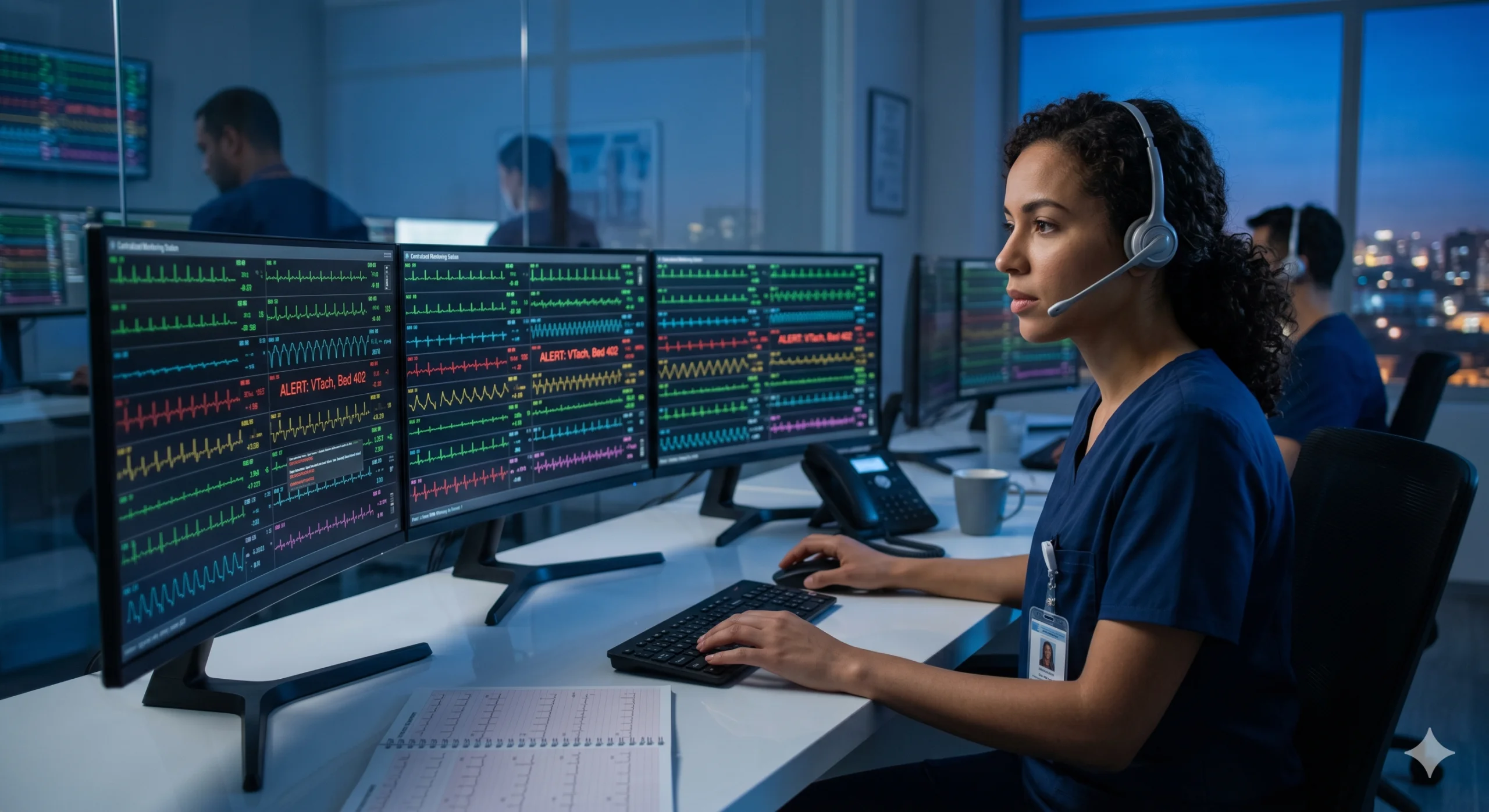

In the fast paced ecosystem of modern healthcare, some of the most critical work happens behind a screen, away from the direct glare of surgical lights. As we navigate the clinical landscape of 2026, the role of the telemetry technician, or “telemetry tech,” has emerged as a cornerstone of patient safety. These professionals act as the watchful guardians of the heart, interpreting the silent language of cardiac rhythms to ensure that life saving interventions happen in seconds, not minutes. If you have ever been curious about the intersection of technology and medicine, or if you are looking for a healthcare career that rewards focus and analytical thinking, the world of telemetry offers a unique and vital path.
The Invisible Shield: Defining the Telemetry Tech
A telemetry technician is a specialized healthcare professional who monitors patient vital signs specifically cardiac rhythms via remote electronic equipment. While a nurse manages the bedside and a doctor manages the diagnosis, the telemetry tech manages the data.
In a typical 2026 hospital setting, these technicians often work in a “centralized monitoring station.” This high tech hub allows a single technician to watch the heartbeats of dozens of patients simultaneously. Using telemetry units small, portable devices worn by patients that transmit EKG data wirelessly the tech identifies normal patterns and, more importantly, flags dangerous arrhythmias the moment they occur.
Roles and Responsibilities in 2026
The responsibilities of a telemetry tech have evolved significantly with the integration of AI and more advanced monitoring hardware. Their daily tasks are a blend of technical expertise and high stakes communication:
- Continuous Surveillance: They provide 24/7 monitoring of EKG rhythms, ensuring that every “blip” on the screen is understood and accounted for.
- Rhythm Interpretation: Techs must be able to instantly distinguish between a harmless muscle twitch (artifact) and a life threatening event like ventricular fibrillation or asystole.
- Rapid Alert Systems: When a rhythm changes, the tech is the first link in the chain of survival. They must communicate clearly and calmly with nursing staff to initiate a rapid response or a code blue.
- Data Documentation: In the era of electronic health records (EHR), telemetry techs are responsible for recording and “stripping” cardiac data, providing a permanent record of a patient’s heart activity throughout their stay.
- Equipment Troubleshooting: They ensure that leads are placed correctly and that the wireless transmitters are functioning, often guiding bedside staff on how to fix technical issues.
The Technological Leap of 2026
Telemetry in 2026 is no longer just about watching green lines bounce across a black screen. The industry has seen a massive shift toward “smart monitoring.” Artificial Intelligence now works alongside the technician, filtering out “false alarms” caused by a patient simply moving in bed or a lead coming loose. This reduces alarm fatigue, a major challenge in hospital environments, and allows the technician to focus their mental energy on genuine clinical emergencies.
Furthermore, the “Internet of Medical Things” (IoMT) has expanded telemetry beyond the hospital walls. We are seeing more “virtual wards” where telemetry techs monitor patients from their own homes using hospital grade wearable sensors. This “hospital at home” model is revolutionizing how we manage chronic heart conditions, and telemetry techs are the engine driving that change.
Career Path: Education and Certification
One of the most appealing aspects of becoming a telemetry tech is the relatively low barrier to entry compared to other medical roles. While it requires immense skill, it does not require a four year degree.
Educational Requirements
Most entry level positions require a high school diploma or GED. However, in today’s competitive market, many employers prefer candidates who have completed a specialized certificate program. These programs, often found at community colleges or through hospital based training, focus heavily on anatomy, physiology, and the physics of electrocardiology.
Certification
To reach the top of the pay scale, obtaining a national certification is essential. The National Telemetry Association (NTA) and similar bodies offer exams that validate a technician’s ability to interpret complex EKG strips. Being “Certified” tells a hospital that you can be trusted with the lives of their patients.
The Financial and Professional Outlook
As of 2026, the financial outlook for telemetry technicians is strong. In the United States, the average hourly pay for a telemetry tech is approximately $27, or roughly $56,000 annually. However, experienced techs working in major metropolitan areas like New York or Los Angeles can see wages exceeding $40 per hour.
Because hospitals never sleep, the role offers incredible flexibility. Many techs choose to work three 12 hour shifts per week, allowing for four days off. This makes it an ideal “bridge” career for those pursuing further education, such as nursing or medical school.
Is This the Right Career for You?
Success as a telemetry tech requires a specific temperament. You must be comfortable with long periods of intense focus. While the job is not physically demanding you are generally seated in a quiet, climate controlled room it is mentally exhaustive. You are essentially a human “Early Warning System.”
You also need thick skin and excellent communication skills. In an emergency, you may have to give urgent instructions to a stressed nurse or physician. Being able to remain professional and precise under pressure is the hallmark of a great technician.
The Future of Telemetry
The future of this field is bright. As healthcare systems continue to decentralize and move toward remote monitoring, the need for skilled data interpreters will only grow. We are moving toward a world where a telemetry tech might not just monitor heart rates, but also oxygen saturation, blood glucose, and neurological activity in real time.
Telemetry technicians are the unsung heroes of the modern hospital. They are the eyes that never blink and the ears that hear the first signs of trouble. For those looking to make a real difference in the lives of others while working at the cutting edge of medical technology, there is no better place to be.
For more insights into how technology is transforming professional roles and healthcare systems, visit the link below. devnoxa tech.