
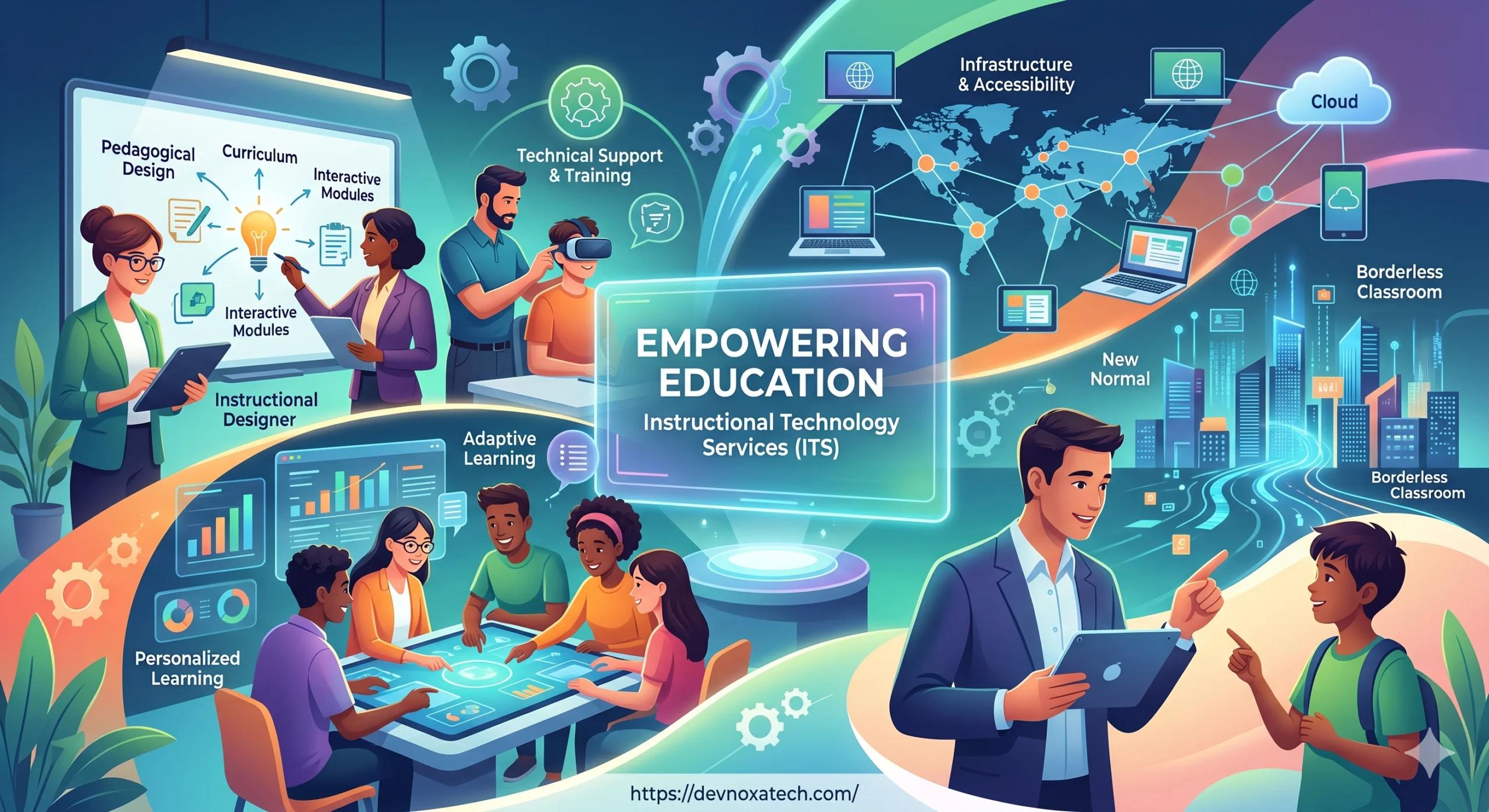

The modern classroom bears little resemblance to the chalkboards and heavy encyclopedias of the past. As we navigate the digital age, the bridge between complex educational goals and the tools used to achieve them is built by Instructional Technology Services (ITS). This field is no longer just about fixing a projector or managing a computer lab; it has become the heartbeat of contemporary learning, blending pedagogy with cutting-edge innovation to ensure that students and educators thrive in an interconnected world.
Defining the Digital Bridge
At its core, Instructional Technology Services represents a dedicated ecosystem of professionals, software, and hardware designed to enhance the learning experience. While “Educational Technology” often refers to the tools themselves—like tablets or learning management systems—ITS is the service-oriented framework that makes those tools functional, accessible, and strategically integrated into a curriculum.
The primary goal is not to replace the teacher with a machine, but to amplify the teacher’s reach and the student’s engagement. ITS teams act as architects, designing digital environments where information is not just delivered, but discovered. They handle everything from the backend infrastructure of a university’s server to the front-end user experience of a third-grade reading app.
The Pillars of Service
To understand the scope of ITS, one must look at the diverse roles it plays within an institution. These services are generally built upon four main pillars: Infrastructure, Support, Design, and Analytics.
Infrastructure and Accessibility
Before a single lesson can be taught online, the foundation must be rock-solid. ITS ensures that high-speed internet, secure cloud storage, and hardware are available to all. More importantly, they champion accessibility. Instructional technology services are responsible for ensuring that digital materials are compatible with screen readers, offer closed captioning, and meet the diverse needs of learners with disabilities. In this sense, ITS is a tool for equity, breaking down physical and sensory barriers to education.
Pedagogical Design
This is where the magic happens. Instructional designers within the ITS umbrella work alongside subject matter experts to translate complex information into digestible digital formats. They understand that a three-hour lecture does not translate well to a Zoom recording. Instead, they help create interactive modules, gamified assessments, and asynchronous discussions that keep students motivated. They focus on the “how” of learning, ensuring that the technology serves the lesson, rather than the other way around.
Technical Support and Training
No matter how advanced a tool is, it is useless if the user is intimidated by it. A significant portion of ITS involves professional development. This means hosting workshops for faculty on how to use new software and providing real-time troubleshooting for students. By fostering digital literacy, ITS empowers individuals to troubleshoot their own paths, turning “I can’t do this” into “I know which tool to use.”
Data-Driven Insights
One of the most transformative aspects of modern ITS is the ability to track learning analytics. Through Learning Management Systems (LMS), ITS can provide educators with data on student engagement. If a large percentage of students are struggling with a specific module, the data reveals it instantly. This allows for rapid intervention and the ability to pivot instructional strategies in real-time, creating a more responsive educational environment.
The Shift Toward Personalized Learning
One of the greatest achievements of instructional technology services is the democratization of personalized learning. In a traditional setting, a teacher often has to teach to the “middle” of the class, potentially leaving behind struggling students while failing to challenge those who are advanced.
ITS enables adaptive learning platforms. These systems use algorithms to adjust the difficulty of content based on a student’s performance. If a student masters a concept quickly, the system moves them forward; if they struggle, it provides supplemental resources. ITS professionals manage these systems, ensuring the data is secure and the logic behind the adaptation remains pedagogically sound.
Bridging the Distance
The global events of the early 2020s accelerated the adoption of ITS by a decade. Virtual and hybrid learning models shifted from being “optional perks” to “essential requirements.” During this transition, instructional technology services were the thin line between the continuation of education and a total standstill.
However, the “new normal” isn’t just about video calls. It’s about creating a “borderless classroom.” Through ITS, a student in a rural village can access the same high-level university resources as someone living in a major metropolis. Virtual Reality (VR) and Augmented Reality (AR) are now being integrated by ITS teams to allow medical students to practice surgery in a risk-free digital environment or history students to walk through a digitally reconstructed ancient Rome.
Challenges and Ethical Considerations
With great power comes significant responsibility. The expansion of ITS brings about complex challenges regarding data privacy and the “Digital Divide.” Instructional technology services must be the gatekeepers of student data, ensuring that sensitive information is protected from breaches.
Furthermore, there is a constant battle against tech-obsolescence. ITS departments must strategically manage budgets to ensure they aren’t chasing every “shiny new toy,” but instead investing in sustainable technologies that provide long-term value. They must also work to ensure that students from lower socioeconomic backgrounds aren’t left behind because they lack the hardware required to access the services provided.
The Human Element in a Digital Space
It is a common misconception that instructional technology services make education colder or more robotic. In reality, when implemented correctly, ITS frees up the teacher’s time. By automating grading for simple quizzes or providing basic information through modules, the teacher is granted more time for one-on-one Mentorship and deep-dive discussions.
The human element remains the most critical component. ITS is staffed by people who are passionate about learning. They are the “silent partners” in every degree earned and every skill mastered in the modern era. They are the translators who turn bits and bytes into “aha!” moments.
Looking Toward the Future
As we look ahead, the role of Artificial Intelligence (AI) will undoubtedly reshape instructional technology services. We are moving toward a future where AI tutors can provide 24/7 support, and generative tools can help educators create custom content in seconds. The role of ITS will be to curate these AI tools, ensuring they are used ethically and effectively to support human intelligence rather than replace it.
The future of education is hybrid, flexible, and deeply integrated with technology. Instructional Technology Services will continue to be the guiding hand that ensures this integration remains purposeful. By focusing on the intersection of human psychology and digital capability, ITS ensures that the light of knowledge continues to burn brighter and reach further than ever before.
In conclusion, Instructional Technology Services are the unsung heroes of the modern educational landscape. They provide the tools, the training, and the vision necessary to prepare students for a future that is being written in code. As long as there is a desire to learn, there will be a need for the innovative services that connect the learner to the lesson. devnoxa tech