
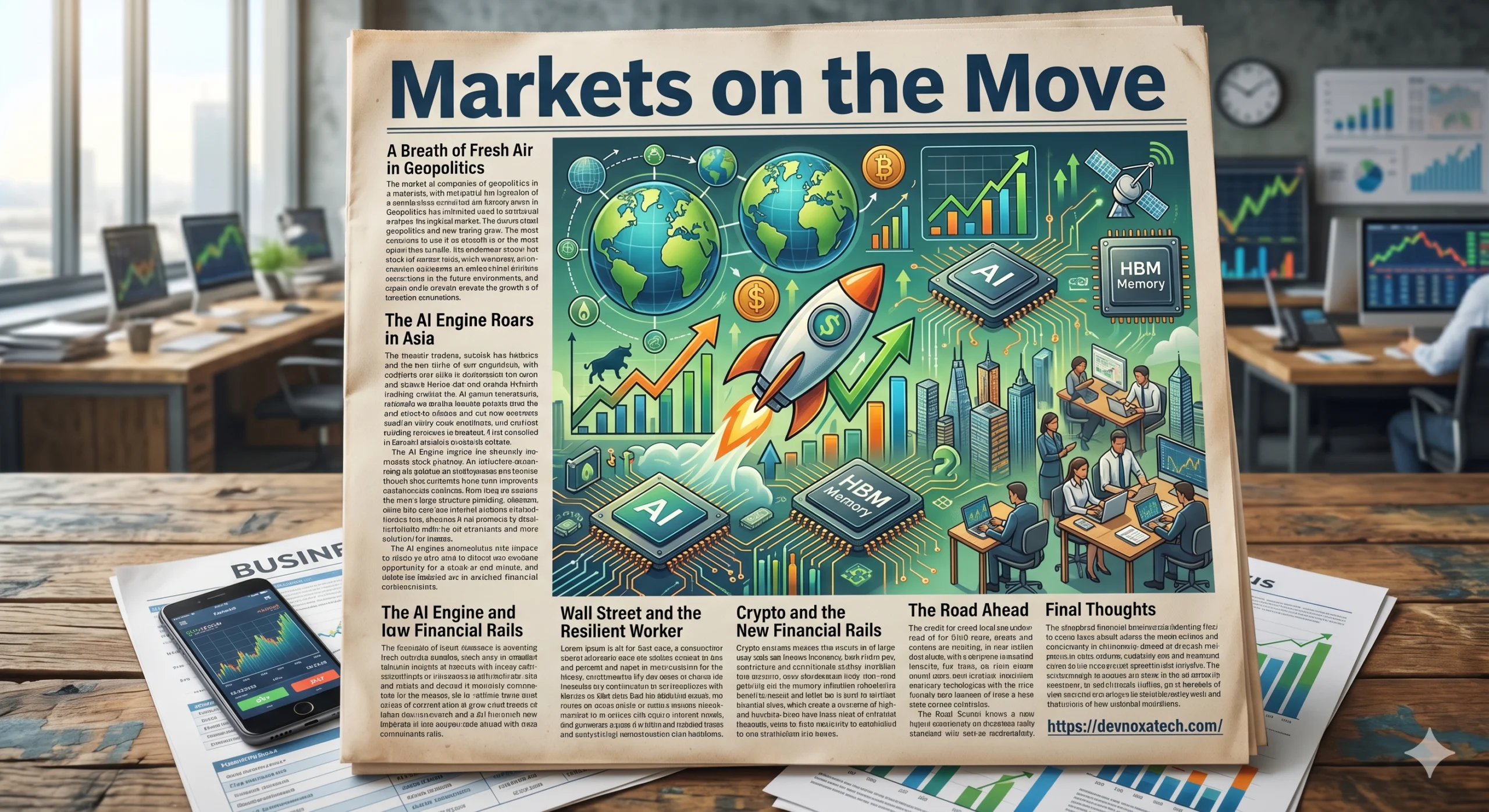

Today marks a fascinating turning point in the global financial landscape. For anyone keeping an eye on their portfolio or simply trying to make sense of the evening news, the atmosphere on May 6, 2026, is one of cautious but undeniable optimism. We are seeing a rare alignment where geopolitical shifts, technological breakthroughs, and labor markets on the move resilience are all pulling the wagon in the same direction. From the bustling trading floors in Seoul to the digital ledgers of the crypto world, there is a sense that the “fog of war” might finally be lifting, replaced by a renewed focus on growth.
A Breath of Fresh Air in Geopolitics
The biggest headline driving today’s market action is the potential for de-escalation in the Middle East. Reports of a memorandum of understanding between the U.S. and Iran have sent a massive ripple through the commodities sector. While it is important to remember that these are early days—a 30-day window to negotiate a more permanent peace—the mere suggestion of a ceasefire has acted like a release valve for global tension.
As a direct result, crude oil prices have taken a significant tumble. WTI and Brent crude are both trading sharply lower, providing much-needed relief to a global economy that has been stifled by high energy costs for months. This “peace dividend” is being felt immediately in the equity markets. When energy costs drop, the cost of doing business drops with them, and investors are wasteing no time in pricing that reality into stock valuations.
The AI Engine Roars in Asia
While the headlines are focused on oil and diplomacy, the real muscle behind today’s rally is coming from the tech sector. South Korea’s KOSPI index made history today, surging past the 7,000-point mark for the first time. This isn’t just a random spike; it is a testament to the sheer power of the artificial intelligence boom.
Tech giants like Samsung Electronics and SK Hynix saw their shares jump by double digits. These companies are the backbone of the AI revolution, producing the high-bandwidth memory chips that power everything from advanced chatbots to autonomous defense systems. The message from Asia is clear: AI is no longer a speculative future; it is the primary engine of current industrial growth. Even in China, markets returned from the May Day holiday with a spring in their step, bolstered by consumer spending data that beat even the most optimistic forecasts.
Wall Street and the Resilient Worker
In the United States, the narrative is slightly different but equally compelling. The tech-heavy Nasdaq is hovering near all-time highs, fueled by an earnings season that has seen many silicon valley stalwarts crush expectations. But beyond the glitz of Big Tech, the real story is the American worker.
The latest ADP Employment report showed that the U.S. added over 100,000 jobs in April, a 15-month high. This “low-hire, low-fire” environment suggests a stabilizing labor market where businesses are holding onto talent while slowly expanding. For the Federal Reserve, this presents a delicate balancing act. A strong labor market usually suggests higher inflation, but because productivity is increasing—thanks in part to those AI tools we mentioned—the economy seems to be growing without overheating.
Crypto and the New Financial Rails
The digital asset space is also showing signs of a “risk-on” sentiment. Bitcoin has been holding steady above the $81,000 mark, acting less like a speculative volatile asset and more like a pillar of the new financial architecture. We are seeing a significant shift in how institutional investors view the blockchain.
Today’s discussions aren’t just about price action; they are about “TradFi Tokenization.” Major financial institutions are increasingly looking at how to move traditional assets—like bonds and real estate—onto blockchain infrastructure to make trading faster and cheaper. This convergence of old-world finance and new-world technology is providing a floor for crypto prices that simply didn’t exist a few years ago.
The Road Ahead
Despite the green screens and record-breaking indices, it would be a mistake to ignore the underlying risks. The global economy is still in a “fragile” state, as noted by recent IMF and Oxford Economics reports. Public debt remains at historic highs, and any breakdown in the current peace negotiations could send oil prices soaring back into the triple digits.
Furthermore, there is a growing debate about whether we are in an AI bubble. While the productivity gains are real, the valuations for some companies are reaching levels that require perfection to justify. Investors are keeping a close eye on Friday’s Non-Farm Payrolls report, which will likely dictate the market’s direction for the rest of the month.
Final Thoughts
Today feels like a day where the world decided to look forward rather than over its shoulder. Between the cooling of geopolitical hotspots and the warming of the global tech engine, the path of least resistance for markets appears to be upward. Whether you are a retail investor or a casual observer, the lesson of today is simple: resilience is the theme of 2026. The world has learned to navigate crises, and now it is learning how to build through them.
For those looking to stay ahead of the curve in technology and market trends, keep an eye on the innovators who are bridging the gap between today’s challenges and tomorrow’s solutions. devnoxa tech