
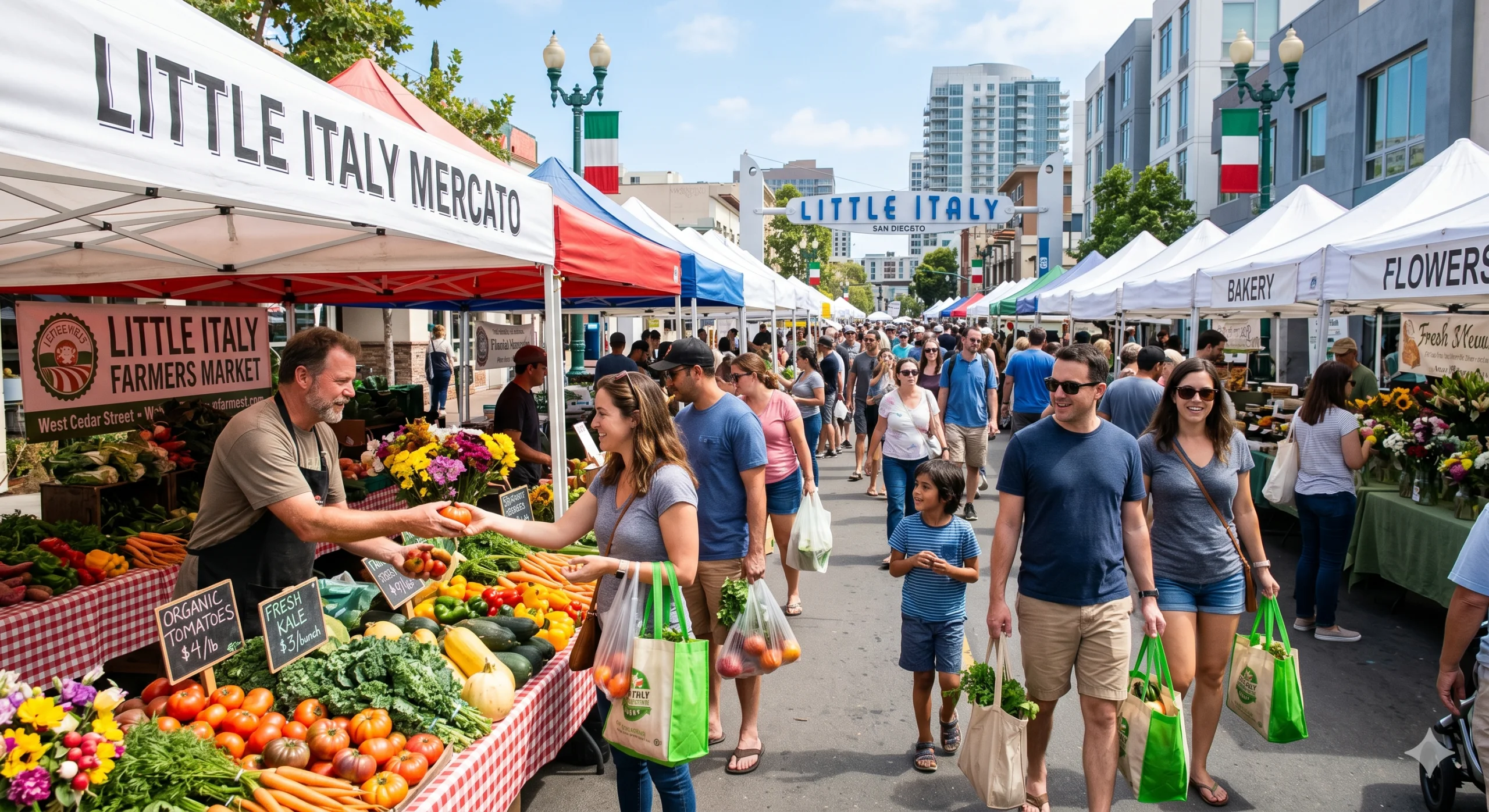

The air in downtown San Diego on a Saturday morning carries a specific, electric charge. It isn’t just the salt spray from the nearby harbor or the smell of roasting espresso; it is the collective hum of thousands of people descending upon a few city blocks for a ritual that has defined the neighborhood for years. This is the Little Italy farmers market so expansive and vibrant that it feels less like a place to buy groceries and more like a weekly festival dedicated to the art of living well.
A Neighborhood Reimagined
To understand the market, you have to understand Little Italy itself. Once a quiet enclave for Italian tuna fishermen and their families, the neighborhood faced a period of decline in the mid-twentieth century as highways sliced through its heart. However, over the last few decades, it has undergone a metamorphosis. Today, it is arguably the most stylish and walkable neighborhood in San Diego, and the Mercato is its crowning jewel.
Every Saturday, rain or shine, several blocks of West Cedar Street and beyond are closed to traffic. In their place rises a city of white pop-up tents, stretching from Front Street all the way down toward the Pacific Highway. It is a massive undertaking, organized with the kind of precision that makes the chaos feel inviting rather than overwhelming.
The Sensory Overload
Walking into the market for the first time is a sensory experience that stays with you. Your eyes are immediately hit with a kaleidoscope of colors. There are stacks of heirloom tomatoes in shades of purple and gold, piles of leafy greens so vibrant they look painted, and buckets of fresh-cut flowers that perfume the entire block.
Then there is the sound. It is a mix of buskers playing acoustic guitars, the rhythmic chopping of knives from food prep stations, and the constant chatter of neighbors catching up. You’ll hear Italian being spoken near the deli stalls, children laughing near the fountain at Piazza della Famiglia, and the occasional bark of a pampered French bulldog. It is a soundtrack of a community in motion.
The Bounty of the Land
At its core, the Little Italy Mercato is about the farmers. San Diego County is unique because it has more small farms than any other county in the United States, and the Mercato serves as the primary stage for these growers. Because the weather in Southern California is famously consistent, the variety of produce available year-round is staggering.
In the winter, you find citrus fruits that taste like candy—blood oranges, Meyer lemons, and tangelos. By the time spring rolls around, the tables are heavy with strawberries that are red all the way through and snap peas that are sweet enough to eat raw. Summer brings the stone fruits and the legendary California avocados, while autumn introduces a variety of squashes and apples that seem out of place in a Mediterranean climate but are delicious nonetheless.
What makes this market different from a high-end grocery store is the connection to the source. When you buy a bag of arugula here, you aren’t just getting greens; you are often talking to the person who pulled them out of the dirt forty-eight hours ago. There is a sense of accountability and pride that changes the way you think about your food.
Beyond the Produce
While the “farmers” part of the market is the foundation, the “market” part is where things get truly creative. The Mercato has become a launchpad for local artisans and food entrepreneurs.
You can find stalls dedicated entirely to small-batch hot sauces, jars of honey harvested from hives in the nearby mountains, and jars of sea salt gathered from the local coastline. There are bakers selling sourdough loaves with crusts so hard they crackle when you squeeze them, and pastry chefs offering vegan donuts that rival any traditional bakery.
The international influence is also impossible to miss. Given the neighborhood’s heritage, there is a strong Italian presence, with vendors selling handmade pasta, imported olive oils, and aged balsamic vinegars. But you’ll also find fresh sea urchin (uni) cracked open right in front of you, authentic French crepes, and spicy African sambusas. It is a culinary map of the world squeezed into a few city blocks.
The Social Fabric
The Mercato serves a purpose that goes far beyond commerce. In an era where so much of our lives is spent behind screens or in the isolated bubbles of our cars, the market is a return to the public square. It is a place where people actually look at each other.
You see the “regulars”—the locals who live in the high-rise condos nearby, carrying their reusable hemp bags and knowing exactly which vendor has the best eggs. You see the tourists, wide-eyed and clutching iced lattes, trying to decide which stall to visit first. It’s a place for families, for first dates, and for dog lovers.
The Piazza della Famiglia, a beautiful open-air plaza with a tiled fountain, serves as the market’s living room. People sit on the edges of the fountain or at the bistro tables, eating their market finds and watching the world go by. It’s one of those rare places where the pace of life actually slows down, even though there is so much happening around you.
Sustainable Living
There is also an educational component to the Little Italy Mercato. It forces you to eat seasonally. In a globalized world, we are used to having everything available all the time. The market reminds us that nature has a rhythm. You learn to wait for the return of the cherries or the specific window when the figs are perfect.
Furthermore, shopping here is a vote for sustainability. By buying local, you are reducing the “food miles” associated with your dinner. You are supporting open space in the county and helping small family businesses survive in an era of corporate consolidation. There is a “no-waste” ethos that permeates the stalls, with many vendors encouraging customers to bring back their egg cartons or berry baskets for reuse.
Tips for the Perfect Visit
If you plan to visit, there is a bit of strategy involved. The market usually opens at 8:00 AM and runs until 2:00 PM. If you want the best selection—especially the rare items like squash blossoms or specific types of mushrooms—you need to be there early. The “early bird” crowd is focused and efficient.
However, if you are there for the atmosphere, arriving around 11:00 AM is ideal. The sun is up, the musicians are in full swing, and the energy is at its peak. Parking in Little Italy can be a challenge, so many people choose to take the trolley, which drops you off just a few blocks away.
Bring cash, though most vendors now accept cards and mobile payments. Most importantly, bring an open mind and a hungry stomach. Half the fun is trying samples of things you’ve never heard of.
A Lasting Impression
As the clock nears 2:00 PM, the vendors begin the coordinated dance of packing up. The tents come down, the remaining produce is loaded back into trucks, and the streets are swept clean. By mid-afternoon, the cars return, and the street looks like any other urban thoroughfare.
But the impact of the morning remains. The people walking home carry bags full of nourishment, and the neighborhood feels more connected for having shared the space. The Little Italy Mercato is a testament to the fact that even in a major city, we still crave the simple, ancient pleasure of gathering together to celebrate the harvest. It is the heart of San Diego, beating loudly every Saturday morning, reminding us that the best things in life are grown with care and shared with neighbors. devnoxa tech