
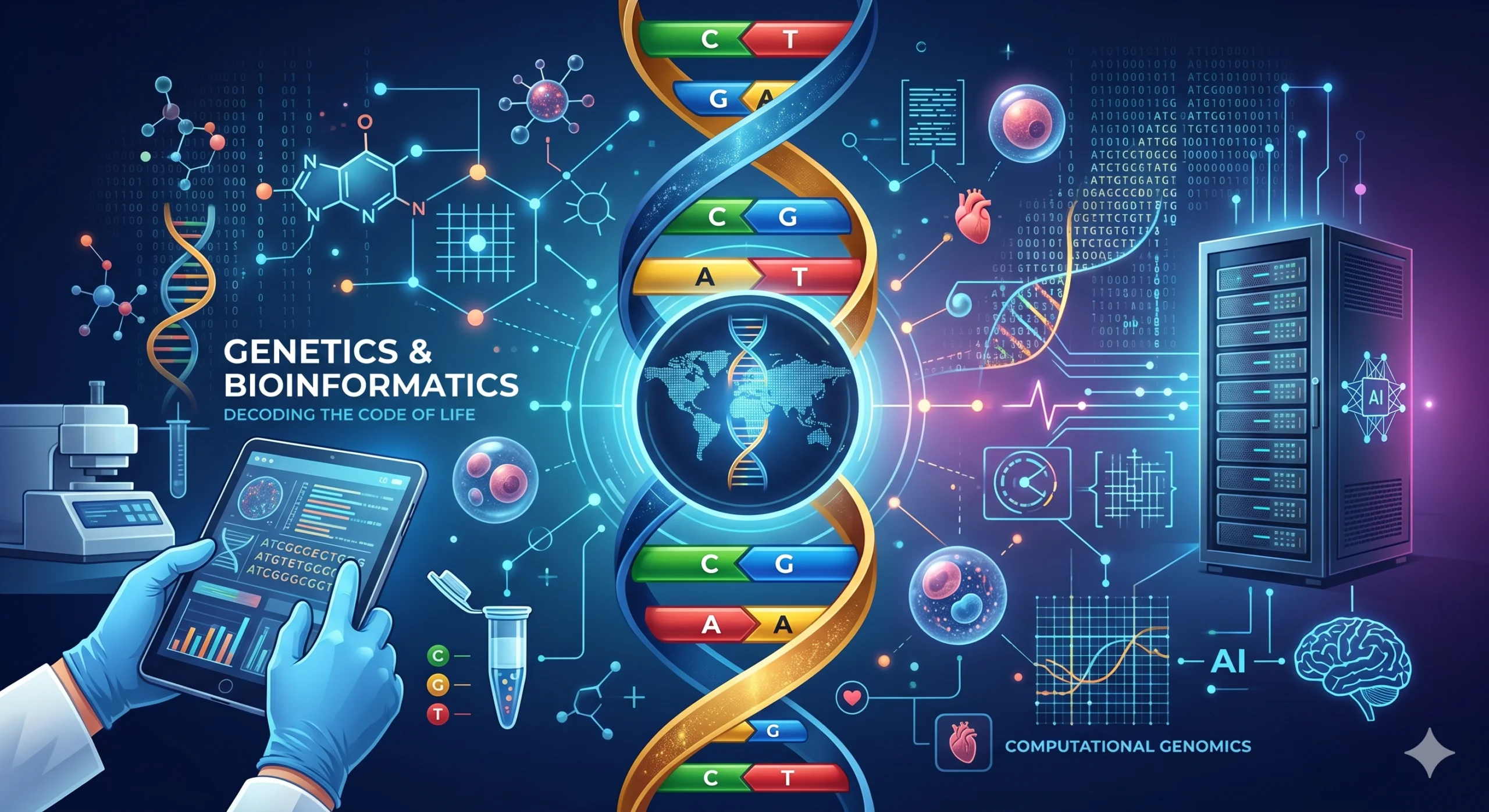

The world of genetics is often compared to a massive, intricate library. Inside this library, every living organism has its own set of instruction manuals written in a code that determines everything from the color of a person’s eyes to how a plant survives a drought. At the heart of deciphering these manuals lies a fundamental concept known as CGAT. While it might sound like a technical acronym or a random string of letters, CGAT represents the four chemical bases that make up the rungs of the DNA ladder: Cytosine, Guanine, Adenine, and Thymine.
To understand the significance of CGAT, one must first look at the structure of Deoxyribonucleic Acid (DNA). DNA is a double helix, a shape that resembles a twisted ladder. The sides of this ladder are made of sugars and phosphates, but the “information” is stored in the rungs. Each rung consists of two nitrogenous bases paired together. These bases follow a very strict rule of engagement: Adenine always pairs with Thymine, and Cytosine always pairs with Guanine. This complementary base pairing is the reason why, if you know the sequence of one side of a DNA strand, you can perfectly predict the other.
The Language of Life
If we think of DNA as a language, then CGAT are the letters of the alphabet. However, unlike the English alphabet with its 26 letters, the biological alphabet has only four. It is the specific order and combination of these four letters that create the complexity of life. A sequence like ATCGGT might mean something entirely different than GGTATC. These sequences form “words” called codons, which in turn form “sentences” called genes.
Genes provide the instructions for building proteins, which are the workhorses of the body. They build tissues, transport oxygen in the blood, and trigger chemical reactions. When we talk about CGAT in a modern context, we are often referring to the computational and biological methods used to sequence, analyze, and interpret these patterns. The field of Bioinformatics has emerged as the bridge between raw biological data (the CGAT sequences) and meaningful medical or scientific insights.
The Revolution of Genome Sequencing
For decades, the sequences of CGAT remained a mystery. It wasn’t until the late 20th century that scientists developed the technology to actually read these letters. The Human Genome Project, completed in the early 2000s, was a monumental effort to map all three billion letters in the human genetic code. This project changed medicine forever.
By understanding the “standard” sequence of CGAT in humans, researchers could begin to identify “typos” or mutations. For example, if a specific gene usually has a Cytosine at a certain position, but a patient has a Thymine instead, that single letter change—known as a Single Nucleotide Polymorphism (SNP)—could be the cause of a hereditary disease or an increased risk for certain cancers.
Today, sequencing has become faster and significantly cheaper. What once took years and billions of dollars can now be done in a matter of hours for a few hundred dollars. This accessibility has given rise to personalized medicine. Instead of a “one-size-fits-all” approach to healthcare, doctors can look at a patient’s unique CGAT sequence to determine which medications will be most effective or which lifestyle changes are most critical for their specific genetic makeup.
CGAT in Technology and Data Science
As the volume of genetic data exploded, the term CGAT also became associated with the computational toolsets used to handle this information. Computational Genomics Analysis Tools (often abbreviated or referred to in the context of CGAT) are the software and algorithms that allow scientists to sift through billions of base pairs to find patterns.
The challenge is immense. Analyzing a single human genome generates massive amounts of data. To make sense of it, researchers use high-performance computing to compare sequences, align them against reference genomes, and detect variations. This intersection of biology and data science is where the most exciting discoveries are happening. Artificial Intelligence is now being trained to predict how changes in the CGAT sequence will affect the folding of proteins, a breakthrough that could lead to the creation of entirely new enzymes or more effective vaccines.
Ethical Considerations and the Future
As our ability to read and write the CGAT code grows, so do the ethical questions. Technologies like CRISPR-Cas9 now allow us to not just read the code, but to edit it. We can “cut out” a Guanine-Cytosine pair and replace it with an Adenine-Thymine pair. This holds the potential to cure genetic disorders like sickle cell anemia or cystic fibrosis.
However, the power to edit the blueprint of life brings up concerns about “designer babies” and genetic privacy. If an insurance company knows your CGAT sequence suggests a high risk for heart disease, could they deny you coverage? If we edit the genes of crops to be more resilient, what are the long-term effects on the ecosystem? These are the questions that society must answer as we move deeper into the genomic age.
Furthermore, the study of CGAT isn’t limited to humans. It is being used to track the evolution of viruses, helping scientists stay one step ahead of pandemics. It is used in forensics to solve cold cases by matching DNA found at crime scenes with public genealogical databases. It is even used in agriculture to breed cattle that produce less methane or rice that can grow in salty soil.
Conclusion
The four letters—C, G, A, and T—are the most fundamental components of our existence. They are the legacy of billions of years of evolution, passed down from the very first single-celled organisms to the complex humans we are today. By learning to read and interpret the CGAT code, we are essentially learning to read the history of life itself.
Whether through the lens of a biologist looking through a microscope or a data scientist running algorithms on a supercomputer, the goal remains the same: to understand the instructions that make life possible. As we continue to refine our tools and expand our knowledge, the secrets hidden within the CGAT sequence will continue to unlock new frontiers in health, technology, and our understanding of our place in the universe.
The journey from discovering the double helix to being able to edit individual base pairs has been remarkably short in the grand scheme of human history. Yet, we have only just begun to scratch the surface of what is possible when we truly understand the language of CGAT. devnoxa tech