
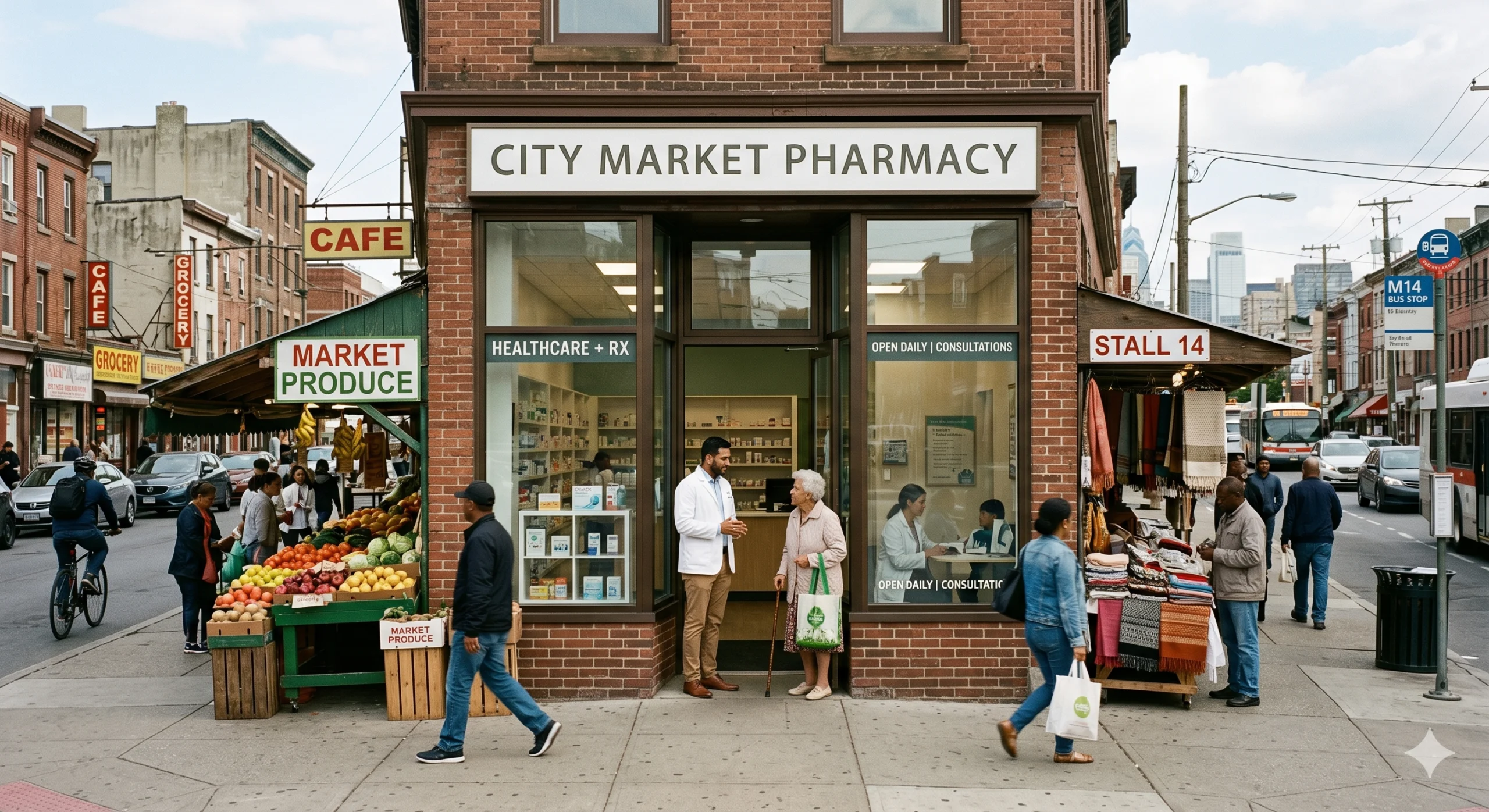

In the middle of a bustling urban landscape, where the noise of traffic competes with the shouts of street vendors, there is often a quiet corner that serves as a sanctuary for the community. The city market pharmacy is more than just a place to pick up a prescription. It is a vital hub of health, a center for advice, and a bridge between the clinical world of hospitals and the daily lives of residents. These pharmacies represent a unique intersection of commerce and care, providing essential services in environments that are often underserved or overwhelmed.
A Neighborhood Landmark
A city market pharmacy is rarely a standalone, clinical box. Instead, it is woven into the fabric of the neighborhood. It sits alongside the grocer, the tailor, and the coffee shop. This proximity creates a level of accessibility that a massive hospital or a remote suburban medical center simply cannot match. For many city dwellers, especially those who rely on public transportation or walking, the local pharmacy is their primary point of contact with the healthcare system.
The “market” aspect of its location is crucial. By being situated where people already do their daily shopping, the pharmacy lowers the barrier to seeking medical help. A person might stop in for a bottle of aspirin while buying vegetables, only to end up chatting with the pharmacist about a persistent cough or a skin rash. This informal access is often the first line of defense in public health, catching minor issues before they escalate into emergencies.
The Pharmacist as a Trusted Advisor
In a busy city, doctors are often booked weeks in advance, and urgent care clinics can have hours-long wait times. The city market pharmacist, however, is usually available for a quick consultation right then and there. This makes the pharmacist one of the most accessible healthcare professionals in the urban environment.
The relationship between a city market pharmacist and their regular customers is built on years of trust. They know the families in the area. They remember which elderly neighbor has trouble opening child-proof caps and which young parent is struggling with a baby’s first fever. This personal touch is a stark contrast to the sterile, often anonymous experience of modern corporate healthcare. In these small urban hubs, the pharmacist is a mentor, a guide, and a friendly face.
Navigating the Urban Health Crisis
Cities present unique health challenges. Densely populated areas often see faster spread of seasonal illnesses, and the stress of urban life can lead to chronic conditions like hypertension and anxiety. City market pharmacies are on the front lines of managing these issues.
They do more than dispense pills. Many urban pharmacies now offer:
- Vaccination Clinics: Providing easy access to flu shots and travel vaccines.
- Health Screenings: Rapid testing for blood pressure, glucose levels, and cholesterol.
- Medication Therapy Management: Helping patients with multiple chronic conditions coordinate their various prescriptions to avoid dangerous interactions.
- Educational Outreach: Teaching the community about nutrition, smoking cessation, and chronic disease management.
By offering these services in a familiar market setting, pharmacies help reduce the burden on local emergency rooms. They act as a filter, providing care for manageable conditions and directing patients to more intensive medical facilities only when absolutely necessary.
The Economic Engine of the Market
The presence of a pharmacy also bolsters the local economy of the market area. A pharmacy is a destination business; people travel specifically to visit it. Once they have picked up their medication, they are likely to spend money at the surrounding stalls—buying juice from the fruit vendor or a newspaper from the stand next door.
Furthermore, these pharmacies often stock a range of household essentials that reflect the specific needs of the local demographic. In a neighborhood with many young families, you’ll find a wide selection of diapers and formula. In an area with an aging population, you’ll see a focus on mobility aids and specialized vitamins. This curation ensures that the pharmacy remains a relevant and indispensable part of the local ecosystem.
Overcoming Challenges
Operating a pharmacy in a city market is not without its difficulties. High rents, limited storage space, and the logistical nightmare of city deliveries are constant hurdles. There is also the pressure of competing with massive retail chains and mail-order prescription services.
However, the city market pharmacy has a competitive advantage that big-box retailers lack: agility and intimacy. They can pivot quickly to stock what the neighborhood needs during a local health trend and offer a level of customer service that a call center or a self-service kiosk can never replicate. When a customer walks in, they aren’t just a prescription number; they are a neighbor.
Technology and the Modern Pharmacy
While the charm of the city market pharmacy lies in its traditional role, modern technology is helping these establishments survive and thrive. Many have adopted digital platforms that allow customers to text their refill requests or receive notifications when their medicine is ready. Some even offer local delivery services via bicycle or small electric vehicles, ensuring that housebound residents never miss a dose.
This blend of old-school community values and new-age efficiency is the secret to their longevity. They are evolving with the city, proving that even in a digital world, the physical presence of a healthcare professional in a central market is irreplaceable.
A Pillar of Community Resilience
During times of crisis, such as natural disasters or public health emergencies, the city market pharmacy often stays open when everything else shuts down. They become centers of information and distribution for essential supplies. This resilience is a testament to the dedication of the staff who see their work not just as a job, but as a civic duty.
They provide a sense of stability. In a fast-changing urban environment where shops open and close overnight, a long-standing market pharmacy represents continuity. It is a reminder that the health and well-being of the community are prioritized above all else.
Conclusion
The city market pharmacy is the unsung hero of the urban landscape. It is a place where science meets empathy, and where commerce serves the public good. By providing accessible care, expert advice, and a human connection, these pharmacies ensure that the heart of the city keeps beating strongly. They are far more than just retailers; they are the essential guardians of our neighborhood health.
As we look toward the future of urban planning and healthcare, we must ensure that these vital institutions are protected and supported. A city without a vibrant market pharmacy is a city that has lost a crucial piece of its safety net. devnoxa tech