
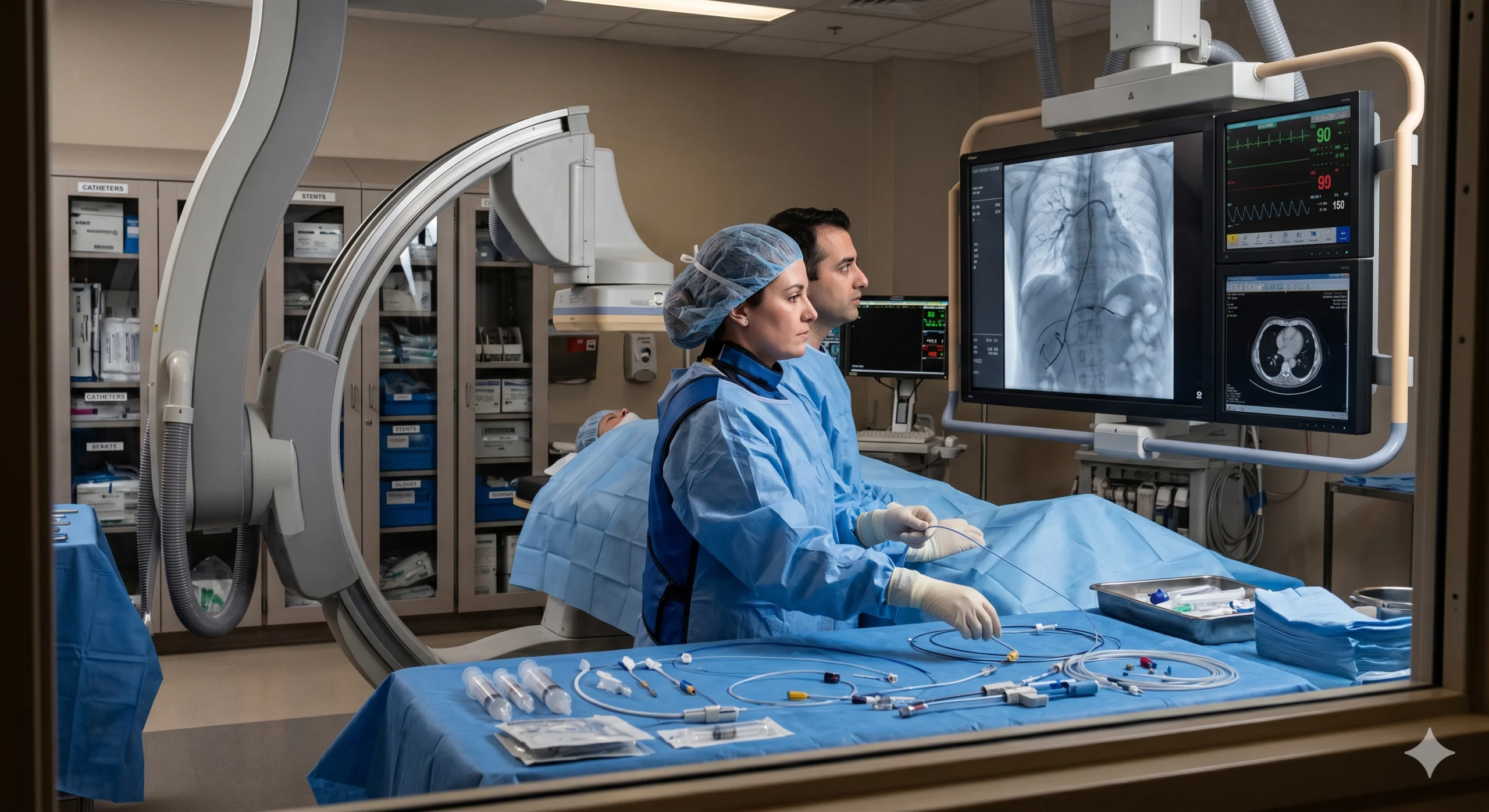

The modern hospital is a sprawling ecosystem of high-tech machinery and specialized professionals, but few areas are as dynamic or as quietly revolutionary as the Interventional Radiology Tech (IR) suite. At the heart of this department is the Interventional Radiology Technologist—often referred to as an IR tech. While the title might sound like a mouthful, the role is one of the most hands-on, fast-paced, and vital positions in contemporary healthcare.
To understand what an IR tech does, you first have to understand the magic of interventional radiology itself. It is a subspecialty that uses medical imaging—like X-rays, CT scans, and ultrasounds—to guide tiny instruments through the body’s blood vessels and organs. Instead of making a large incision to fix a problem, doctors use “pinhole” entries. The IR tech is the right hand of the radiologist, ensuring that every wire, catheter, and digital image is perfect.
The Daily Rhythm of the IR Suite
Walking into an IR suite feels a bit like entering a cockpit. There are monitors everywhere, displaying live, flickering skeletons or maps of a patient’s vascular system. An IR tech’s day usually starts long before the patient arrives. They are responsible for prepping the room, which is no small feat. This isn’t just about tidying up; it involves calibrated sophisticated imaging equipment and ensuring the sterile field is flawless.
When the procedure begins, the tech’s role shifts into a blend of technical operator and surgical assistant. They assist the physician in navigating the maze of the human body. If a patient has a blood clot in their lung, for example, the tech helps the doctor guide a catheter from the groin all the way up to the chest. This requires a deep understanding of human anatomy and a steady hand.
The tech is also responsible for “scrubbing in.” In this capacity, they work directly at the sterile table, handing the doctor the precise wires and stents needed for the job. Because IR is often used for emergencies—like stopping a massive internal bleed or treating a stroke—the pressure can be immense. An IR tech has to remain calm when the stakes are at their highest.
The Intersection of Technology and Care
What makes this career unique is the constant evolution of the gear. We are living in an era where we can “glue” shut an aneurysm or use tiny radioactive beads to kill a liver tumor. The IR tech must be a lifelong learner. They have to master the physics of radiation to ensure the patient receives the lowest possible dose while the doctor gets the clearest possible picture.
However, it isn’t all about machines. One of the most overlooked parts of the job is patient advocacy. Patients entering an IR suite are often terrified. They are awake but sedated, lying on a cold table surrounded by intimidating technology. A great IR tech knows how to bridge that gap. They are the ones who hold a patient’s hand, explain the “thumping” sound of the machine, and provide the human comfort that a computer cannot.
Key Responsibilities
- Imaging Mastery: Operating fluoroscopy (live X-ray) and CT equipment to visualize internal structures in real time.
- Scrub Assistant: Maintaining a sterile environment and assisting the radiologist with specialized tools like guidewires and balloons.
- Patient Safety: Monitoring vital signs and ensuring radiation safety protocols are strictly followed for everyone in the room.
- Post-Procedure Care: Assisting with “hemostasis”—making sure the entry site doesn’t bleed after the catheter is removed.
Challenges of the Role
No job is without its hurdles, and for IR techs, the physical and mental demands are significant. Because they work with radiation, they must wear heavy lead aprons that can weigh 15 to 20 pounds. Standing in this “lead” for eight to twelve hours a day is a workout in itself. Back and shoulder strain are common occupational hazards.
Then there is the “on-call” life. Since medical emergencies don’t stick to a 9-to-5 schedule, IR techs are often called into the hospital in the middle of the night. Whether it’s a car accident victim with internal trauma or a patient with a sudden arterial blockage, the tech must be ready to go from a deep sleep to peak performance in minutes.
Despite these challenges, the burnout rate is surprisingly manageable because the “wins” are so tangible. There is a specific kind of adrenaline and satisfaction that comes from seeing a patient arrive in critical condition and watching their vitals stabilize immediately after you helped the doctor clear an obstruction.
Education and Career Path
Becoming an IR tech isn’t something that happens overnight. Most start as general Radiologic Technologists (RTs). This involves earning a degree and passing a national board exam. Once you have the basics of X-ray down, you typically move into a specialized “Interventional” or “Vascular” track.
Many techs earn additional certifications, such as the Vascular-Interventional (VI) radiography credential. This shows that they have mastered the specific complexities of the IR suite. It’s a field that rewards those who are detail-oriented and have a bit of a “gadget” obsession. If you like knowing how things work and aren’t squeamish about blood or needles, it’s a perfect fit.
The job market for this role is incredibly strong. As the population ages and the demand for “minimally invasive” surgery grows, the need for skilled techs is skyrocketing. Hospitals are moving away from traditional open surgeries whenever possible because IR procedures involve less pain, fewer risks, and much faster recovery times.
The Heart of Modern Surgery
In the grand scheme of medicine, the Interventional Radiology tech is an unsung hero. They are the ones who ensure the “eyes” of the surgeon are clear and the “hands” have the right tools. They occupy a strange and beautiful space where high-end physics meets bedside manner.
Every time a stroke is reversed or a tumor is treated without a single stitch, there was likely an IR tech in the background, making sure the monitors were calibrated and the patient was safe. It is a career of precision, pressure, and profound impact. It isn’t just about taking pictures; it’s about using those pictures to save lives in real-time.
For those looking for a career that combines technical expertise with the visceral reality of emergency medicine, being an IR tech is one of the most rewarding paths available. You aren’t just a cog in the machine; you are the one making sure the machine serves the human lying on the table. devnoxa tech