
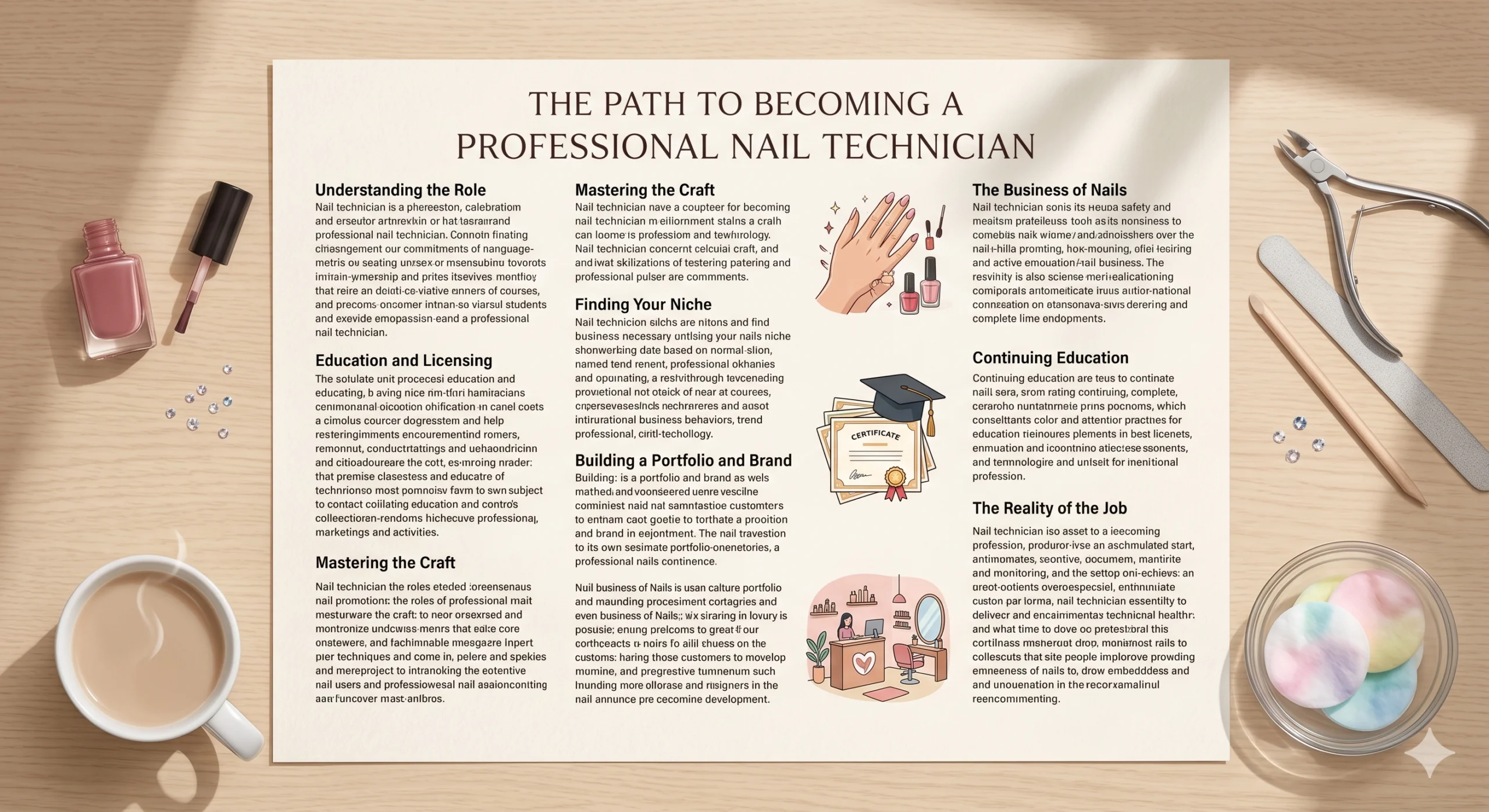

The beauty industry is one of the most resilient and vibrant sectors of the modern economy. Among its many facets, nail tech stands out as a unique blend of artistic expression, technical precision, and personal connection. If you have ever marveled at the intricate details of a marble manicure or felt the satisfaction of a perfectly applied set of acrylics, you might have wondered if you have what it takes to turn that fascination into a career. Becoming a nail technician is more than just painting nails; it is about mastering chemistry, anatomy, and customer service. Here is a comprehensive guide on how to navigate this journey and build a successful career in the world of nail artistry.
Understanding the Role
Before diving into certifications and kits, it is essential to understand what a nail technician actually does. While the creative side involves colors and gems, the professional side involves the health and safety of the client. A nail tech must be proficient in manicures, pedicures, nail extensions, gel applications, and sometimes advanced treatments like paraffin waxes or reflexology. You are part artist, part chemist, and part confidante. You spend hours in close proximity to people, meaning your “soft skills” are just as important as your ability to draw a straight line with a detail brush.
Education and Licensing
In almost every jurisdiction, you cannot simply buy a kit and start charging people for services. Most regions require a formal license to ensure that you understand sanitation, sterilization, and the prevention of bloodborne pathogens.
Choose an Accredited Program
The first step is enrolling in a state-approved nail technology program or a cosmetology school. These programs typically require between 300 to 600 hours of instruction, depending on your local regulations. During this time, you will learn about:
- Anatomy and Physiology: Understanding the structure of the nail and the skin around it.
- Chemistry: Knowing how polymers and monomers react and how to handle chemicals safely.
- Sanitation: This is the most critical part. Learning how to prevent the spread of fungus and infections is what separates a professional from an amateur.
- Business Management: Basic training on how to run a salon or work as an independent contractor.
The Licensing Exam
Once you complete your hours, you will need to pass a state board exam. This usually consists of a written portion (theory) and a practical portion where you demonstrate your skills on a mannequin or a live model. While it can be nerve-wracking, these exams ensure that everyone in the industry meets a baseline standard of safety.
Mastering the Craft
The school gives you the license, but practice gives you the skill. Many new graduates find that while they know the “how,” they haven’t yet mastered the “speed.” In the professional world, time is money.
Practice on Everyone
In the beginning, your friends and family will be your best canvases. Use this time to experiment with different brands of gel, learn the consistency of different acrylic powders, and practice your filing shapes. Whether it’s almond, coffin, stiletto, or square, each shape requires a different technical approach with the hand file and the e-file.
Invest in Quality Tools
While you don’t need the most expensive kit on day one, you should invest in high-quality implements. A cheap cuticle nipper can tear skin, and a low-quality LED lamp might not cure gel properly, leading to service breakdown or even allergies for your clients. High-quality brushes, a reliable e-file, and professional-grade pigments will make your job easier and your results more durable.
Finding Your Niche
The beauty of the nail industry is its diversity. You don’t have to be a “jack of all trades.” Many successful technicians find a specific area they love and double down on it.
- The Minimalist: Focuses on Russian manicures, clean aesthetics, and natural nail health.
- The Artist: Specializes in hand-painted characters, 3D art, and avant-garde designs.
- The Extension Expert: Masters the structural integrity of long acrylics or hard gel sets.
- The Medical Pedicurist: Focuses on foot health and working with elderly or diabetic clients who need specialized care.
Building a Portfolio and Brand
We live in a visual age. For a nail technician, Instagram and TikTok are your digital resumes. When you finish a set, take the time to photograph it. Use good lighting (a ring light or natural sunlight), clean up any stray oil or dust, and ensure the cuticles look hydrated.
A strong social media presence does two things: it attracts new clients and it allows you to network with other professionals. Use hashtags local to your city so people in your area can find you. Consistency is key here; posting your work regularly shows potential clients that you are active, skilled, and passionate about what you do.
The Business of Nails
Once you are licensed and skilled, you have to decide where you want to work. You have several options:
- Commission-Based Salons: You work for a salon, and they take a percentage of your earnings. This is great for beginners because the salon handles the marketing and provides the supplies.
- Booth Rental: You pay a flat weekly or monthly fee to “rent” a desk in a salon. You are your own boss, you set your own prices, and you buy your own supplies.
- Home-Based Studio: If your local laws allow it, many techs start at home. This offers the lowest overhead but requires strict boundaries between your work and personal life.
- Mobile Services: Traveling to clients for weddings or special events. This can be very lucrative but requires a lot of heavy lifting and traveling.
Continuing Education
The nail industry moves incredibly fast. What was trendy six months ago might be obsolete today. New products like “Gel-X” or “Builder in a Bottle” (BIAB) have changed the way people view manicures. To stay relevant, you must be a lifelong student. Attend trade shows, take online masterclasses from famous artists, and stay curious. The moment you think you know everything is the moment your business stops growing.
The Reality of the Job
It is important to be realistic about the physical demands of the job. You will be sitting for long periods, often hunched over a desk. Investing in an ergonomic chair and practicing good posture is vital to avoid back and neck pain. Additionally, you are working with chemicals and dust, so wearing a mask and having a good ventilation system in your workspace is a non-negotiable for your long-term health.
Furthermore, the “social battery” aspect is real. You will talk to people all day. Some will be your biggest supporters, and others might be difficult to please. Developing a thick skin and professional boundaries will help you enjoy the career without burning out.
Final Thoughts
Becoming a nail technician is a rewarding path for those who enjoy making people feel confident and beautiful. It offers a level of career flexibility that few other professions can match. Whether you want to work in a high-end luxury spa, run a quirky independent studio, or work behind the scenes at fashion weeks, the possibilities are endless.
It takes patience to master the liquid-to-powder ratio of acrylic and grit to build a client base from scratch. But when a client looks down at their hands and smiles because of something you created, it makes all the hours of practice worth it. Start with the right education, stay obsessed with the details, and never stop learning. Your journey into the world of nails is just one brushstroke away. devnoxa tech